Introduction
The Rock Ptarmigan (Lagopus muta) is a medium-sized grouse of Arctic, subarctic and alpine environments across the Northern Hemisphere. It is adapted to cold, exposed landscapes through seasonal moulting, feathered feet and behaviour that helps it find food and shelter in snow-covered terrain. Although often associated with the Arctic tundra, the species also occurs in high mountains as far south as the Alps, Pyrenees and Japan.
Physical Description
The Rock Ptarmigan is a compact, chicken-like bird with a short neck, small bill and heavily feathered legs and feet. Adults are generally 32–40 cm long and weigh approximately 440–640 g, although body size varies between populations and subspecies.
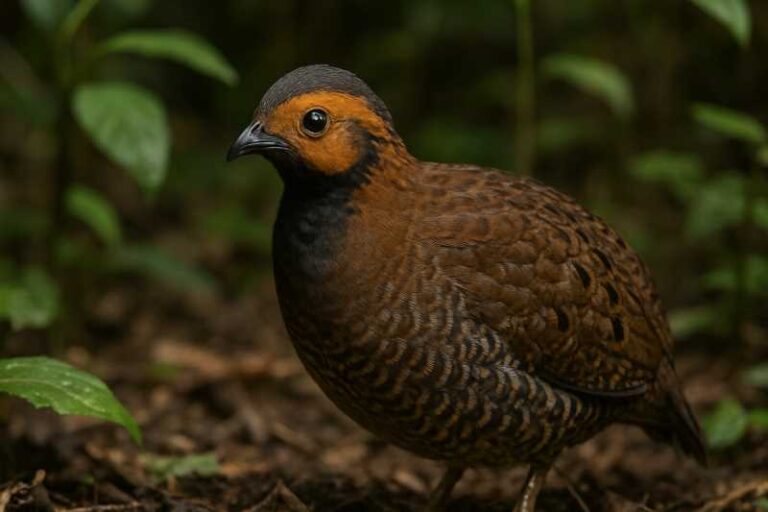
Its plumage changes seasonally. In winter, both sexes are predominantly white, with dark eyes, bill, lores and outer tail feathers. During the breeding season, females develop cryptic brown, grey and buff mottling, while males usually retain more white on the body and develop dark markings on the head and a conspicuous red comb above each eye. Males may soil their white plumage during the breeding season, which can reduce the contrast between the bird and the patchy, snow-free tundra.
The wings and legs remain largely white through much of the annual cycle. Feathered feet provide insulation and help distribute the bird’s weight when it walks on soft snow. Juveniles are downy and precocial at hatching, then develop mottled juvenile plumage before acquiring adult seasonal plumages through subsequent moults.
Range and Habitat
The Rock Ptarmigan has a broad circumpolar distribution across northern North America, Greenland, Iceland, northern Europe and northern Asia. It also occurs in suitable mountain habitats in regions including Scotland, the Alps, the Pyrenees and Japan. The Svalbard Rock Ptarmigan, L. m. hyperboreus, is restricted to Svalbard and Franz Josef Land.
The species generally occupies open, treeless terrain. Preferred habitats include rocky Arctic tundra, scree slopes, alpine ridges, fellfields and areas of low shrubs, lichens, mosses and herbaceous plants. Where it occurs alongside the Willow Ptarmigan (Lagopus lagopus), the Rock Ptarmigan usually favours higher, drier and more barren ground, although the species can move to lower areas during winter when food and snow conditions require it.
Most populations are sedentary or make relatively short seasonal movements, but local and regional migrations occur. Movement patterns vary with latitude, snow cover, food availability and the characteristics of individual subspecies. The Svalbard population, for example, makes seasonal movements between breeding areas and winter feeding habitats.
Behaviour and Diet
Rock Ptarmigan are mainly ground-dwelling birds. Outside the breeding season, they may form small flocks, while males become territorial in spring. Territorial behaviour includes calling, threat displays, tail-fanning, parallel walking and aerial display flights. Males defend areas and court females with vocalisations, posturing and steep display flights followed by gliding descents.
The diet is predominantly vegetarian. Depending on the season and location, Rock Ptarmigan eat willow and dwarf-birch buds, catkins, leaves, flowers, shoots, small twigs, berries, seeds, mosses, lichens and other tundra plants. They also take insects, spiders and other invertebrates, particularly during the breeding season and while feeding young. The bill is used to browse low vegetation and to uncover food from the ground or snow.
The nest is a shallow scrape on open, stony tundra, often beside a rock or in a natural depression. It may be lined with grass, moss, lichens and the female’s feathers. Clutch size is commonly about 5–8 eggs, with recorded clutches ranging from 3 to 13 eggs. The female performs most or all incubation, which lasts approximately three weeks. Chicks are down-covered, mobile and able to leave the nest soon after hatching, following the female to feeding areas.
Identification Tips
- Look for a compact, chicken-like grouse with a small bill and feathered feet in open rocky tundra or alpine terrain.
- In winter, the bird is mostly white but normally retains dark eyes, bill, lores and outer tail feathers.
- In summer, females are intricately mottled brown and grey. Males are generally whiter, with dark facial markings and red eye-combs during the breeding season.
- Compare the species carefully with the Willow Ptarmigan. Rock Ptarmigan usually has a smaller bill and favours higher, rockier and more open ground, whereas Willow Ptarmigan is more closely associated with lower shrub and willow habitats where the two species overlap.
- The White-tailed Ptarmigan is a potential comparison in North America. It is generally smaller and has a white tail, while the Rock Ptarmigan has dark outer tail feathers. Habitat, size and bill shape are also useful supporting characters, but plumage can vary with season and subspecies.
- During transitional moults, plumage may appear mixed or incomplete, so habitat, structure, tail pattern and facial markings should be considered together.
Conservation Status
The Rock Ptarmigan is currently assessed globally as Least Concern on the IUCN Red List. This broad assessment does not mean that all populations are secure. Monitoring studies report contrasting regional trends, including declines in some areas and stable or increasing populations in others.
Important pressures include climate change, altered snow conditions, changes in the timing of vegetation growth and moulting, habitat shifts at high elevations, unsustainable harvest in some regions and disturbance or habitat alteration associated with infrastructure and resource development. In mountain populations, upward movement of vegetation zones can reduce the area of suitable alpine habitat. Local conservation measures include population monitoring, sustainable harvest regulation, protection of breeding habitat and limiting disturbance in sensitive Arctic and alpine areas.
Frequently Asked Questions
Where does the Rock Ptarmigan live?
It occurs across Arctic and subarctic regions of North America, Greenland, Europe and Asia, as well as in suitable alpine habitats including the Alps, Pyrenees, Scotland and Japan.
Does the Rock Ptarmigan migrate?
Most populations are sedentary or make short seasonal movements, but some populations undertake longer movements between breeding and wintering areas. Movement varies among subspecies and local conditions.
What does the Rock Ptarmigan eat?
It mainly eats plant material, including buds, leaves, flowers, shoots, berries, seeds, mosses and lichens. Insects, spiders and other invertebrates are also taken, especially during the breeding season.
Why does the Rock Ptarmigan change colour?
Seasonal moulting changes its plumage from predominantly white in winter to mottled brown, grey and buff in the snow-free season. This helps the bird remain less visible against changing tundra and alpine backgrounds.
How can a Rock Ptarmigan be distinguished from a Willow Ptarmigan?
Rock Ptarmigan usually has a smaller bill and occupies higher, drier and rockier habitats. Willow Ptarmigan is generally associated with lower ground and more extensive willow or shrub cover, although the species can overlap and identification may be difficult during moulting.
Is the Rock Ptarmigan endangered?
The species is assessed globally as Least Concern, but some regional populations are declining or face local threats. Climate change, habitat change, disturbance and harvest pressure require continued monitoring and appropriate management.
References
- BirdLife International. 2026. Rock Ptarmigan Lagopus muta Species Factsheet. BirdLife DataZone and IUCN Red List assessment resources. Accessed 8 September 2026. https://datazone.birdlife.org/species/factsheet/rock-ptarmigan-lagopus-muta
- Gill, F., Donsker, D. and Rasmussen, P., eds. 2026. IOC World Bird List, version 15.2. International Ornithologists’ Union. Accessed 8 September 2026. https://www.worldbirdnames.org/
- Cornell Lab of Ornithology. n.d. Rock Ptarmigan: Identification. All About Birds. Accessed 8 September 2026. https://www.allaboutbirds.org/guide/Rock_Ptarmigan/id
- Cornell Lab of Ornithology. n.d. Rock Ptarmigan: Life History. All About Birds. Accessed 8 September 2026. https://www.allaboutbirds.org/guide/Rock_Ptarmigan/lifehistory
- Alaska Department of Fish and Game. n.d. Rock Ptarmigan Species Profile. Accessed 8 September 2026. https://www.adfg.alaska.gov/index.cfm?adfg=rockptarmigan.main
- Fuglei, E., et al. 2020. Circumpolar status of Arctic ptarmigan: population dynamics and trends. Royal Society Open Science, 7(1), 191500. https://doi.org/10.1098/rsos.191500
- Pyle, P. 2007. Revision of molt and plumage terminology in ptarmigan (Phasianidae: Lagopus spp.) based on evolutionary considerations. The Auk, 124(2), 508–514. https://doi.org/10.1642/0004-8038(2007)124[508:ROMAPT]2.0.CO;2
- Norwegian Polar Institute. n.d. Svalbard Rock Ptarmigan. Accessed 8 September 2026. https://npolar.no/en/species/svalbard-rock-ptarmigan/
- Kjønsberg, M., et al. 2026. Field test of assumptions for using line transect distance sampling on Rock Ptarmigan. Wildlife Biology. https://doi.org/10.1002/wlb3.01471
Related posts