Understanding the Large-billed Leaf Warbler: A Comprehensive Overview
The Large-billed Leaf Warbler, scientifically known as Phylloscopus magnirostris, is a captivating species within the family of Phylloscopidae. Renowned for its distinctive large bill, this bird is an intriguing subject for ornithologists and bird enthusiasts alike. Its study offers insights into avian diversity, migratory behaviors, and habitat preferences.
Taxonomy and Classification
The Large-billed Leaf Warbler was first classified in the mid-19th century and has since been a subject of extensive research. It belongs to the genus Phylloscopus, which includes numerous other leaf warbler species. The genus name Phylloscopus is derived from Greek, meaning ‘leaf watcher,’ a nod to their preferred habitat and foraging behavior.
Physical Characteristics
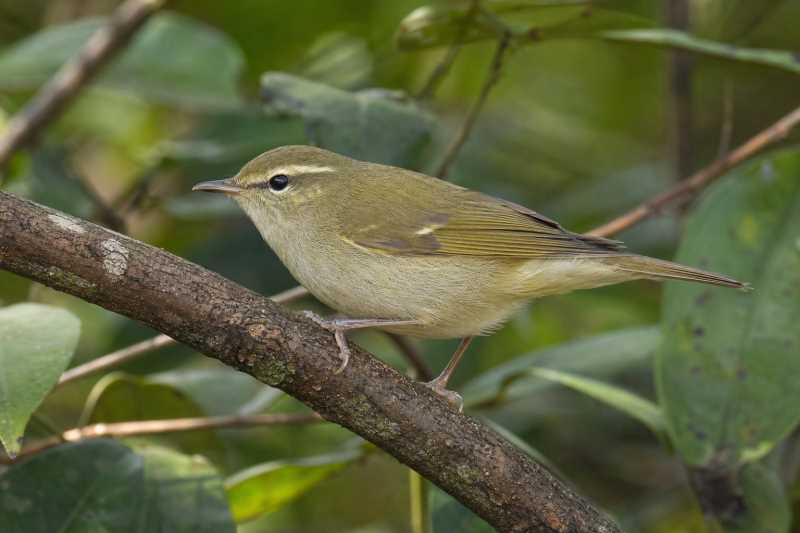
As its name suggests, the Large-billed Leaf Warbler is distinguished by its noticeably large bill, which is broader and longer than those of many other warblers. This feature aids in foraging, allowing it to access a variety of insects and larvae hidden beneath bark and foliage. The bird’s plumage is predominantly olive-green, with lighter underparts and a subtle yellow wash. This coloration provides excellent camouflage against the leafy backdrops of its habitat.
Distribution and Habitat
The geographical range of the Large-billed Leaf Warbler extends across various parts of Asia. It is predominantly found in the Himalayan foothills, stretching from Pakistan through India and into Southeast Asia. During the breeding season, it favors montane forests, often at elevations of 900 to 3000 meters. These areas provide ample cover and abundant food sources.
In the non-breeding season, the warbler migrates to lower altitudes and can be found in a variety of forest types, including tropical and subtropical forests. The bird’s adaptability to different habitats emphasizes its resilience and versatility.
Behavior and Ecology
The Large-billed Leaf Warbler is primarily insectivorous, feeding on a diverse diet of insects and spiders. Its foraging behavior is characterized by active movement through foliage, energetically probing leaves and bark. The large bill is particularly advantageous in extracting hidden prey.
Vocalization plays a crucial role in the life of this warbler. Its song, a series of high-pitched notes, is a common sound in its breeding habitat. These calls are crucial for territory establishment and mate attraction. Observations also suggest that vocalizations may help maintain pair bonds during the breeding season.
Breeding and Reproduction
The breeding season for the Large-billed Leaf Warbler occurs from April to June. During this period, males engage in elaborate singing displays to attract females. Nests are typically constructed on the ground or in low shrubs, often well-concealed by vegetation. The nest structure is a delicate dome built from grass and leaves.
Females lay a clutch of 3 to 5 eggs, which are incubated for approximately two weeks. Both parents participate in feeding the chicks, which fledge after about 10 to 12 days. The parental investment in terms of feeding and protection is substantial, ensuring high survival rates for the offspring.
Conservation Status
The Large-billed Leaf Warbler is currently listed as ‘Least Concern’ by the IUCN Red List. This status is attributed to its wide distribution and stable population trends. However, like many forest-dwelling species, it faces potential threats from habitat loss due to deforestation and land-use changes.
Conservation efforts are necessary to monitor population trends and preserve critical habitats. Sustainable forest management practices and protected area networks are essential for ensuring the continued survival of this species.
Conclusion
The Large-billed Leaf Warbler is a remarkable example of avian adaptation and survival. Its unique characteristics, from the large bill to its melodious calls, make it a fascinating subject for study. Understanding its ecology and behavior not only enriches our knowledge of biodiversity but also highlights the importance of conservation efforts in preserving such species.
As we continue to explore and protect our natural world, the Large-billed Leaf Warbler serves as a symbol of the intricate interconnections within ecosystems and the need for vigilant stewardship of our environment.
Related posts