Introduction
The Glow-throated Hummingbird, Selasphorus ardens, is a rare hummingbird endemic to Panama. It is known from isolated highland areas in the Serranía de Tabasará and has also been reported from the Azuero Peninsula. Very little is known about its population, breeding biology and daily behaviour, making confirmed records especially valuable.
Physical Description
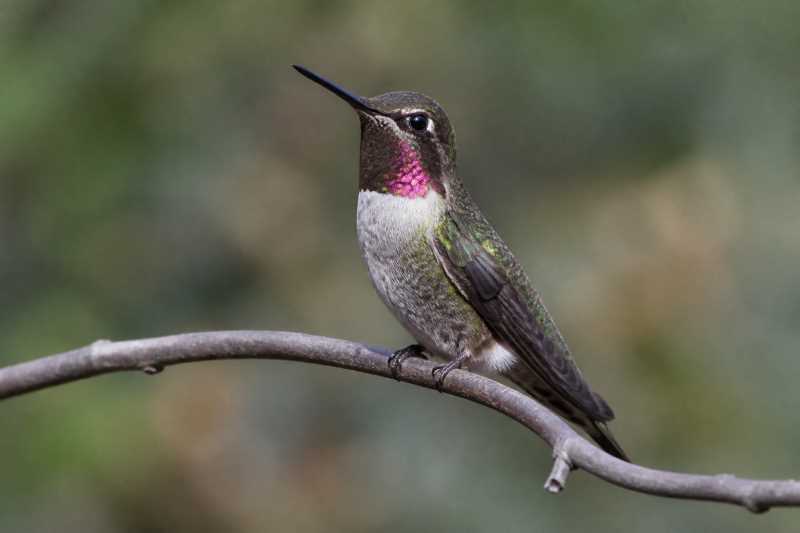
The Glow-throated Hummingbird is a small, short-billed hummingbird with a straight black bill. The male has iridescent bronzy-green upperparts, dark tail feathers edged with rusty rufous, and a striking pinkish-red gorget bordered below by a broad white bib. The underparts are dusky green-grey with a pale central breast stripe.
Females lack the brilliant gorget. They have iridescent upperparts, mostly white underparts and noticeable rufous colouring on the flanks. Juveniles and immature birds are less distinctive than adult males, and the species can be difficult to identify confidently in the field because it resembles other small Selasphorus hummingbirds.
Reliable published measurements are limited, so exact body length and mass should not be assumed from figures sometimes repeated in general summaries.
Range and Habitat
The Glow-throated Hummingbird is endemic to Panama. Its best-established range is associated with the highlands of the Serranía de Tabasará in eastern Chiriquí and Veraguas, including areas around Cerro Colorado, Cerro Flores, Santa Fe and Cerro Tute. Reports from Cerro Hoya National Park on the Azuero Peninsula have expanded interest in its distribution, although the identity and taxonomic significance of the Cerro Hoya birds have been debated in ornithological literature.
The species is associated with humid mountain habitats, particularly shrubby second-growth, forest clearings and forest edges. It has been recorded from approximately 750 to 1,800 metres above sea level, with some evidence suggesting that birds in the Santa Fe area may favour higher elevations and mountain ridges. It is considered non-migratory, although local movements are poorly documented.
Where to See This Species
Santa Fe National Park, Veraguas, Panama
Santa Fe National Park is one of the most credible places to search for the Glow-throated Hummingbird because the species has historical records from the Santa Fe and Cerro Tute highlands. The bird is exceptionally uncommon and has not been reliably encountered during every modern survey, so sightings should be regarded as difficult and specialist rather than expected. Look for suitable shrubby vegetation, forest margins and high-elevation clearings, preferably with an experienced local guide and current site information.
Nearby accommodation: Santa Fe town offers practical guest houses, small hotels, cabins and other basic accommodation suitable for birdwatchers visiting the park.
Behaviour and Diet
The species is poorly known, and many details of its behaviour remain uncertain. Like other hummingbirds, it is capable of hovering while feeding and is expected to defend flower-rich feeding areas when resources are concentrated. It is generally treated as a solitary bird outside periods of courtship.
The diet has not been documented in detail. It is expected to include nectar from small flowers as well as small insects and other arthropods, which provide protein. Its relatively short bill may allow it to use flowers that are less accessible to longer-billed hummingbirds.
No nest has been reliably documented, and the timing and details of breeding remain uncertain. Courtship displays have not been adequately described for this species, although related Selasphorus hummingbirds perform aerial displays and rapid dives during courtship.
Identification Tips
- Look for a small hummingbird with a relatively short, straight black bill.
- Adult males are distinctive when the iridescent pinkish-red gorget catches the light, especially above the broad white bib.
- Females are mainly pale below with rufous flanks and lack the male’s bright throat patch.
- The bronzy-green upperparts and rusty-edged dark tail help separate it from some other small highland hummingbirds.
- Identification requires care because the species may be confused with other Selasphorus hummingbirds, particularly the Scintillant Hummingbird and Volcano Hummingbird where their ranges or identification features overlap.
- Treat unusual records cautiously, especially in the Azuero Peninsula, where the identity of some reported birds has been questioned.
Conservation Status
The Glow-throated Hummingbird is currently classified as Endangered. It has a very restricted and fragmented range, and its population trend is considered to be decreasing.
Major threats include the clearing and fragmentation of humid highland forest for agriculture, cattle pasture and coffee production. Fires used for land clearance, pesticide use and the loss of forest corridors may also reduce habitat quality. Because the species occurs near the upper parts of isolated mountain ranges, climate change could further reduce the amount of suitable habitat.
Protecting remaining highland forest, maintaining links between forest fragments and improving knowledge of the species’ distribution are important conservation priorities. Surveys in protected areas such as Santa Fe National Park, together with careful investigation of records from Cerro Hoya, can help clarify its status and habitat requirements.
Frequently Asked Questions
Where is the Glow-throated Hummingbird found?
It is endemic to Panama, with confirmed or historically well-supported records from highland areas in the Serranía de Tabasará, including parts of Chiriquí and Veraguas. Possible records also come from the Azuero Peninsula.
Is the Glow-throated Hummingbird migratory?
It is generally considered non-migratory. However, local movements between mountain habitats have not been studied in detail.
What does the Glow-throated Hummingbird eat?
Its diet is not well documented, but it is expected to feed on flower nectar and small insects or other arthropods, as do many related hummingbirds.
How can the species be identified?
The male is recognised by its iridescent pinkish-red throat, broad white bib, bronzy-green upperparts and short black bill. Females lack the bright gorget and are mostly pale below with rufous flanks.
Where is the best place to look for this hummingbird?
Santa Fe National Park in Veraguas is one of the most credible places to search because of historical records from the Santa Fe and Cerro Tute highlands. The species is very rare, so a sighting is not guaranteed.
Why is the Glow-throated Hummingbird endangered?
Its range is small and fragmented, while highland forest continues to be affected by agricultural expansion, grazing, forest clearance, fires and other land-use pressures. Climate change may place additional pressure on its restricted mountain habitat.
References
- BirdLife International
- American Bird Conservancy
- Smithsonian Tropical Research Institute
Related posts