Esmeraldas Antbird: A Jewel of the Neotropical Forests
The Esmeraldas Antbird (Sipia nigricauda), an enigmatic and captivating species, is a testament to the rich biodiversity that thrives within the neotropical forests of South America. This bird, often shrouded in mystery due to its elusive nature, plays a crucial role in the ecosystem it inhabits. Its presence is a symbol of the intricate balance that exists in these biodiverse regions, and its study offers valuable insights into the complexities of avian ecology.
A Glimpse into the Habitat and Distribution
The Esmeraldas Antbird is primarily found in the northwestern regions of Ecuador and southwestern Colombia. Its habitat is the humid lowland and foothill forests, where it thrives among the dense undergrowth. These areas, although rich in biodiversity, are increasingly threatened by deforestation and habitat fragmentation, which poses significant risks to the survival of this species.
The bird’s preference for dense, humid forests makes it a challenging subject for ornithologists and bird enthusiasts. Despite its elusive nature, the Esmeraldas Antbird is a vital part of the ecosystem, contributing to pest control and seed dispersal through its feeding habits.
Physical Characteristics and Behavior
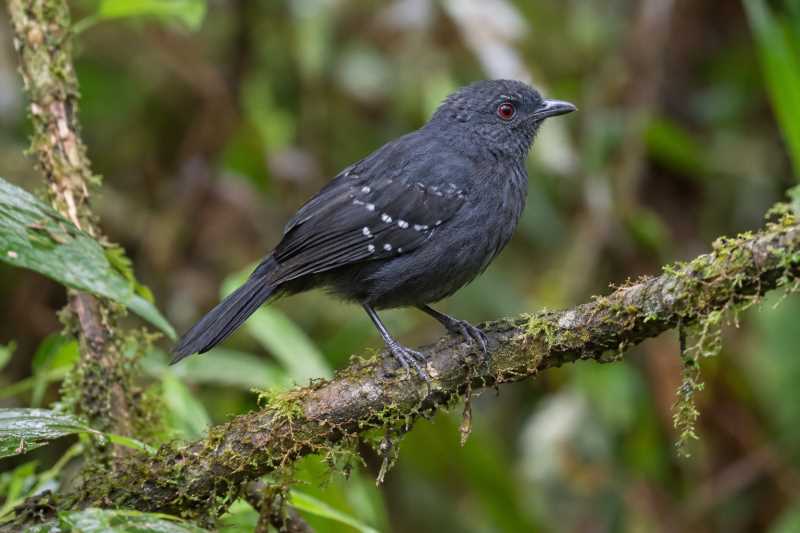
The Esmeraldas Antbird is a small passerine, measuring approximately 13-14 cm in length. It exhibits a striking plumage that consists of a predominantly dark body with subtle, contrasting patterns. Its plumage provides effective camouflage among the shadowy forest floors, aiding in its stealthy movements through the underbrush.
Both males and females exhibit similar plumage, which is unusual among many bird species where sexual dimorphism is common. This similarity in appearance suggests that these birds may rely more on vocalizations rather than visual cues for mate selection and territorial disputes.
The diet of the Esmeraldas Antbird primarily consists of insects and other small invertebrates. It is known for its unique foraging technique, often seen hopping along the forest floor or low branches, meticulously searching for prey. This behavior not only aids in controlling insect populations but also plays a role in the ecological balance by keeping certain pest species in check.
Vocalizations: A Symphony of the Forest
One of the most remarkable aspects of the Esmeraldas Antbird is its vocal repertoire. The species is known for its distinct calls and songs, which serve various purposes, including mate attraction, territory defense, and communication within pairs. These vocalizations are a vital part of their behavior, especially given their reliance on sound over sight in the dense forest environment.
The Esmeraldas Antbird’s song is a series of melodious whistles, often repeated in a rhythmic pattern. These calls can be heard echoing through the forest, adding to the symphony of sounds that characterize these biodiverse regions. Understanding these vocal patterns provides researchers with crucial data on the species’ social structure and breeding behaviors.
Conservation Status and Challenges
The Esmeraldas Antbird is currently classified as Near Threatened by the International Union for Conservation of Nature (IUCN). The primary threat to its survival is habitat loss due to logging, agricultural expansion, and urban development. These activities lead to the fragmentation of forests, which disrupts the natural habitat and poses a severe threat to the species’ long-term survival.
Conservation efforts are essential to preserve the Esmeraldas Antbird’s habitat and ensure the survival of this unique species. Protecting large tracts of forest, promoting sustainable land-use practices, and raising awareness about the importance of biodiversity are crucial steps in safeguarding the future of this bird and the myriad other species that share its habitat.
Research and Future Directions
Continued research on the Esmeraldas Antbird is vital for understanding its ecological role and ensuring its conservation. Studies focusing on its breeding patterns, diet, and habitat preferences can provide valuable insights into its life history and adaptability to changing environments.
Furthermore, the Esmeraldas Antbird serves as an indicator species for the health of its forest ecosystem. Monitoring its population trends and habitat conditions can offer early warnings of environmental degradation, prompting timely conservation actions.
Final Thoughts
The Esmeraldas Antbird is more than just a bird; it is a symbol of the rich biodiversity that characterizes the neotropical forests. Its survival is intricately linked to the health of its habitat, making its conservation a priority for ensuring the stability of these ecosystems. Through concerted efforts in research, conservation, and public awareness, we can work towards a future where the Esmeraldas Antbird continues to thrive, enriching the natural symphony of its forest home.
Related posts