Discovering the Enigmatic Scaled Ground Cuckoo (Neomorphus squamiger)
The natural world is home to a plethora of fascinating creatures, each with its own unique characteristics and ecological roles. Among these, the Scaled Ground Cuckoo (Neomorphus squamiger) stands out as a bird of intrigue and allure. This elusive species, native to the dense forests of South America, captivates ornithologists and bird enthusiasts alike with its distinct appearance and mysterious behaviors.
Taxonomy and Distribution
The Scaled Ground Cuckoo belongs to the family Cuculidae, which encompasses a diverse array of cuckoos found worldwide. Within this family, the genus Neomorphus is characterized by large, ground-dwelling cuckoos predominantly inhabiting the Neotropical region. Neomorphus squamiger is primarily found in the humid lowland forests of the Amazon Basin, with its range extending across parts of Brazil, Peru, and Bolivia.
Despite its relatively wide distribution, sightings of the Scaled Ground Cuckoo are rare due to its secretive nature and the dense habitats it frequents. The bird is typically encountered in primary forests, where it remains well-camouflaged among the undergrowth, making it a challenging species to study in the wild.
Physical Characteristics
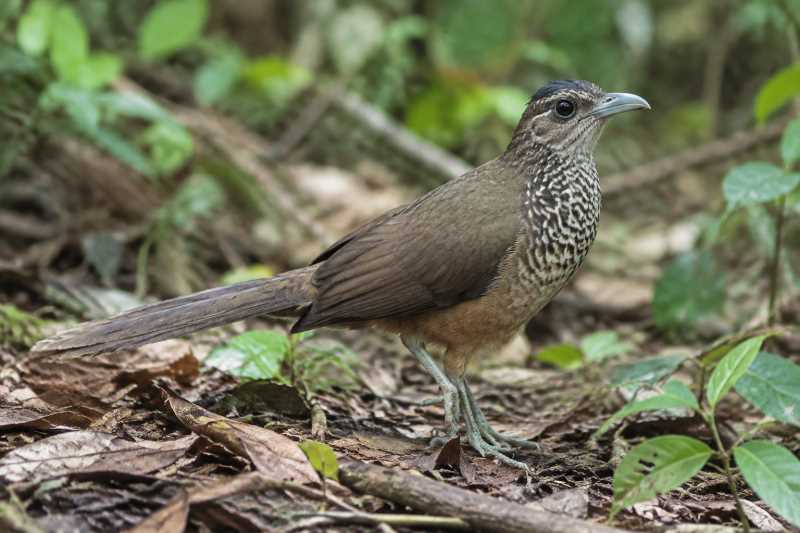
The Scaled Ground Cuckoo is a large bird, measuring around 45 to 50 centimeters in length. Its plumage is predominantly dark, with a striking combination of glossy black and iridescent green hues. The bird’s most distinctive feature is its scaled appearance, derived from the overlapping feather patterns on its wings and back, which resemble the scales of a reptile. This unique coloration provides excellent camouflage in the dappled light of the forest floor.
Its long, strong legs are adapted for terrestrial life, allowing it to walk and forage efficiently on the ground. The bird’s bill is robust and slightly downcurved, suited for manipulating its diverse diet, which includes insects, small vertebrates, and fruits. The Scaled Ground Cuckoo’s eyes are large and dark, providing enhanced vision for locating prey in the dimly lit understory.
Behavior and Ecology
The Scaled Ground Cuckoo is primarily a solitary and shy bird, spending much of its time foraging on the forest floor. Its diet is varied and opportunistic, consisting of insects, small reptiles, amphibians, and occasionally small mammals. The bird is known to follow ant swarms, taking advantage of the disturbance caused by the ants to catch fleeing prey.
Communication among Scaled Ground Cuckoos is subtle, involving low-frequency calls and vocalizations that are often difficult for human observers to detect. These calls play a crucial role in territory establishment and mate attraction, although detailed studies on the bird’s vocal behavior are limited due to its elusive nature.
Breeding behaviors of the Scaled Ground Cuckoo are not well-documented, but it is believed to be a monogamous species with both parents involved in raising the young. Nests are typically constructed on the ground or in low vegetation, camouflaged to protect against predators. The bird’s reproductive cycle and parental care strategies remain intriguing areas for future research.
Conservation Status and Threats
The Scaled Ground Cuckoo is currently classified as Near Threatened on the IUCN Red List of Threatened Species. Habitat destruction, primarily due to deforestation and land conversion for agriculture, poses the most significant threat to its survival. As large tracts of primary forest are cleared, the bird’s habitat becomes increasingly fragmented, limiting its movement and access to resources.
Conservation efforts aimed at preserving the Amazon rainforest are crucial for the survival of the Scaled Ground Cuckoo. Protecting large, contiguous areas of habitat ensures the species’ long-term viability and supports the broader ecosystem services provided by these vital forests. Additionally, further research into the ecology and behavior of Neomorphus squamiger will enhance our understanding of its role in the ecosystem and inform targeted conservation strategies.
Conclusion
The Scaled Ground Cuckoo remains a symbol of the hidden wonders of the world’s forests. Its elusive nature and distinctive appearance make it a subject of fascination for birdwatchers and scientists alike. As we strive to protect the rich biodiversity of the Amazon, the Scaled Ground Cuckoo serves as a reminder of the intricate connections that sustain life on our planet.
By raising awareness and supporting conservation initiatives, we can ensure that this remarkable bird continues to thrive in its natural habitat, contributing to the ecological balance of the regions it inhabits. The Scaled Ground Cuckoo is not just an avian marvel; it represents the enduring mystery and beauty of Earth’s untamed wilderness.
Related posts