Introduction
The Black-headed Antthrush (Formicarius nigricapillus) is a captivating bird species native to the neotropical forests of Central and South America. Known for its distinctive plumage and elusive nature, this bird presents a fascinating subject for ornithologists and bird enthusiasts alike. In this article, we delve into the various aspects of the Black-headed Antthrush, including its habitat, behavior, diet, and conservation status.
Taxonomy and Description
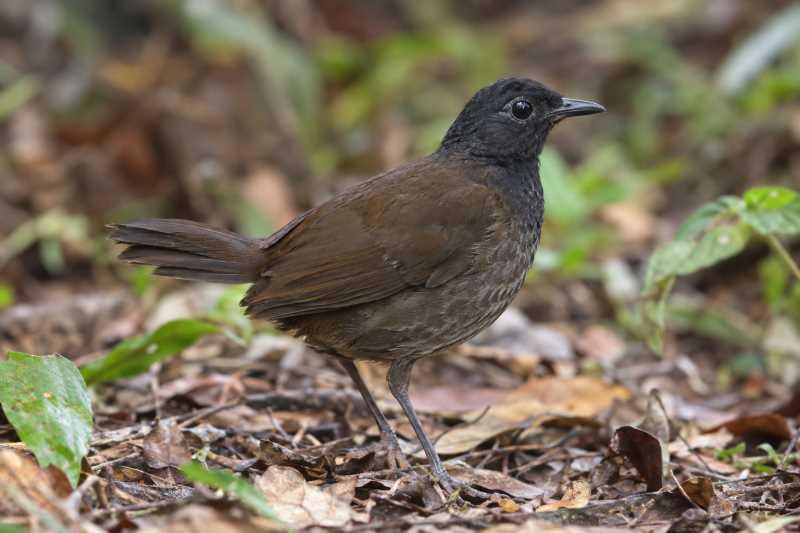
The Black-headed Antthrush belongs to the family Formicariidae, which is part of the order Passeriformes. The scientific name, Formicarius nigricapillus, reflects its notable features, with ‘Formicarius’ indicating its affinity with ants and ‘nigricapillus’ describing its black-capped head. This species is characterized by its dark head contrasting with a chestnut-colored body, a feature that aids in its identification.
Adult Black-headed Antthrushes measure approximately 18 to 20 centimeters in length. They possess a robust body, strong legs, and a relatively short tail. Their plumage is predominantly earthy tones, which provides excellent camouflage in the forest floor habitat they prefer.
Habitat and Distribution
The Black-headed Antthrush is primarily found in the humid lowland forests of Central America, with its range extending from southern Mexico through to western Colombia and northwestern Ecuador. These birds are typically associated with dense understory vegetation in tropical and subtropical forests.
They are most commonly found in primary forests but can also inhabit secondary forests, particularly those that retain a thick understory. The preference for dense forest cover is likely a strategy to avoid predation and to facilitate their foraging behavior.
Behavior and Ecology
Black-headed Antthrushes are ground-dwelling birds that exhibit a unique foraging behavior. They are known to follow swarms of army ants, taking advantage of the insects and small vertebrates flushed out by the ant activity. This behavior is not only fascinating but also critical for their survival, as it provides a steady food source.
These birds are generally solitary, although they may occasionally be observed in pairs. Their elusive nature and preference for dense cover make them a challenge to spot, which adds to their allure among bird watchers.
Vocalizations
The vocalizations of the Black-headed Antthrush are distinct and can be used for identification in the field. Their calls are typically a series of melodious whistles or trills, which are often delivered from a concealed perch within the forest understory. These vocalizations serve as a means of communication between individuals and play a role in territory establishment and mate attraction.
Reproduction and Nesting
Breeding behavior in Black-headed Antthrushes is not extensively documented, partly due to their secretive nature. However, like many tropical birds, they are believed to have a prolonged breeding season that coincides with the rainy season when food resources are more abundant.
Nesting usually occurs on or near the ground, where the female lays a clutch of two to three eggs. Both parents are involved in incubating the eggs and caring for the young, demonstrating a level of parental investment that is common among passerines.
Diet
The diet of the Black-headed Antthrush consists primarily of insects and other small invertebrates. Their association with army ant swarms provides them with a diverse menu that includes beetles, spiders, and other arthropods. Occasionally, they may also consume small vertebrates such as lizards and frogs.
This ant-following behavior is a specialized foraging strategy that not only allows them to access a rich food source but also reduces the time and energy spent searching for prey.
Conservation Status
The Black-headed Antthrush is currently listed as Least Concern on the IUCN Red List. However, like many forest-dependent species, it faces threats from habitat destruction and fragmentation due to logging, agriculture, and urbanization.
Conservation efforts for this species are focused on preserving large tracts of tropical and subtropical forests, which are crucial for maintaining their populations. Protected areas and reserves play a significant role in safeguarding these habitats and ensuring the long-term survival of the Black-headed Antthrush and other forest-dwelling species.
Conclusion
The Black-headed Antthrush is a remarkable bird that exemplifies the rich biodiversity of neotropical forests. Its unique behaviors and ecological role as an ant-follower highlight the intricate relationships that exist within these ecosystems. By understanding and appreciating the complexities of such species, we can foster greater awareness and commitment to conserving the natural environments they inhabit.
Further Research
Future research should focus on obtaining more detailed information on the breeding biology and population dynamics of the Black-headed Antthrush. Additionally, studies on the impact of habitat fragmentation and climate change on their populations could provide valuable insights for conservation strategies.
References
- BirdLife International. "Formicarius nigricapillus." IUCN Red List of Threatened Species.
- Ridgely, R. S., & Gwynne, J. A. (1989). A Guide to the Birds of Panama with Costa Rica, Nicaragua, and Honduras.
- Stiles, F. G., & Skutch, A. F. (1989). A Guide to the Birds of Costa Rica.
Related posts