Introduction
The Chestnut-eared Laughingthrush (Ianthocincla konkakinhensis) is a fascinating avian species that captivates bird enthusiasts and ornithologists alike. This elusive bird, first described in 1999, is a testament to the rich biodiversity of Southeast Asia, particularly in Vietnam, where it is primarily found. As a member of the Leiothrichidae family, it shares its lineage with other laughingthrushes, known for their vibrant plumage and melodic calls. This article delves into the various aspects of the Chestnut-eared Laughingthrush, exploring its habitat, behavior, conservation status, and the challenges it faces in the wild.
Taxonomy and Classification
The Chestnut-eared Laughingthrush belongs to the genus Ianthocincla, which was previously grouped under Garrulax. The taxonomic reclassification has been a subject of much debate, but recent DNA analyses have provided clearer insights into its evolutionary lineage. The species epithet ‘konkakinhensis’ refers to its type locality near Mount Kon Ka Kinh in Vietnam, highlighting its geographic significance.
Physical Description
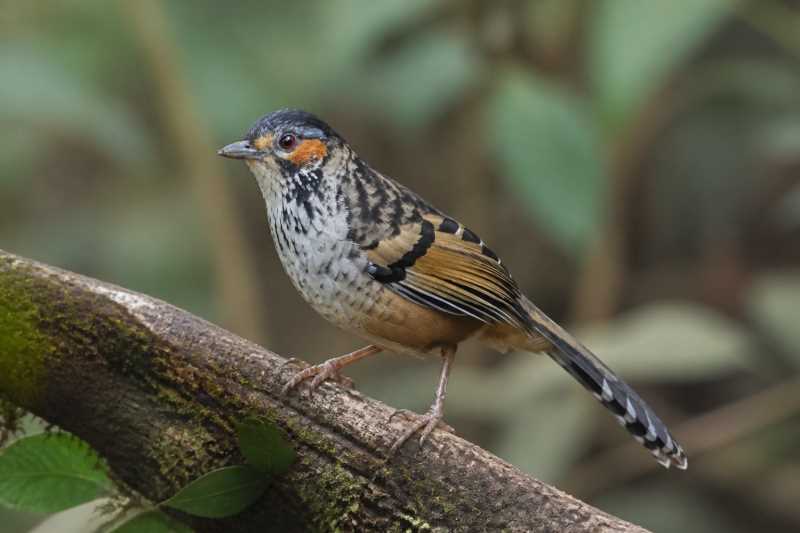
This medium-sized bird is distinguished by its striking chestnut-colored ear patches, which contrast sharply against its predominantly grey and olive-green plumage. The Chestnut-eared Laughingthrush measures approximately 22-24 cm in length, with a robust body and strong legs adapted for foraging on the forest floor. Its plumage provides excellent camouflage amidst the dense foliage of its habitat, while its expressive eyes and curved beak add to its charismatic appearance.
Habitat and Distribution
The Chestnut-eared Laughingthrush is endemic to the montane forests of central Vietnam. It thrives in subtropical or tropical moist lowland forests, often found at altitudes ranging from 1,200 to 1,800 meters. The bird’s natural habitat is characterized by dense undergrowth and a rich diversity of flora, offering ample food sources and shelter. However, its limited distribution makes it particularly vulnerable to habitat loss and environmental changes.
Behavior and Ecology
The Chestnut-eared Laughingthrush is known for its social behavior, often seen in small groups or pairs. Its vocalizations are a distinctive feature, consisting of a variety of melodious whistles and calls that are used for communication among group members. These birds are primarily ground-foragers, feeding on a diverse diet of insects, seeds, and berries. Their foraging behavior is characterized by agile movements and keen observation, allowing them to exploit a wide range of food resources.
Breeding and Reproduction
Little is known about the breeding habits of the Chestnut-eared Laughingthrush, owing to its elusive nature and remote habitat. However, like many laughingthrushes, it is presumed to be monogamous, with pairs forming long-term bonds. Nesting typically occurs in dense vegetation, where the female lays a clutch of two to four eggs. Both parents are involved in the incubation and care of the young, ensuring high survival rates in a stable environment.
Conservation Status
The Chestnut-eared Laughingthrush is currently listed as Near Threatened on the IUCN Red List. The primary threat to its survival is habitat destruction due to logging, agricultural expansion, and infrastructure development. Conservation efforts are crucial to protect the remaining montane forests, which serve as a refuge for this and many other endemic species. Protected areas, such as national parks and wildlife reserves, play a vital role in preserving the natural habitat of the Chestnut-eared Laughingthrush.
Challenges and Threats
In addition to habitat loss, climate change poses a significant threat to the Chestnut-eared Laughingthrush. Changes in temperature and precipitation patterns can alter the delicate balance of its montane ecosystem, affecting food availability and breeding success. Furthermore, human activities, such as illegal logging and land conversion, continue to encroach upon its habitat, necessitating urgent conservation measures.
Conservation Efforts and Future Outlook
Efforts to conserve the Chestnut-eared Laughingthrush are centered around habitat protection and restoration. International collaborations between conservation organizations and local authorities aim to implement sustainable land-use practices and enhance the management of protected areas. Community engagement and education are also integral components, fostering a sense of stewardship among local populations. While challenges remain, ongoing research and conservation initiatives offer hope for the future of this remarkable species.
Conclusion
The Chestnut-eared Laughingthrush is a symbol of the rich biodiversity found in Vietnam’s montane forests. Its unique characteristics and ecological significance underscore the importance of conservation efforts to safeguard its habitat. By addressing the challenges posed by habitat loss and climate change, we can ensure the survival of the Chestnut-eared Laughingthrush and preserve the natural heritage of its environment for future generations.
References
- BirdLife International. (2021). "Ianthocincla konkakinhensis." The IUCN Red List of Threatened Species 2021.
- Collar, N. J., & Robson, C. (2007). "Family Timaliidae (Babblers)." In Handbook of the Birds of the World. Vol. 12.
- Nguyen, C. D. (2015). "Ecology and Conservation of the Chestnut-eared Laughingthrush in Vietnam." Journal of Avian Biology.
- Rasmussen, P. C., & Anderton, J. C. (2005). "Birds of South Asia: The Ripley Guide." Smithsonian Institution and Lynx Edicions.
Meta Title
"Exploring the Chestnut-eared Laughingthrush"
Meta Description
"Discover the habitat, behavior, and conservation of the Chestnut-eared Laughingthrush, a unique bird species endemic to Vietnam’s montane forests."
Related posts