The Enigmatic Brown Jay (Cyanocorax morio): A Comprehensive Exploration
The Brown Jay, scientifically known as Cyanocorax morio, is a captivating bird species that draws interest from ornithologists and bird enthusiasts alike. This article delves into the Brown Jay’s habitat, behavior, diet, and conservation status, offering a holistic overview of this intriguing bird.
Habitat and Distribution
The Brown Jay is native to Central America, with its range extending from southern Texas in the United States down to Honduras. This bird thrives in a variety of habitats, including subtropical or tropical moist lowland forests, mangroves, and even some agricultural areas. The adaptability to different environments has allowed the Brown Jay to maintain a stable presence across its range.
These birds are often found in groups and are known for their sociability. They typically inhabit areas with dense vegetation, which provides ample food sources and nesting sites. The presence of water bodies in their habitat is also essential, as it supports their diverse diet.
Physical Characteristics
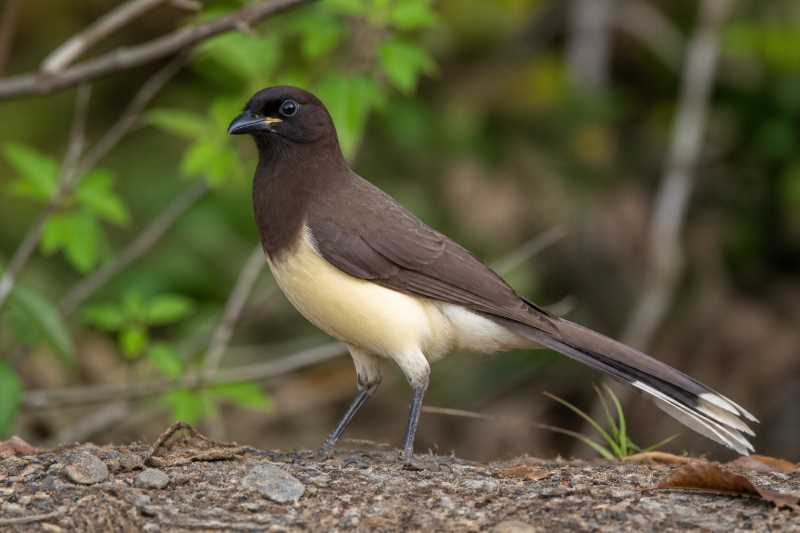
The Brown Jay is a medium to large bird, measuring between 38 to 45 centimeters in length. As its name suggests, the bird’s plumage is primarily brown, with some variations across its range. Northern populations tend to have darker plumage, while southern populations exhibit a lighter shade.
One of the distinguishing features of the Brown Jay is its white-tipped tail feathers, which are particularly noticeable during flight. This striking contrast in coloration aids in identifying the bird even from a distance. Additionally, Brown Jays have a robust bill and strong legs, adaptations that facilitate their varied diet.
Behavior and Social Structure
Brown Jays are known for their complex social structures and are often observed in groups called flocks, which can range from small family units to larger aggregations of up to 20 individuals. These flocks are dynamic, with a clear hierarchy that dictates social interactions and foraging behavior.
Communication within these groups is sophisticated, involving a range of vocalizations. The Brown Jay’s calls are loud and varied, serving functions from warning calls to mating signals. Their vocal prowess is a testament to their intelligence and adaptability.
Diet and Feeding Habits
Omnivorous in nature, Brown Jays have a diverse diet that includes fruits, insects, small vertebrates, and occasionally, eggs from other birds’ nests. This dietary flexibility allows them to thrive in various environments and adapt to seasonal changes in food availability.
Their foraging behavior is opportunistic and cooperative, often involving coordinated efforts within the flock to locate and secure food resources. This cooperative feeding strategy not only ensures sufficient food for the group but also strengthens social bonds among the members.
Reproduction and Nesting
Brown Jays are cooperative breeders, meaning that in addition to the breeding pair, other members of the flock assist in raising the young. This includes activities such as feeding and protecting the chicks. This cooperative approach increases the survival rate of the offspring, contributing to the species’ resilience.
Nesting sites are usually located in dense foliage, providing protection from predators. The nests are constructed from twigs and lined with softer materials, ensuring a suitable environment for egg incubation. Typically, the female lays between 3 to 5 eggs, which are incubated for about 18 days before hatching.
Conservation Status
Currently, the Brown Jay is classified as a species of Least Concern by the International Union for Conservation of Nature (IUCN). Despite this relatively secure status, the species faces threats from habitat destruction and fragmentation, primarily due to agricultural expansion and deforestation.
Conservation efforts are crucial to ensure the sustainability of their populations, particularly in regions where habitat loss is most pronounced. Protecting the natural environments of the Brown Jay, along with other native species, remains a priority for conservationists.
Conclusion
The Brown Jay is a remarkable example of avian adaptability and social complexity. Its ability to thrive in diverse habitats and maintain intricate social structures highlights the resilience of this species. Continued research and conservation efforts are essential to preserve the rich biodiversity of Central America, ensuring that the Brown Jay and its ecosystem continue to flourish for future generations to appreciate.
This comprehensive exploration of the Brown Jay underscores the importance of understanding and protecting the diverse species that inhabit our planet, enriching our natural world with their presence.
Related posts