The Black-fronted Brushfinch: A Jewel of the Avian World
In the lush, cloud-kissed forests of the Central Andes, a small yet striking bird flits about the undergrowth, captivating the hearts of birdwatchers and ornithologists alike. The Black-fronted Brushfinch (Atlapetes nigrifrons), with its vivid plumage and enigmatic presence, is a testament to the rich biodiversity of its native habitats. This article delves into the characteristics, habitat, behavior, and conservation status of this remarkable species, shedding light on its significance within the ecological tapestry of South America.
Physical Characteristics
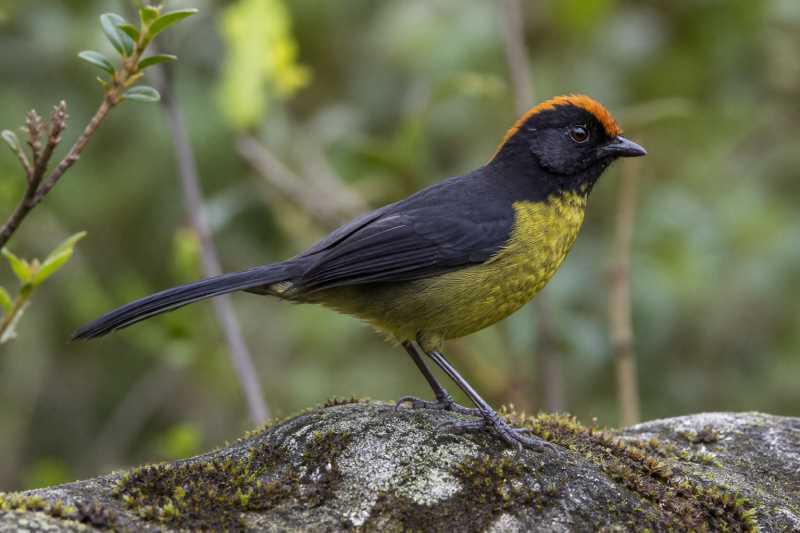
The Black-fronted Brushfinch is a medium-sized passerine bird, measuring approximately 17 to 18 centimeters in length. Its most distinguishing feature is the bold black mask that adorns its face, contrasting starkly with the olive-green to grayish plumage that covers the rest of its body. The wings and tail feathers exhibit subtle tones of brown, which aid in its camouflage within the dense foliage of its environment.
The bird’s eyes are a deep, expressive brown, and its stout, conical bill is perfectly adapted for its diet of seeds and small insects. The brushfinch’s legs are a pale gray, allowing it to perch comfortably on branches and navigate the forest floor with ease. Sexual dimorphism is minimal in this species, with males and females exhibiting similar plumage and size, which can make field identification challenging.
Habitat and Distribution
The Black-fronted Brushfinch is endemic to the montane forests of the Central Andes, primarily found in Colombia and Ecuador. It inhabits altitudes ranging from 1,500 to 3,000 meters above sea level, favoring areas with dense understory, which provide ample cover and foraging opportunities. These cloud forests, characterized by high humidity and a rich diversity of plant species, offer an ideal environment for the brushfinch to thrive.
The bird’s range is relatively restricted, confined to the eastern slopes of the Andes. This limited distribution has made the Black-fronted Brushfinch a focal point for conservation efforts, as its habitat is increasingly threatened by deforestation and land-use changes. Despite these challenges, the species has demonstrated some resilience, adapting to secondary growth and fragmented landscapes when necessary.
Behavioral Traits
Known for its elusive nature, the Black-fronted Brushfinch is more often heard than seen. Its song is a series of clear, melodious whistles that echo through the forest, serving both territorial and mating purposes. These vocalizations are integral to its social structure, helping to establish and maintain pair bonds, which are typically monogamous.
Foraging primarily on the ground or in low vegetation, the brushfinch’s diet consists of a mix of seeds, berries, and small arthropods. Its feeding habits play a crucial role in seed dispersal, contributing to the regeneration of its forest habitat. The bird’s movements are deliberate and cautious, a reflection of its need to remain vigilant against predators such as snakes and raptors.
Breeding occurs during the wet season when food resources are abundant. Nests are constructed low to the ground, often in dense shrubbery, providing protection from the elements and predators. Clutch sizes are generally small, with two to three eggs per nest. The incubation and fledging periods are relatively short, ensuring that the young are ready to face the challenges of the forest environment within a few weeks.
Conservation Status and Challenges
The International Union for Conservation of Nature (IUCN) currently lists the Black-fronted Brushfinch as a species of Least Concern, although its population is suspected to be declining. Habitat loss due to agricultural expansion, logging, and human settlement poses the greatest threat to this species. Furthermore, climate change may alter the delicate ecosystems of the Andes, affecting the availability of food and suitable nesting sites.
Conservation initiatives aimed at preserving the Black-fronted Brushfinch focus on habitat protection and restoration. Protected areas and national parks play a vital role in safeguarding the remaining tracts of cloud forest, while reforestation projects seek to reconnect fragmented habitats. Community engagement and education are also crucial, fostering a sense of stewardship among local populations who share their home with this avian gem.
Conclusion
The Black-fronted Brushfinch is more than just a bird; it is a symbol of the intricate web of life that flourishes in the Andean cloud forests. Its vibrant presence and ecological role underscore the importance of conserving these vital ecosystems. As we continue to grapple with global environmental challenges, the story of the Black-fronted Brushfinch serves as a reminder of the beauty and fragility of the natural world.
Preserving the habitats of species like the Black-fronted Brushfinch is not merely an act of conservation; it is an investment in the future of our planet’s biodiversity. By protecting this small yet significant bird, we take a step toward ensuring that future generations can marvel at the wonders of our natural heritage.
Related posts