The Enchanting World of the Festive Coquette (Lophornis chalybeus)
In the lush, vibrant landscapes of South America, particularly the forests and woodland edges of Brazil, Venezuela, and Colombia, resides one of nature’s most dazzling avian gems — the Festive Coquette (Lophornis chalybeus). This petite hummingbird, a member of the Trochilidae family, is renowned for its remarkable plumage and agile flight. Despite its small size, the Festive Coquette makes a significant impression with its striking appearance and fascinating behaviors.
Distinctive Features and Plumage
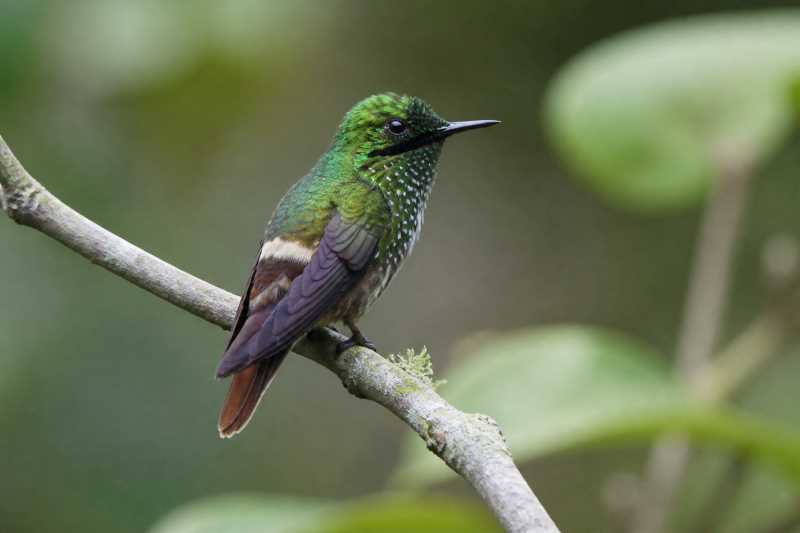
The Festive Coquette is a diminutive creature, measuring approximately 6 to 7 centimeters in length and weighing a mere 3 grams. Its size, however, does not diminish its beauty. This bird is adorned with iridescent plumage that shimmers in the sunlight, providing a visual spectacle that is both captivating and mesmerizing.
Male Festive Coquettes are particularly striking, with a gleaming green body, a rufous crest, and a prominent white band around their necks. Their crowns are a vibrant mix of green and bronze, and their tails boast a rich copper hue. The females, though less flamboyant, are equally enchanting with their green upperparts and white underparts, complemented by a subtle rufous wash on their flanks.
Behavior and Ecology
The Festive Coquette is known for its energetic and acrobatic flight, often seen darting swiftly among the foliage in search of nectar. Their primary diet consists of nectar from a variety of flowering plants, which they supplement with small insects and spiders to meet their protein needs. This diet not only sustains them but also plays a crucial role in pollination, making them vital contributors to their ecosystem.
These hummingbirds are solitary creatures, coming together only during the breeding season. Males perform elaborate courtship displays, showcasing their vibrant plumage and agility to attract females. Once mating occurs, the female takes on the responsibility of building the nest, incubating the eggs, and feeding the chicks.
Habitat and Distribution
The Festive Coquette prefers tropical and subtropical environments, thriving in forest edges, gardens, and areas with abundant flowering plants. Their distribution is largely tied to regions where these conditions are met, making them relatively common in certain areas of South America. However, habitat loss due to deforestation and urbanization poses a threat to their populations, emphasizing the need for conservation efforts to preserve their natural habitats.
Conservation Status
Currently, the Festive Coquette is listed as Least Concern by the International Union for Conservation of Nature (IUCN). However, like many species that depend on specific habitats, they face ongoing challenges from habitat destruction. Protecting forested areas and promoting biodiversity-friendly practices are essential to ensure the survival of these remarkable birds.
Human Interaction and Cultural Significance
The Festive Coquette, with its vibrant colors and dynamic presence, often captures the attention of birdwatchers and nature enthusiasts. In regions where they are found, these hummingbirds are celebrated for their beauty and grace. They also play a role in the cultural identity of the areas they inhabit, often featured in local art and folklore.
Conclusion
The Festive Coquette is a testament to the wonders of biodiversity and the intricate beauty of the natural world. As we continue to explore and appreciate these remarkable creatures, it is imperative that we also recognize our responsibility to protect and preserve their habitats. By supporting conservation efforts and promoting sustainable practices, we can ensure that future generations will have the opportunity to witness the dazzling display of the Festive Coquette in its natural environment.
In summary, the Festive Coquette is not just a bird; it is a symbol of the vibrant, interconnected ecosystems that make up our planet. Its presence enriches the environments it inhabits and inspires all who are fortunate enough to observe its festive display of colors and dynamic behavior.
Related posts