LeConte’s Sparrow: A Hidden Gem of North America’s Grasslands
The LeConte’s Sparrow, scientifically known as Ammospiza leconteii, is an elusive and enchanting bird that graces the grasslands of North America. Named after the American entomologist John Lawrence LeConte, this small sparrow is a fascinating subject for ornithologists and bird enthusiasts alike. Despite its relatively inconspicuous presence, the LeConte’s Sparrow offers a glimpse into the intricate ecosystems of the prairies and wetlands it inhabits.
Description and Identification
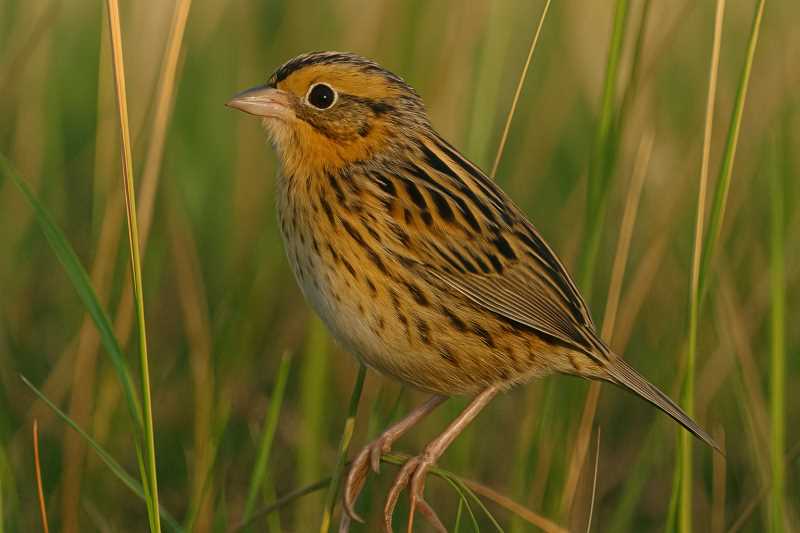
The LeConte’s Sparrow is a small bird, measuring approximately 5 inches in length with a wingspan of about 7 inches. Its plumage is a delicate blend of earthy tones, featuring a prominent buffy face with a grayish crown and a distinctive white median crown stripe. The back is adorned with a complex pattern of streaks, combining shades of brown and black that provide excellent camouflage in its natural habitat.
The bird’s underparts are a soft buff color, fading to white on the belly, while the wings display subtle bars of black and brown. One of its most notable features is its short tail, which, combined with its secretive nature, makes it a challenge to spot in the wild. The LeConte’s Sparrow’s song is a thin, insect-like trill, often described as a whisper in the wind, which adds to its mystique.
Habitat and Distribution
LeConte’s Sparrows are primarily found in the central and northern regions of North America. Their breeding grounds extend from the north-central United States into the southern provinces of Canada, including Alberta, Manitoba, and Saskatchewan. These birds favor wet meadows, sedge marshes, and grasslands, where they can find ample cover and food.
During the non-breeding season, LeConte’s Sparrows migrate to the southeastern United States, reaching as far as Florida and Texas. They prefer habitats that offer dense vegetation, such as tall grasses and marshes, which provide both protection from predators and abundant foraging opportunities.
Behavior and Diet
LeConte’s Sparrows are known for their elusive behavior, often skulking low in the grass and rarely flying unless disturbed. This secretive nature makes them a challenging species to observe and study in the wild. They are primarily ground foragers, feeding on a diet of seeds and insects. During the breeding season, their diet shifts more towards insects, which provide the necessary protein for raising their young.
These sparrows are solitary during the breeding season, with males establishing territories and singing to attract mates. Their nests are strategically concealed in dense vegetation, often built close to the ground and made of grasses and plant fibers. The female typically lays a clutch of 3 to 5 eggs, which she incubates for about 11 to 13 days.
Conservation Status
Currently, the LeConte’s Sparrow is classified as a species of Least Concern by the International Union for Conservation of Nature (IUCN). However, like many grassland birds, it faces threats from habitat loss and degradation. Agricultural expansion, urban development, and changes in land use have led to a decline in suitable habitats for these birds.
Conservation efforts are essential to ensure the survival of LeConte’s Sparrows and other grassland species. Initiatives such as preserving natural grasslands, restoring wetlands, and implementing sustainable agricultural practices can help protect these vital ecosystems and the unique wildlife they support.
Conclusion
The LeConte’s Sparrow may not be the most well-known bird, but its presence is a testament to the rich biodiversity of North America’s grasslands. Its subtle beauty and secretive nature make it a rewarding challenge for birdwatchers and a valuable indicator of the health of its habitat. By understanding and protecting the environments that support species like the LeConte’s Sparrow, we contribute to the conservation of the intricate web of life that defines our planet.
Whether you are an avid birder or a casual observer, the LeConte’s Sparrow offers an opportunity to connect with the natural world and appreciate the delicate balance of ecosystems that sustain us all.
Related posts