Introduction
In the rich and diverse avian world of Australia, the honeyeaters stand out as a captivating group of birds known for their vibrant plumage, melodious calls, and ecological significance. Among this fascinating group is Gilbert’s Honeyeater (Melithreptus chloropsis), a bird that not only enchants with its appearance but also plays a crucial role in its ecosystem. This article delves into the life, habitat, behavior, and conservation status of Gilbert’s Honeyeater, providing a comprehensive overview of this remarkable species.
Taxonomy and Nomenclature
Gilbert’s Honeyeater belongs to the family Meliphagidae, which is a diverse family of passerine birds commonly found in Australia and surrounding regions. The genus Melithreptus is known for its distinctive members, which are predominantly small to medium-sized honeyeaters. The specific epithet ‘chloropsis’ is derived from Greek, meaning ‘green appearance,’ a nod to the bird’s coloration.
Historically, the bird was considered a subspecies of the White-naped Honeyeater but was later elevated to a full species status due to distinct differences in vocalization, morphology, and distribution.
Physical Description
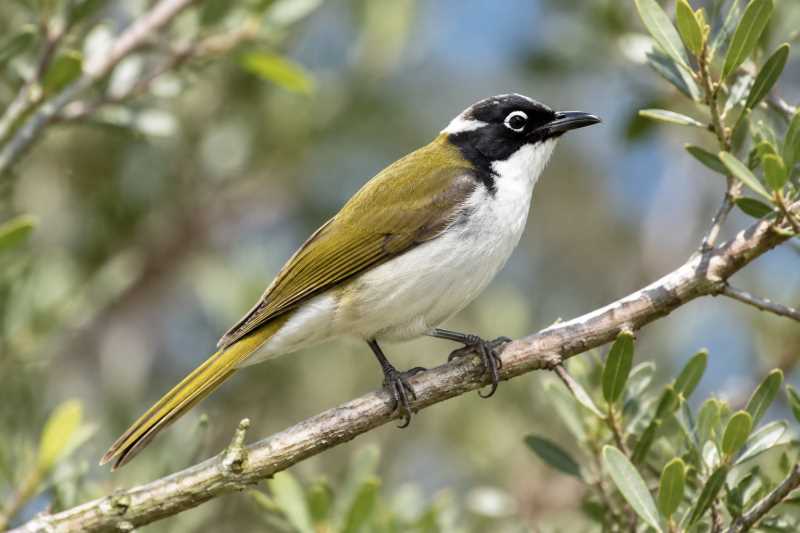
Gilbert’s Honeyeater is a medium-sized bird, measuring approximately 14-16 cm in length. It exhibits a striking plumage with olive-green upper parts, a white underbelly, and a distinctive black cap that extends from the crown to the nape. One of the most distinguishing features is the white band across the nape, which contrasts sharply with the bird’s black head.
The eyes are surrounded by a thin, pale blue ring, adding to its distinctive appearance. Both males and females are similar in appearance, though juveniles are generally duller with less pronounced markings.
Distribution and Habitat
Gilbert’s Honeyeater is primarily found in the southwest of Western Australia, inhabiting a range of environments from coastal woodlands to inland forests. The bird’s distribution is largely tied to the presence of Eucalyptus forests, where it finds both food and shelter.
These environments provide the honeyeater with ample opportunities to feed on nectar, which is its primary food source. The availability of flowering plants is crucial, and as such, the bird is often seen following seasonal blooms.
Diet and Feeding Habits
As with many honeyeaters, Gilbert’s Honeyeater has a specialized diet that mainly consists of nectar. It possesses a brush-tipped tongue that is perfectly adapted to extract nectar from flowers. This feeding behavior not only sustains the bird but also facilitates the pollination of various plant species.
In addition to nectar, the honeyeater occasionally feeds on insects and spiders, especially during breeding seasons when protein is essential for the growth of chicks. This opportunistic feeding strategy allows it to thrive in its natural habitat.
Behavior and Social Structure
Gilbert’s Honeyeater is known for its highly active and social nature. It is often seen in small groups, particularly during feeding excursions. This social behavior is thought to enhance foraging efficiency and provide protection against predators.
Vocalizations are an integral part of its behavior, with a variety of calls used for communication among flock members. These calls are not just for maintaining group cohesion but also play a role in territorial defense.
Breeding and Reproduction
The breeding season for Gilbert’s Honeyeater typically occurs from late winter to early spring, aligning with the abundance of food resources. During this time, males engage in elaborate displays to attract females, which include vocal performances and physical displays.
Nests are constructed in trees or shrubs, often using bark, leaves, and spider webs to create a sturdy structure. The female lays 2-3 eggs, which she incubates for about two weeks. Both parents are involved in feeding and caring for the chicks until they fledge, usually within three weeks.
Conservation Status
Currently, Gilbert’s Honeyeater is listed as a species of least concern, thanks to its relatively stable population. However, ongoing threats such as habitat destruction, climate change, and competition with invasive species could pose significant challenges in the future.
Conservation efforts are focused on preserving native habitats and ensuring the availability of food resources. Public awareness and habitat restoration projects are crucial to maintaining healthy populations of Gilbert’s Honeyeater.
The Role of Citizen Science
Citizen science initiatives have played a significant role in monitoring the populations and distribution of Gilbert’s Honeyeater. Birdwatchers and nature enthusiasts contribute valuable data that aids researchers in tracking changes in the bird’s range and population dynamics.
Such community-driven efforts are vital for effective conservation strategies, as they provide real-time data that can inform policy and habitat management decisions.
Conclusion
Gilbert’s Honeyeater is a testament to the intricate beauty and ecological importance of Australia’s avian fauna. Its role as a pollinator underscores the interconnectedness of ecosystems and the need for conservation efforts to protect these fragile environments.
As we continue to study and appreciate Gilbert’s Honeyeater, it remains a symbol of the natural heritage of Western Australia, reminding us of the delicate balance that sustains life on our planet.
Through continued research, conservation, and public engagement, we can ensure that this remarkable species continues to thrive for generations to come.
Related posts