Northern Bentbill: A Fascinating Avian Species of Central America
The Northern Bentbill (Oncostoma cinereigulare) is a small passerine bird that belongs to the family Tyrannidae, often referred to as tyrant flycatchers. This intriguing bird is native to the tropical forests of Central America, where it plays a vital role in the ecosystem. Known for its distinctive appearance and behaviors, the Northern Bentbill is a subject of interest for ornithologists and bird enthusiasts alike.
Taxonomy and Etymology
The Northern Bentbill was first described scientifically in the mid-19th century. The genus name, *Oncostoma*, reflects the bird’s unique bill shape, with ‘onco’ meaning hooked and ‘stoma’ meaning mouth in Greek. The species name, *cinereigulare*, is derived from Latin, with ‘cinereus’ meaning ash-colored and ‘gularis’ referring to the throat, highlighting the bird’s ash-gray throat patch.
Physical Characteristics
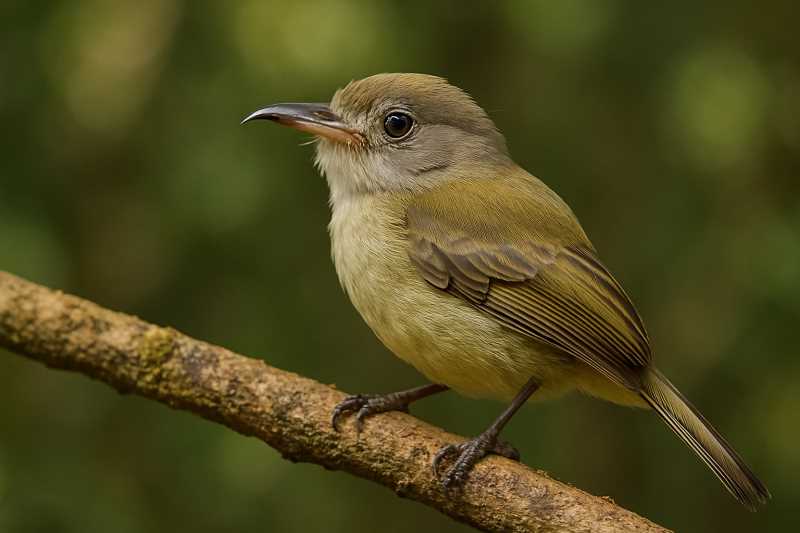
The Northern Bentbill is a diminutive bird, measuring about 10-12 cm in length and weighing approximately 7-9 grams. Its plumage is primarily olive-green, which provides excellent camouflage in its forested habitat. The bird’s most distinctive feature is its slightly upturned bill, which is short and stout, adapted for its insectivorous diet. The bill’s unique shape gives the Northern Bentbill its name and sets it apart from other flycatchers.
The bird’s underparts are a lighter yellowish-green, and it has a conspicuous ash-gray throat patch. Its eyes are dark, and it possesses a faint eye-ring that enhances its alert appearance. The wings are rounded, and the tail is relatively short, aiding in its agile flight through dense foliage.
Habitat and Distribution
The Northern Bentbill inhabits the lowland tropical forests of Central America, ranging from southern Mexico through Belize, Guatemala, Honduras, Nicaragua, and into Costa Rica. This species is primarily found in humid tropical and subtropical forests, often near water bodies like rivers and streams.
The bird is most commonly seen in the understory and mid-story layers of the forest, where it actively forages for insects. Its preference for dense, humid environments makes it a specialist species, adapted to thrive in the rich biodiversity of Central American forests.
Behavior and Diet
The Northern Bentbill is an insectivore, feeding mainly on small insects and arthropods. It employs a ‘sallying’ foraging technique, which involves perching on a branch and darting out to catch prey in mid-air, a behavior typical of many flycatchers. This active foraging method requires keen eyesight and agile flight, both of which the Northern Bentbill possesses.
In addition to sallying, the Northern Bentbill also gleans insects from foliage, demonstrating versatility in its feeding behaviors. Its diet consists of various insects, including beetles, flies, and caterpillars, which it captures with precision using its uniquely shaped bill.
The Northern Bentbill is also known for its vocalizations, which include a series of high-pitched, thin whistles. These calls are used primarily during the breeding season to attract mates and establish territory.
Breeding and Reproduction
The breeding season for the Northern Bentbill typically occurs from March to June, coinciding with the onset of the rainy season in its range. The species is monogamous, with pairs forming long-term bonds. During courtship, males perform aerial displays and vocalize to attract females.
Nest building is a joint effort, with both male and female participating in the construction of a small, cup-shaped nest. The nest is usually situated in a low shrub or tree, concealed within dense foliage to protect it from predators. The female typically lays 2-3 eggs, which are incubated by both parents for about 15-17 days.
Once hatched, the chicks are altricial, meaning they are born blind and helpless. Both parents share the responsibility of feeding and caring for the young, providing a steady diet of insects. Fledging occurs approximately 13-15 days after hatching, with the young birds remaining dependent on their parents for a few additional weeks as they learn to forage independently.
Conservation Status and Threats
The Northern Bentbill is currently classified as Least Concern by the International Union for Conservation of Nature (IUCN). Despite this relatively secure status, the species faces several threats, primarily due to habitat loss and degradation. Deforestation for agriculture, logging, and human development are significant concerns that impact the Northern Bentbill’s habitat.
Conservation efforts aimed at preserving tropical forests are crucial for the continued survival of the Northern Bentbill and countless other species that share its habitat. Protected areas and sustainable land management practices can help mitigate the effects of habitat loss and ensure the conservation of this unique bird.
Conclusion
The Northern Bentbill is a remarkable species that exemplifies the rich biodiversity of Central America’s tropical forests. Its unique adaptations, from its distinctive bill to its agile foraging techniques, make it a fascinating subject for study and observation. As conservation efforts continue to focus on preserving critical habitats, the Northern Bentbill serves as a reminder of the intricate connections within ecosystems and the importance of protecting them for future generations.
Related posts