The Enchanting Philippine Trogon: A Jewel of the Jungle
The Philippine Trogon (Harpactes ardens) is a remarkable bird species that captivates ornithologists and bird enthusiasts alike with its vivid plumage and elusive nature. As a member of the Trogonidae family, this bird is endemic to the Philippines, making it a unique and vital component of the archipelago’s rich biodiversity. In this article, we delve into the fascinating world of the Philippine Trogon, exploring its habitat, behavior, conservation status, and the challenges it faces in its natural environment.
Habitat and Distribution
The Philippine Trogon inhabits the lush tropical and subtropical forests of the Philippine archipelago. Its range includes several islands, such as Luzon, Mindanao, Samar, and Leyte, where it thrives in both primary and secondary forests. These birds prefer lowland and montane forests, typically residing at elevations ranging from sea level to about 2,000 meters. Their preference for dense, mature forests makes them particularly vulnerable to habitat destruction, which poses a significant threat to their survival.
The dense canopy and understory of these forests provide the Philippine Trogon with ample resources and protection. These birds are often found perched quietly among the foliage, making them challenging to spot despite their bright coloration. Their presence is more often detected by their distinctive calls, which echo through the forest.
Physical Characteristics
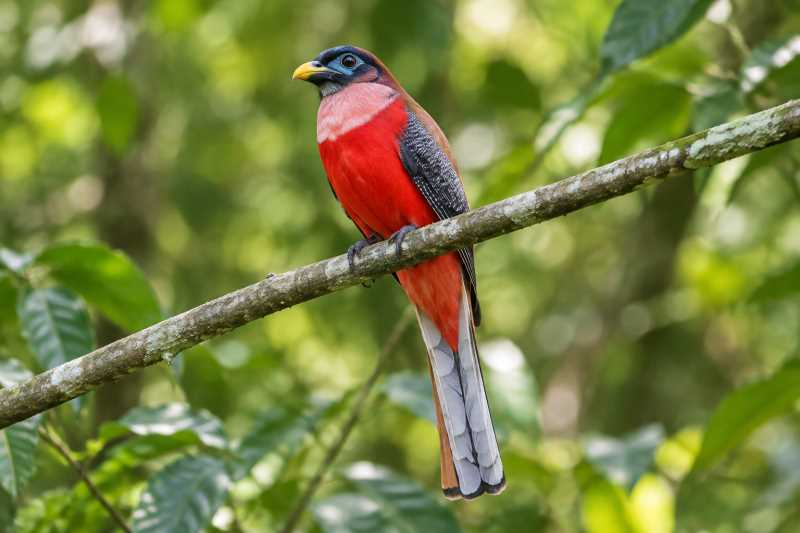
The Philippine Trogon is a medium-sized bird, measuring about 25-28 centimeters in length. One of its most striking features is its vibrant plumage, which varies slightly between males and females. The male Philippine Trogon boasts a vivid crimson breast and belly, complemented by a contrasting black head and upperparts. The wings are adorned with a pattern of black and white, adding a touch of elegance to its appearance. In contrast, the female exhibits a more subdued coloration, with a brownish head and upperparts, while retaining the bright red underparts.
Both sexes share the characteristic broad, square-shaped tail, which is dark with white tips. Their eyes are encircled by a conspicuous blue ring, adding another layer of intrigue to their already striking appearance. The combination of their vibrant colors and unique markings makes them a true spectacle in the wild.
Behavior and Diet
Philippine Trogons are known for their solitary and sedentary nature. They are often seen perched motionlessly on branches, scanning their surroundings for food. Their diet primarily consists of insects, particularly beetles, caterpillars, and grasshoppers. They also consume small fruits, which they pluck from trees and shrubs. This dietary flexibility allows them to adapt to varying food availability in their forest habitats.
Trogons employ a sit-and-wait hunting strategy, remaining still until prey comes into view. Once a target is identified, they swoop down with precision to capture it. This foraging behavior, combined with their excellent camouflage, makes them efficient predators despite their seemingly laid-back demeanor.
Breeding and Nesting
The breeding season of the Philippine Trogon typically occurs from March to June, coinciding with the onset of the rainy season in the Philippines. During this time, males engage in courtship displays, showcasing their vibrant plumage to attract potential mates. These displays often involve a series of calls and visual displays, including tail fanning and wing flicking.
Philippine Trogons are cavity nesters, utilizing natural tree cavities or abandoned woodpecker holes for nesting. The female lays a clutch of two to three eggs, which are incubated by both parents. The incubation period lasts about 17-19 days, after which the chicks hatch. Both parents are actively involved in feeding and caring for the young until they fledge, typically after 16-18 days.
Conservation Status and Challenges
The Philippine Trogon is currently classified as "Near Threatened" by the International Union for Conservation of Nature (IUCN). The primary threat to this species is habitat loss due to deforestation, driven by logging, agriculture, and urban expansion. The degradation of their forest habitats severely impacts their ability to find food and suitable nesting sites, leading to population declines.
Conservation efforts are crucial to ensuring the survival of the Philippine Trogon. Protecting and restoring their natural habitats through sustainable forest management practices is vital. Additionally, raising awareness about the importance of preserving the Philippines’ unique biodiversity can foster community engagement in conservation initiatives.
Efforts by local and international conservation organizations have been instrumental in promoting the protection of critical habitats and implementing measures to mitigate habitat destruction. Continued research and monitoring are essential to understanding the population dynamics and ecological requirements of the Philippine Trogon, enabling more effective conservation strategies.
Conclusion
The Philippine Trogon is a captivating symbol of the Philippines’ rich natural heritage. Its vibrant plumage, elusive nature, and unique ecological role underscore the importance of conserving this remarkable species. By protecting their habitats and addressing the threats they face, we can ensure that future generations will continue to marvel at the beauty and wonder of the Philippine Trogon.
In conclusion, the Philippine Trogon is not just a bird; it is a testament to the intricate and fragile balance of life within the forests of the Philippines. Its conservation is not only essential for maintaining biodiversity but also for preserving the ecological integrity of the region.
Related posts