The Enigmatic Malayan Black Magpie: A Jewel of Southeast Asia
The lush, verdant forests of Southeast Asia are home to a plethora of remarkable avian species, each exhibiting unique characteristics that captivate bird enthusiasts and ornithologists alike. Among these, the Malayan Black Magpie, scientifically known as *Platysmurus leucopterus*, stands out as a particularly intriguing species due to its striking appearance and fascinating behaviors. This article delves into the various aspects of the Malayan Black Magpie, from its distinctive features to its ecological significance.
Physical Characteristics
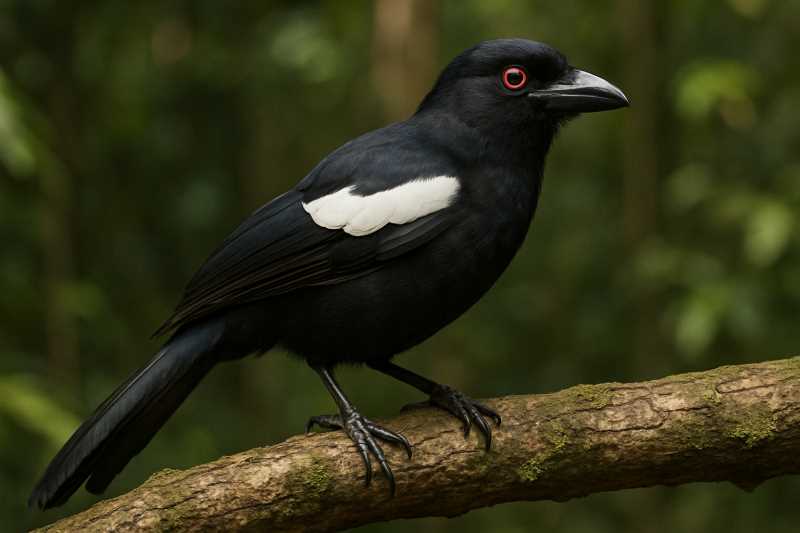
The Malayan Black Magpie is a visually striking bird, easily identifiable by its glossy black plumage that shimmers with a subtle iridescence under the sunlight. This magpie is medium-sized, typically measuring about 40-45 centimeters in length, including its long tail. One of the most distinctive features of this bird is its contrasting white wing patches, which are most visible when the bird is in flight and create a dramatic display against the backdrop of its otherwise dark feathers. Additionally, the bird possesses a stout bill and strong legs, both of which are adapted to its omnivorous diet and arboreal lifestyle.
Habitat and Distribution
The Malayan Black Magpie is native to the lowland and montane forests of Southeast Asia, with its range extending across the Malaysian Peninsula, Borneo, and Sumatra. It thrives in a variety of forested habitats, including primary and secondary forests, as well as forest edges and clearings. This adaptability to different forest types and conditions is indicative of the bird’s resilience and resourcefulness in the face of habitat changes.
Behavior and Diet
This magpie is a highly social bird, often found in small, noisy groups that move through the forest in search of food. Its diet is omnivorous, consisting of a variety of insects, fruits, seeds, and occasionally small vertebrates. The Malayan Black Magpie is known for its inquisitive nature and intelligence, traits that are common among corvids. These birds often engage in playful behavior and are known to use tools, a testament to their cognitive abilities.
The vocalizations of the Malayan Black Magpie are another notable aspect of its behavior. The bird’s calls are varied and complex, ranging from harsh cackles to melodious whistles. These vocalizations serve multiple purposes, including communication within groups, territorial defense, and mate attraction. The magpie’s ability to mimic other bird species adds yet another layer to its vocal repertoire, showcasing its adaptability and intelligence.
Reproduction and Lifespan
During the breeding season, which typically occurs between March and June, the Malayan Black Magpie engages in elaborate courtship displays. These displays involve a combination of vocalizations, plumage fluffing, and wing flicking to attract potential mates. Once a pair is formed, they work together to build a cup-shaped nest high in the forest canopy, using twigs, leaves, and other plant materials.
The female typically lays a clutch of two to four eggs, which both parents take turns incubating. After the eggs hatch, the chicks are altricial, meaning they are born blind and helpless, requiring substantial parental care. Both parents participate in feeding and nurturing the young until they fledge, which usually occurs after about three weeks. In the wild, the Malayan Black Magpie can live for up to 10 years, though this can vary based on environmental factors and predation pressures.
Conservation Status
The Malayan Black Magpie is currently listed as “Least Concern” on the IUCN Red List, reflecting its relatively stable population across its range. However, like many forest-dependent species, it faces potential threats from habitat loss due to logging, agriculture, and urban expansion. Conservation efforts aimed at preserving and restoring forest habitats are crucial to ensuring the long-term survival of this species.
Ecological Significance
As both predators and prey, Malayan Black Magpies play an important role in their ecosystem. By controlling insect populations and dispersing seeds through their feeding activities, they contribute to the health and diversity of their forest habitats. Additionally, as a part of the corvid family, they are considered indicators of forest health, with their presence often signaling a rich and balanced ecosystem.
Conclusion
The Malayan Black Magpie is a remarkable bird that embodies the beauty and complexity of Southeast Asia’s avian biodiversity. Its striking appearance, intelligent behavior, and adaptability make it a fascinating subject for study and admiration. As we continue to explore and understand the intricate dynamics of forest ecosystems, the Malayan Black Magpie serves as a reminder of the delicate balance that sustains these environments and the importance of preserving them for future generations.
Whether observed in the wild or studied through research, the Malayan Black Magpie remains a symbol of the vibrant and diverse life that thrives within the forests of Southeast Asia, captivating all who have the privilege to encounter it.
Related posts