Milne-Edwards’s Sifaka: A Detailed Exploration of the Enigmatic Lemur
Introduction
Milne-Edwards’s Sifaka, scientifically known as Propithecus edwardsi, is an intriguing primate species native to the island of Madagascar. These lemurs are a testament to the island’s rich biodiversity and unique evolutionary history. Named after the French zoologist Alphonse Milne-Edwards, this species of sifaka is a member of the family Indriidae. Known for their distinctive leaping abilities and social structures, Milne-Edwards’s Sifakas play a crucial role in the ecosystems they inhabit. In this comprehensive article, we delve into the captivating world of Milne-Edwards’s Sifaka, exploring their physical characteristics, habitat, behavior, and the conservation challenges they face.
Physical Description
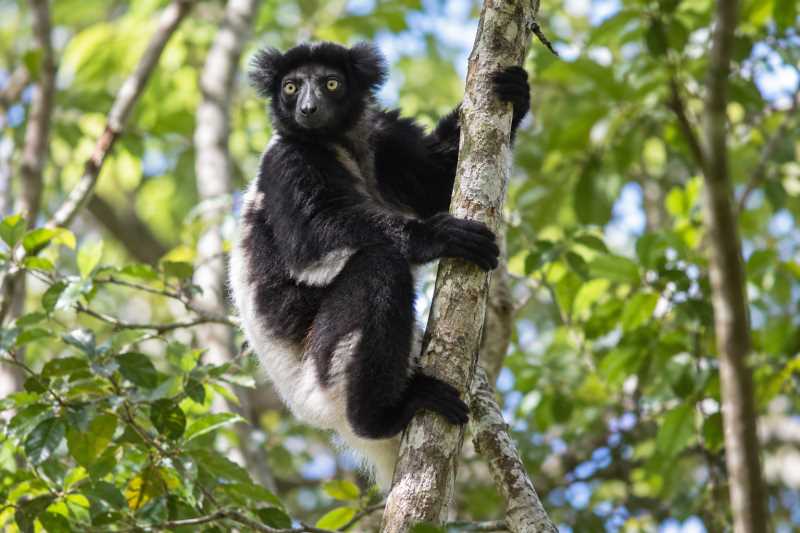
Milne-Edwards’s Sifaka is a medium-sized lemur, with a body length ranging from 45 to 55 centimeters and a tail that is almost equal in length. Adult sifakas typically weigh between 5 and 6 kilograms. Their fur is usually dense and soft, displaying a striking combination of black and white colors, with some individuals exhibiting brownish or cream tones. The face is predominantly black, accented by starkly contrasting silver-gray fur that frames it. One of the species’ most distinctive features is its large, expressive eyes, which are adapted for their arboreal lifestyle and nocturnal habits.
The limbs of Milne-Edwards’s Sifaka are long and powerful, designed for an arboreal lifestyle that requires leaping between trees. Their hands and feet have evolved to provide a strong grip, aiding in their ability to navigate the forest canopy with agility and precision. The combination of these physical attributes makes them perfectly suited for life in the dense forests of Madagascar.
Range and Habitat
Milne-Edwards’s Sifaka is endemic to the eastern rainforests of Madagascar, a region known for its lush biodiversity and unique ecosystems. These lemurs are found in a range of altitudes, from lowland rainforests to montane forests, typically at elevations between 600 to 1,600 meters. Their distribution primarily covers the Ranomafana and Andringitra National Parks, where the dense forest canopy provides both food and shelter.
The habitat of Milne-Edwards’s Sifaka is characterized by high rainfall, which supports a diverse array of plant and animal life. The forests are rich in fruit-bearing trees, a crucial aspect of the sifaka’s diet, and provide ample opportunities for shelter and nesting. However, their habitats are increasingly threatened by human activities such as logging, slash-and-burn agriculture, and mining, which are leading to habitat fragmentation and loss.
Behavior and Diet
Milne-Edwards’s Sifaka exhibits fascinating behavioral traits, characterized by their social structures and dietary preferences. These lemurs are diurnal and arboreal, spending most of their lives in the trees. They live in small family groups, typically consisting of 3 to 9 individuals, with a social hierarchy led by a dominant female. Group interactions are marked by grooming, vocalizations, and play, which help to strengthen social bonds.
Their diet is primarily folivorous, consisting of leaves, fruits, flowers, and bark. They have a preference for young leaves and often rely on specific tree species for food, which makes their survival closely linked to the health of their forest environment. During the dry season, when food is scarce, they may resort to eating more fibrous plant material.
Identification Tips (Field Recognition Cues)
When attempting to identify Milne-Edwards’s Sifaka in the wild, there are several key features to look for:
- Coloration: Look for their distinctive black face contrasted with lighter fur on the body, often with a mix of black, white, and brown.
- Size and Shape: Medium-sized with a long tail, large eyes, and robust limbs.
- Vocalizations: Listen for their unique calls, which include grunts, growls, and a distinctive alarm call.
- Movement: Watch for their characteristic leaping movements, as they are known for their ability to jump long distances between trees.
- Group Behavior: Observe their social interactions, as they are often found in small family groups engaging in grooming and playing.
Conservation Status (With Threats and Protections)
Milne-Edwards’s Sifaka is currently listed as Endangered on the IUCN Red List. The primary threats to their survival include habitat destruction due to deforestation, agricultural expansion, and illegal logging. Additionally, hunting and trapping for bushmeat pose significant threats in some areas.
Conservation efforts are underway to protect this species, focusing on habitat preservation and the establishment of protected areas such as national parks. Organizations are working to raise awareness among local communities about the importance of conservation and sustainable land use practices. Ecotourism is also being promoted as a means to generate income while protecting the natural habitat of these unique lemurs.
Frequently Asked Questions
What is Milne-Edwards’s Sifaka?
Milne-Edwards’s Sifaka is a species of lemur native to Madagascar, known for its distinctive black and white coloration and powerful leaping ability.
Where can Milne-Edwards’s Sifaka be found?
These lemurs are found in the eastern rainforests of Madagascar, particularly in areas like Ranomafana and Andringitra National Parks.
What do Milne-Edwards’s Sifakas eat?
Their diet primarily consists of leaves, fruits, flowers, and bark, with a preference for young leaves and specific tree species.
How does Milne-Edwards’s Sifaka move?
They are known for their impressive leaping ability, using their strong limbs to jump long distances between trees in the forest canopy.
Why is Milne-Edwards’s Sifaka endangered?
The species is endangered primarily due to habitat destruction from deforestation, agriculture, and illegal logging, as well as hunting in some areas.
Related posts