The Elusive Grey-breasted Crake: A Comprehensive Study
The Grey-breasted Crake (Laterallus exilis) is a small, secretive bird that thrives in the dense, marshy environments of the Neotropics. Though not as widely recognized as some of its avian relatives, the Grey-breasted Crake plays a crucial role in its ecosystem. This article delves into the various facets of this elusive species, covering its habitat, behavior, diet, reproduction, conservation status, and more.
Taxonomy and Classification
The Grey-breasted Crake belongs to the family Rallidae, which includes other crakes, rails, and coots. Its scientific name, Laterallus exilis, reflects its diminutive size and elusive nature. The species was first described in the 19th century, and since then, it has intrigued ornithologists and bird watchers alike due to its secretive lifestyle and limited visibility in the wild.
Physical Description
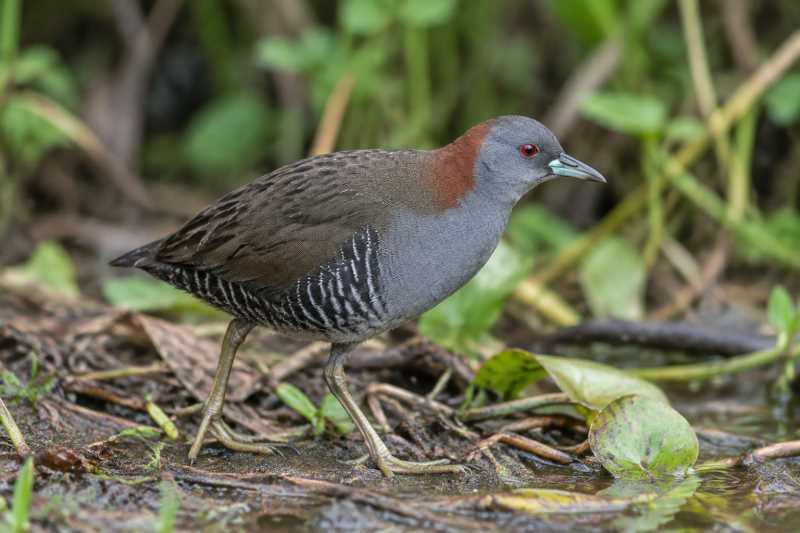
Despite its small size, measuring about 12 to 14 centimeters in length, the Grey-breasted Crake is a distinctive bird. It features a subdued yet charming plumage, characterized by a grey breast and a contrasting rufous-brown back. Its underparts are typically white, with subtle barring on the flanks. The bird’s slender bill and legs are perfectly adapted for navigating its marshy habitat.
Habitat and Distribution
The Grey-breasted Crake is primarily found in the lowland regions of Central and South America, ranging from southern Mexico through Central America to parts of northern Argentina and Brazil. The species prefers dense, wetland environments such as marshes, swamps, and wet grasslands, where it can easily forage for food and seek refuge from predators.
These marshy habitats provide an abundance of food resources and shelter, making them ideal for the Grey-breasted Crake. However, the bird’s reliance on these specific environments also makes it vulnerable to habitat degradation and loss, a concern that is increasingly pressing in the face of human development and climate change.
Behavior and Ecology
The Grey-breasted Crake is a primarily solitary bird, known for its shy and secretive behavior. It is more often heard than seen, with its distinctive ‘tic-tic-tic’ call serving as a key identifier in the dense underbrush where it resides. The bird’s behavior is largely dictated by its need to remain inconspicuous, avoiding predators while foraging for food.
Feeding primarily on invertebrates, the Grey-breasted Crake uses its slender bill to pick insects, worms, and other small creatures from the substrate. Its diet also occasionally includes seeds and small aquatic plants, making it an opportunistic feeder well-adapted to its marshy environment.
Reproduction and Lifespan
The breeding habits of the Grey-breasted Crake are not as well-documented as those of more conspicuous birds. However, it is known that they build their nests close to the ground, hidden among reeds and other vegetation to avoid detection. The nests are typically constructed from grasses and other marsh plants, providing a secure environment for the eggs.
Clutch sizes tend to be small, usually consisting of two to four eggs. Both parents are involved in incubation and feeding of the young, which are precocial and capable of leaving the nest shortly after hatching. The exact lifespan of the Grey-breasted Crake in the wild is not well-documented, but like many small birds, it is likely to be relatively short.
Conservation Status
Currently, the Grey-breasted Crake is classified as Least Concern by the International Union for Conservation of Nature (IUCN). While this status suggests that the species is not immediately at risk of extinction, it does not mean that the bird is free from threats. Habitat destruction, particularly the draining and conversion of wetlands for agriculture and urban development, poses a significant threat to its populations.
Conservation efforts are essential to ensure that the Grey-breasted Crake continues to thrive. Protecting wetlands and implementing sustainable land management practices are crucial steps in conserving this and other similarly affected species. Additionally, further research into their ecology and behavior can aid in the development of targeted conservation strategies.
Research and Observation
Studying the Grey-breasted Crake presents unique challenges due to its elusive nature. Researchers often rely on vocalizations to locate and study these birds, as direct observation is rare. Advances in technology, such as bioacoustic monitoring and remote sensing, have opened new avenues for studying elusive species like the Grey-breasted Crake without disturbing their natural behavior.
Citizen science initiatives also play a role in gathering data on the Grey-breasted Crake. Enthusiastic bird watchers and amateur ornithologists contribute valuable information about sightings and behaviors, enriching the scientific community’s understanding of this secretive bird.
Conclusion
The Grey-breasted Crake is a testament to the diversity and complexity of avian life in the Neotropics. While it may not capture the same attention as more flamboyantly colored or larger birds, its role in maintaining the health of wetland ecosystems is undeniable. Continued research and conservation efforts are vital to ensure that this elusive bird remains a part of our natural world for generations to come.
In a world where many species face the threat of extinction, understanding and appreciating the subtle charms of birds like the Grey-breasted Crake can inspire more comprehensive conservation efforts. By protecting the habitats they call home, we safeguard not only the Grey-breasted Crake but the multitude of species that share its environment, preserving the intricate web of life that sustains us all.
Related posts