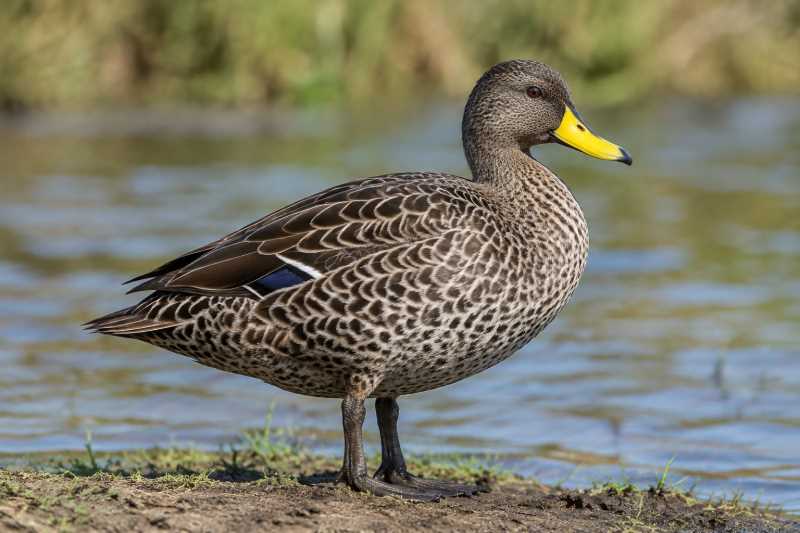
The Yellow-billed Duck (Anas undulata) is a captivating species of waterfowl native to the serene wetlands of sub-Saharan Africa. This medium-sized duck, with its striking yellow bill, is a beloved sight for birdwatchers and wildlife enthusiasts alike. Its adaptability and resilience in various habitats make it a fascinating subject for ornithologists and conservationists.
Physical Characteristics
The Yellow-billed Duck is easily identifiable by its distinctive bright yellow bill, which contrasts with its predominantly dark plumage. The duck’s body is mottled with shades of brown and grey, offering effective camouflage in its natural environment. The wings display a subtle iridescent green speculum, which is more visible during flight. Adult Yellow-billed Ducks typically measure between 51 and 58 cm in length, with a wingspan ranging from 81 to 94 cm.
Habitat and Distribution
This species is widely distributed across sub-Saharan Africa, thriving in a variety of freshwater habitats including lakes, rivers, marshes, and ponds. The Yellow-billed Duck is particularly abundant in regions with ample aquatic vegetation, which provides both food and protection. Although primarily sedentary, some populations may undertake local seasonal movements in response to changing water levels and food availability.
Feeding Habits
The Yellow-billed Duck is an omnivorous feeder, with a diet that includes aquatic plants, seeds, insects, and small aquatic animals. Its feeding behavior is characterized by dabbling and upending in shallow waters, where it filters food items from the water using its specialized bill. The duck’s adaptability in its diet allows it to thrive in a range of environmental conditions, contributing to its widespread presence across the continent.
Breeding and Reproduction
Yellow-billed Ducks are monogamous and typically breed during the wet season when food resources are abundant. The female constructs a well-concealed nest in dense vegetation close to water. Clutches generally consist of 6 to 12 eggs, with the female solely responsible for incubation over a period of about 26 to 30 days. Ducklings are precocial and leave the nest shortly after hatching, though they remain under the watchful care of the female until they fledge at around 8 weeks of age.
Conservation Status
The Yellow-billed Duck is currently classified as Least Concern by the International Union for Conservation of Nature (IUCN). Its extensive range and large population size contribute to its favorable conservation status. However, like many waterfowl species, it faces threats from habitat loss, pollution, and hunting. Wetland conservation efforts and sustainable management practices are crucial to ensuring the continued survival of this species.
Role in Ecosystem
As a part of the ecosystem, the Yellow-billed Duck plays a vital role in maintaining the health of wetland environments. Its feeding activities help control aquatic plant growth and insect populations, while its droppings contribute to nutrient cycling within these ecosystems. Additionally, the presence of Yellow-billed Ducks can serve as an indicator of wetland health, highlighting the importance of preserving these habitats for future generations.
Human Interaction and Cultural Significance
The Yellow-billed Duck holds cultural significance in some African communities, where it is often featured in local folklore and traditional stories. Birdwatchers and ecotourists are drawn to regions where these ducks are found, contributing to local economies through wildlife tourism. Responsible tourism practices and community-based conservation initiatives can help protect the Yellow-billed Duck and its habitat, ensuring that future generations can continue to appreciate this remarkable species.
Conclusion
The Yellow-billed Duck is a resilient and adaptable species that plays an integral role in the ecosystems of sub-Saharan Africa. While its current conservation status is stable, ongoing efforts to protect wetland habitats and mitigate threats are essential for its continued survival. As both a biological marvel and a cultural treasure, the Yellow-billed Duck serves as a reminder of the rich biodiversity that our planet holds and the responsibility we bear to preserve it.
Related posts