Introduction
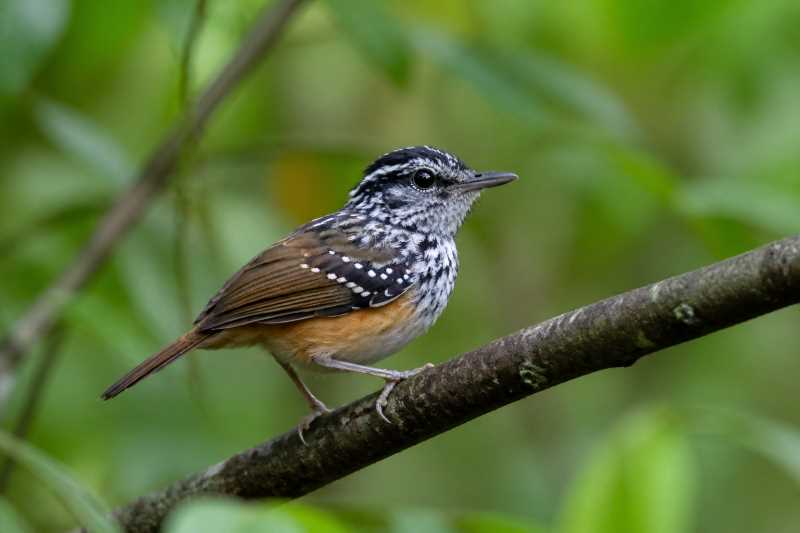
The Spix’s Warbling Antbird, scientifically known as Hypocnemis striata, is a captivating avian species that inhabits the dense forests of the Amazon Basin. This bird is a member of the Thamnophilidae family, which is renowned for its diverse species known as antbirds. Named after the German naturalist Johann Baptist von Spix, the Spix’s Warbling Antbird is distinguished by its melodious vocalizations and distinctive plumage.
Taxonomy and Classification
The Spix’s Warbling Antbird belongs to the order Passeriformes, which encompasses more than half of all bird species. Within this order, the family Thamnophilidae comprises approximately 230 species. The genus Hypocnemis includes several species of antbirds, among which the Spix’s Warbling Antbird is particularly noted for its unique vocal patterns and territorial behavior.
Physical Characteristics
The Spix’s Warbling Antbird is a small bird, measuring approximately 12 to 13 centimeters in length. It exhibits sexual dimorphism, with males and females displaying distinct plumage. Males typically have a striking black and white pattern on their heads, while their bodies are adorned with shades of brown and gray. Females, on the other hand, are generally less vividly colored, presenting a more subdued palette of browns and grays.
One of the most remarkable features of the Spix’s Warbling Antbird is its vibrant song, which consists of a series of melodious warbles and trills. These vocalizations play a crucial role in communication, territory defense, and mate attraction.
Habitat and Distribution
The Spix’s Warbling Antbird is predominantly found in the lowland rainforests of the Amazon Basin, spanning countries such as Brazil, Peru, Colombia, and Bolivia. It thrives in dense, humid environments, often inhabiting the understory layer of the forest. This bird is highly adapted to its habitat, relying on the rich biodiversity of the Amazon for sustenance and shelter.
Behavior and Ecology
The Spix’s Warbling Antbird is primarily insectivorous, feeding on a diverse array of arthropods, including ants, beetles, and spiders. It employs a foraging strategy known as "gleaning," where it meticulously searches leaves and branches for prey. This method allows the bird to exploit the abundant resources of its habitat efficiently.
Territorial behavior is a prominent aspect of the Spix’s Warbling Antbird’s ecology. Males are particularly aggressive in defending their territories, using their vocalizations to warn off intruders and establish dominance. These vocal displays are not only a means of asserting territory but also a critical component of courtship rituals.
Reproduction and Lifespan
Breeding in the Spix’s Warbling Antbird is typically synchronized with the rainy season, which ensures an ample food supply for raising young. The species is monogamous, with pairs forming strong bonds that often last multiple breeding seasons. Nests are constructed in dense vegetation and are meticulously camouflaged to protect the eggs and chicks from predators.
Clutch size is generally small, with females laying two to three eggs per breeding season. Both parents share the responsibilities of incubation and chick rearing, demonstrating a high degree of parental investment. Despite these efforts, predation and environmental factors often result in high chick mortality rates.
Conservation Status
Currently, the Spix’s Warbling Antbird is listed as a species of "Least Concern" by the International Union for Conservation of Nature (IUCN). However, like many species in the Amazon, it faces threats from habitat destruction and deforestation. The ongoing expansion of agriculture, logging, and infrastructure development poses significant risks to the delicate ecosystems of the Amazon Basin.
Conservation efforts aimed at preserving the Amazon rainforest are crucial for the long-term survival of the Spix’s Warbling Antbird and countless other species. Initiatives such as protected areas, sustainable land-use practices, and community-based conservation programs are essential in mitigating the impacts of human activities.
Cultural and Scientific Significance
The Spix’s Warbling Antbird holds cultural significance for indigenous communities in the Amazon, where it is often regarded as a symbol of the rich biodiversity of the region. Scientifically, the species serves as an indicator of ecosystem health, providing valuable insights into the dynamics of rainforest ecosystems.
Research on the Spix’s Warbling Antbird contributes to our understanding of avian evolution, particularly in relation to vocal communication and speciation. Studies have highlighted the role of geographic isolation and environmental factors in shaping the evolutionary trajectory of the species.
Conclusion
The Spix’s Warbling Antbird is a remarkable example of the intricate relationships that define the Amazon rainforest. Its vibrant song, unique behaviors, and ecological role underscore the importance of conserving the habitats that sustain such biodiversity. As we continue to explore and understand the complexities of the natural world, the Spix’s Warbling Antbird remains a testament to the beauty and resilience of life in the Amazon.
Preserving the Amazon rainforest is not only vital for the survival of the Spix’s Warbling Antbird but also for the countless other species that inhabit this invaluable ecosystem. Through concerted conservation efforts and sustainable practices, we can ensure that future generations have the opportunity to experience the wonders of the Amazon and its extraordinary inhabitants.
Related posts