The Majestic Great Slaty Woodpecker: A Comprehensive Overview
The Great Slaty Woodpecker, scientifically known as Mulleripicus pulverulentus, is a remarkable avian species that captures the attention of ornithologists and birdwatchers alike. As the largest member of the woodpecker family, it boasts unique characteristics and behaviors that make it an intriguing subject for study. This article delves into the biology, habitat, behavior, conservation status, and cultural significance of the Great Slaty Woodpecker.
Biological Characteristics
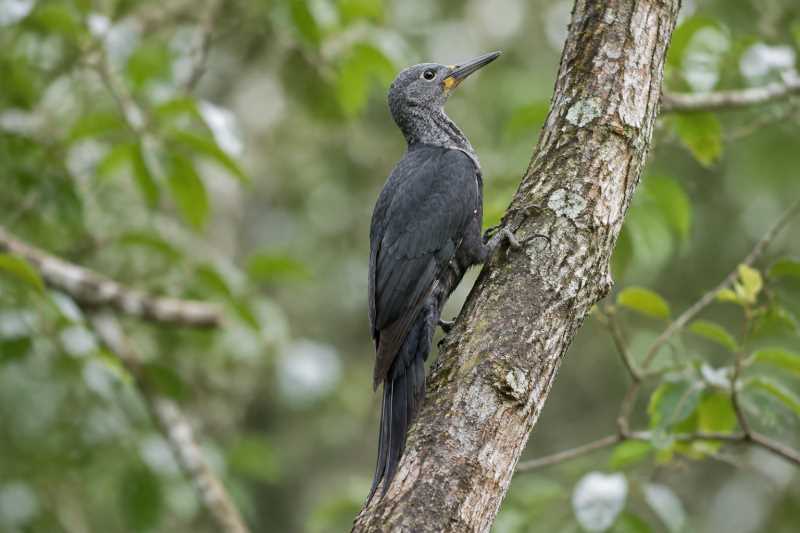
The Great Slaty Woodpecker is a colossal bird, measuring up to 50 centimeters in length and weighing approximately 450 grams. Its imposing size is complemented by its distinctive slate-gray plumage, which provides excellent camouflage against the bark of trees. The species is characterized by a long, chisel-like bill, which it uses proficiently to excavate wood in search of insects. The bird’s robust build and powerful neck muscles enable it to deliver forceful blows to tree trunks, a behavior essential for both foraging and communication.
Sexual dimorphism is relatively subtle in this species, with males and females appearing quite similar. However, males tend to have a slightly larger body size and more prominent red throat patches, which are used in courtship displays. Juvenile birds exhibit a paler, more streaked appearance compared to adults.
Habitat and Distribution
The Great Slaty Woodpecker inhabits the dense lowland and hill forests of Southeast Asia, with its range extending across countries such as Indonesia, Malaysia, Thailand, Myanmar, and parts of India. It prefers primary and mature secondary forests, where large, old-growth trees provide ample foraging and nesting opportunities.
These birds are highly dependent on large tracts of undisturbed forest, making them susceptible to habitat loss. Their presence is often considered an indicator of forest health, as they require extensive areas of contiguous habitat to sustain viable populations.
Behavior and Ecology
Great Slaty Woodpeckers are social birds, often observed foraging in small family groups or loose flocks. Their diet primarily consists of wood-boring insects, larvae, and ants, which they extract from beneath the bark of trees using their specialized bills. They are known to forage at various heights, from the forest floor to the canopy, exhibiting impressive agility and strength.
Communication among these woodpeckers involves a combination of vocalizations and drumming. They produce a series of loud, resonant calls to maintain contact with group members and establish territorial boundaries. Drumming, accomplished by striking their bills against resonant tree surfaces, serves as both a foraging technique and a means of communication.
Breeding typically occurs during the dry season, with pairs excavating nest cavities in large, dead trees. The female lays two to three eggs, which both parents incubate. After hatching, the chicks are fed by both parents and fledge after approximately four weeks.
Conservation Status
The Great Slaty Woodpecker is currently listed as "Vulnerable" on the IUCN Red List, primarily due to habitat destruction and fragmentation. Deforestation for agriculture, logging, and urban development poses significant threats to their survival. Protecting large, contiguous areas of forest is crucial for maintaining viable populations of this species.
Conservation efforts are underway in several countries to preserve critical habitats and mitigate the impacts of human activities. Establishing protected areas, promoting sustainable forestry practices, and raising awareness about the ecological importance of the Great Slaty Woodpecker are essential components of these initiatives.
Cultural Significance
In various cultures across Southeast Asia, the Great Slaty Woodpecker is regarded with fascination and admiration. Its striking appearance and distinctive behaviors have inspired local folklore and traditional stories. In some communities, the bird is seen as a symbol of resilience and adaptability, reflecting its ability to thrive in challenging environments.
The woodpecker’s role as a keystone species in its ecosystem, facilitating nutrient cycling and forest regeneration, further underscores its ecological and cultural significance.
Conclusion
The Great Slaty Woodpecker is a magnificent representative of avian biodiversity in Southeast Asia. Its impressive size, unique behaviors, and ecological importance make it a vital component of forest ecosystems. However, the species faces considerable threats from habitat loss and environmental degradation. Conserving this remarkable bird requires concerted efforts to protect its natural habitat and promote sustainable coexistence with human activities. By valuing and preserving the Great Slaty Woodpecker, we contribute to the broader goal of safeguarding the rich biodiversity of our planet.
Related posts