Introduction
Commerson’s Dolphin, scientifically known as Cephalorhynchus commersonii, is one of the most captivating marine mammals found in the southern hemisphere. Known for its striking black and white coloration, this dolphin species is easily recognizable and is a favorite among marine enthusiasts and researchers alike. These dolphins are named after French naturalist Philibert Commerson, who first described them in the 18th century. Over the years, Commerson’s Dolphins have intrigued scientists and thrill seekers due to their playful nature and unique adaptations to their environments.
Physical Description
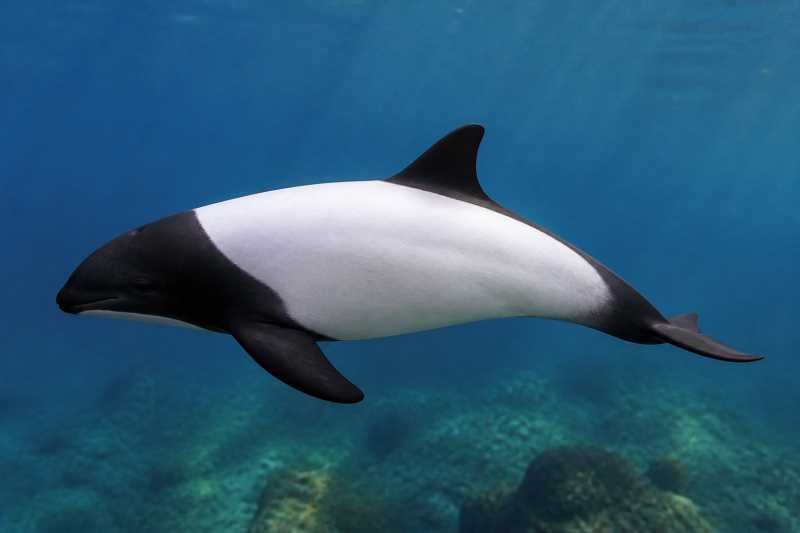
Commerson’s Dolphins are relatively small compared to other dolphin species, with adults typically measuring between 1.2 to 1.7 meters (approximately 3.9 – 5.6 feet) in length and weighing between 35 to 60 kilograms (77 – 132 pounds). One of the most distinctive features of Commerson’s Dolphins is their striking coloration. They have a bold black and white pattern, with a white throat, belly, and sides, contrasted by a black head and dorsal fin. This stark contrast is not just aesthetically pleasing but also plays a role in camouflage, helping them blend into the ocean’s surface and shadows.
Another notable characteristic is their robust, compact body shape, which is well-adapted for swift, agile swimming. Their dorsal fin is rounded and paddle-shaped, which assists in stabilizing their swift movements through water. Additionally, they possess short, rounded flippers and a small, rounded beak, contributing to their unique appearance.
Range and Habitat
Commerson’s Dolphins are primarily found in two distinct geographical locations: the coastal waters off southern South America, including Argentina and the Falkland Islands, and the Kerguelen Islands in the Indian Ocean. In South America, they are commonly seen in the Strait of Magellan, around Tierra del Fuego, and near the southern coast of Argentina. The population in the Kerguelen Islands is geographically isolated, making them a subject of significant study.
These dolphins prefer shallow coastal waters, often seen near river mouths and bays where the water is rich in nutrients, attracting a variety of prey. Their preference for temperate to subantarctic waters makes these regions ideal habitats, where the water temperature ranges between 5 to 15 degrees Celsius (41 – 59 degrees Fahrenheit).
Behavior and Diet
Commerson’s Dolphins are known for their energetic and playful behavior. They are often observed riding the bow waves of boats, leaping out of the water in acrobatic displays, and engaging in playful interactions with one another. They are highly social animals, typically found in small groups ranging from two to ten individuals, although larger aggregations have been reported.
Their diet is varied and opportunistic, consisting mainly of small fish, squid, and crustaceans. Commerson’s Dolphins employ a hunting strategy known as "herding," where they work together to corral schools of fish into dense groups, making them easier to catch. They are also known to take advantage of prey concentrated by tidal currents, demonstrating their adaptability and intelligence in foraging.
Identification Tips
Field recognition of Commerson’s Dolphins is facilitated by their unique coloration and distinct physical features. Here are some tips for identifying them in the wild:
- Coloration: Look for the stark contrast between their black and white body patterns. This is the most distinguishing feature of Commerson’s Dolphins.
- Size and Shape: Note their small, robust bodies, which are compact and streamlined for agile swimming.
- Dorsal Fin: Their dorsal fin is rounded and paddle-like, unlike the more pointed fins of other dolphin species.
- Behavior: Observe their playful behavior, such as bow-riding and acrobatics, which can often be a giveaway.
- Habitat: Consider the location. If you’re in one of their known ranges, especially in shallow coastal waters, there’s a good chance the dolphins you see could be Commerson’s.
Conservation Status
Commerson’s Dolphins are currently listed as "Least Concern" by the International Union for Conservation of Nature (IUCN). However, like many marine species, they face numerous threats that could impact their populations in the future.
Threats
- Bycatch: One of the most significant threats to Commerson’s Dolphins is bycatch in fishing gear, particularly gillnets, which can lead to accidental entanglement and drowning.
- Habitat Degradation: Coastal development, pollution, and increased boat traffic can degrade their natural habitats, making it more difficult for them to thrive.
- Climate Change: Changes in ocean temperatures and currents can affect the availability of prey, potentially leading to shifts in their distribution and abundance.
Protections
Efforts to protect Commerson’s Dolphins include implementing marine protected areas, promoting sustainable fishing practices, and raising public awareness about their conservation needs. Additionally, ongoing research and monitoring are crucial to understanding their population dynamics and implementing effective conservation strategies.
Frequently Asked Questions
1. What are the unique features of Commerson’s Dolphins? Commerson’s Dolphins are known for their striking black and white coloration, small and robust bodies, and rounded dorsal fins. They exhibit playful behaviors such as bow-riding and acrobatics.
2. Where can I see Commerson’s Dolphins in the wild? You can observe Commerson’s Dolphins in the coastal waters of southern South America, particularly around Argentina and the Falkland Islands, as well as near the Kerguelen Islands in the Indian Ocean.
3. Are Commerson’s Dolphins endangered? Currently, Commerson’s Dolphins are classified as "Least Concern" by the IUCN, but they face threats such as bycatch in fishing nets, habitat degradation, and climate change.
4. What do Commerson’s Dolphins eat? Their diet primarily consists of small fish, squid, and crustaceans. They use cooperative hunting techniques to catch prey, often herding fish into dense groups.
5. How do Commerson’s Dolphins communicate? Like other dolphin species, Commerson’s Dolphins use a variety of vocalizations, including clicks, whistles, and echolocation, to communicate and navigate their environment.
Related posts