Broad-striped Dasyure: An In-depth Look at Murexia rothschildi
Introduction
The Broad-striped Dasyure, scientifically known as Murexia rothschildi, is a fascinating mammal species endemic to the island of New Guinea. As a member of the Dasyuridae family, this small carnivorous marsupial is a testament to the incredible biodiversity found within the Australasian region. Often overshadowed by its more famous marsupial cousins like the kangaroo and koala, the Broad-striped Dasyure plays a critical role in its ecosystem.
This article delves into various aspects of the Broad-striped Dasyure’s life, from its unique physical characteristics to its habitat and behaviors. We’ll also explore its conservation status, offering insights into the challenges this species faces in the wild.
Physical Description
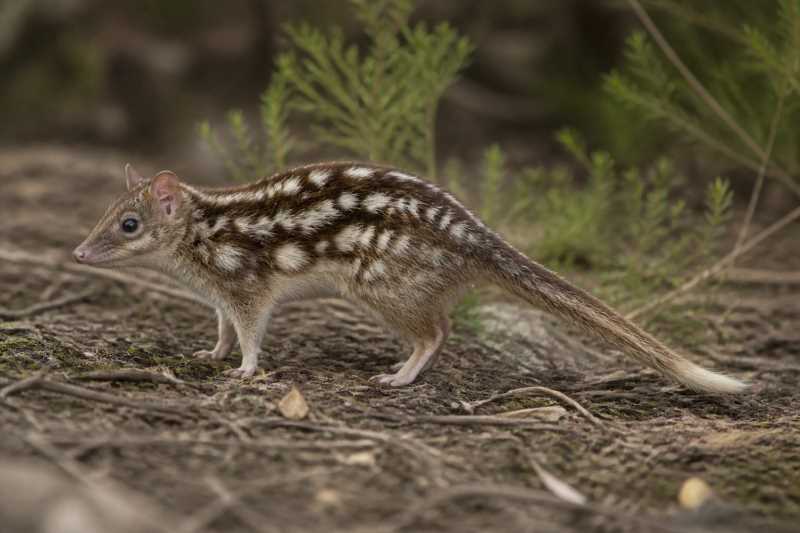
The Broad-striped Dasyure is a small, agile creature, characterized by a distinctive broad stripe of darker fur running along its back. This feature sets it apart from the other members of the Murexia genus. The fur coloration ranges from brown to grey, providing effective camouflage in its natural habitat.
Adult Broad-striped Dasyures typically measure around 20 to 25 centimeters in body length, with a tail roughly the same length. They possess sharp teeth and claws, adapted for hunting their prey. Their eyes are well-developed, aiding in nocturnal activities, while their ears are relatively large, enhancing their acute hearing.
Despite their diminutive size, these dasyures are muscular and robust, making them effective hunters in their forested environments.
Range and Habitat
The Broad-striped Dasyure is native to the island of New Guinea, where it inhabits montane and subalpine forests. These forests are typically found at elevations ranging from 1,200 to 3,500 meters. The dense foliage and rugged terrain of these regions provide ample cover and hunting opportunities for this elusive marsupial.
New Guinea’s rainforests are rich in biodiversity, offering a plethora of prey species for the Broad-striped Dasyure. The island’s climate, characterized by high rainfall and humidity, supports the lush vegetation necessary for their survival.
Behavior and Diet
Broad-striped Dasyures are primarily nocturnal, utilizing the cover of darkness to hunt and forage. Their diet is carnivorous, consisting of small mammals, birds, insects, and other invertebrates. They are solitary hunters, relying on their keen senses to locate and capture prey.
These dasyures exhibit territorial behavior, marking their home ranges with scent markings. They are agile climbers and often navigate the forest canopy in search of food. During the day, they rest in nests made from leaves and twigs, concealed within tree hollows or dense undergrowth.
Identification Tips (Field Recognition Cues)
Identifying the Broad-striped Dasyure in the wild can be challenging due to its elusive nature. However, the following tips can aid in recognition:
- Distinctive Stripe: Look for the broad, dark stripe running along the back, a hallmark feature of this species.
- Size and Shape: Note the small, compact body and long tail, typically matching the body length.
- Behavioral Cues: Observe nocturnal activity patterns and solitary hunting behavior.
- Habitat: Focus on montane and subalpine forest regions within New Guinea.
Conservation Status (with Threats and Protections)
The IUCN Red List currently classifies the Broad-striped Dasyure as "Least Concern," indicating that the species is not immediately at risk of extinction. However, like many species in New Guinea, it faces threats from habitat destruction due to logging and agricultural expansion.
Conservation efforts in the region aim to preserve critical habitats and maintain biodiversity. Protected areas and national parks in New Guinea offer some level of protection, but ongoing environmental pressures necessitate continued vigilance.
Frequently Asked Questions
What is the Broad-striped Dasyure’s primary diet?
The Broad-striped Dasyure primarily feeds on small mammals, birds, insects, and other invertebrates. Its carnivorous diet is supported by its sharp teeth and claws, which are well-suited for hunting.
Where can the Broad-striped Dasyure be found?
This species is native to New Guinea, specifically inhabiting montane and subalpine forests at elevations between 1,200 and 3,500 meters.
How does the Broad-striped Dasyure communicate?
Broad-striped Dasyures primarily communicate through scent markings. They use these markings to establish territories and signal their presence to other individuals.
What threats does the Broad-striped Dasyure face?
The primary threats include habitat destruction due to logging and agricultural expansion. Conservation efforts focus on protecting vital habitats to mitigate these threats.
How can I identify a Broad-striped Dasyure in the wild?
Look for their distinctive broad stripe along the back, small size, and nocturnal behavior. They are typically found in montane and subalpine forests in New Guinea.
Related posts