Introduction
The Black-bellied Pangolin (Phataginus tetradactylus), also known as the Long-tailed Pangolin, is a fascinating and elusive mammal that occupies a unique niche in the ecosystems of Central and West Africa. Known for its distinct characteristics and behaviors, this species of pangolin is part of the larger family of Pholidota, which consists of eight extant species worldwide. The Black-bellied Pangolin is particularly notable for its arboreal lifestyle and unique adaptation strategies, which have evolved to suit its environment.
Pangolins are often referred to as "scaly anteaters" due to their keratinous scales and dietary preferences. The Black-bellied Pangolin is no exception, showcasing a specialized diet and remarkable physical adaptations. Despite their intriguing biology, pangolins face significant threats from habitat loss and illegal poaching, which have led to a critical need for conservation efforts.
Physical Description
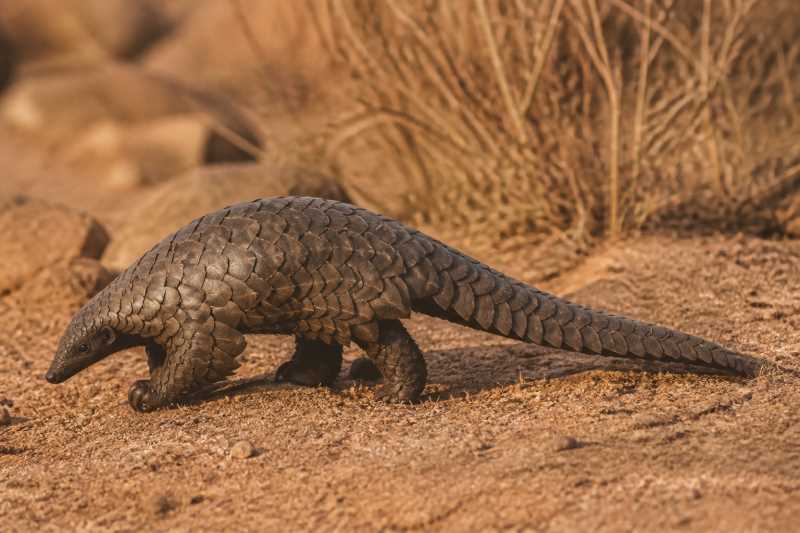
The Black-bellied Pangolin is distinguished by its elongated body and long tail, which can make up nearly two-thirds of its total body length. On average, adults measure between 75 to 110 centimeters, with a tail length ranging from 60 to 70 centimeters. This species is the smallest among African pangolins.
Their scales, which serve as a defense mechanism against predators, cover most of their body except for the belly, face, and inner limbs. The scales are dark brown to black, providing effective camouflage in their arboreal habitats. The underbelly of these pangolins is characteristically black, hence the name "Black-bellied Pangolin."
The head is small and conical, housing a long, sticky tongue that can extend up to 25 centimeters, perfect for extracting ants and termites from their nests. Their limbs are equipped with sharp claws used for climbing trees and digging into insect nests.
Range and Habitat
Black-bellied Pangolins are native to the tropical rainforests of Central and West Africa. Their range includes countries such as Nigeria, Cameroon, the Central African Republic, Gabon, and the Democratic Republic of the Congo.
These pangolins are primarily arboreal, spending most of their lives in the trees. They prefer dense forest habitats with abundant access to their primary food sources: ants and termites. However, they may occasionally venture to the forest floor in search of food or to move between trees.
The health of the forest ecosystems is critical to their survival, as they rely on the intricate balance of their habitat for food and protection from predators.
Behavior and Diet
Black-bellied Pangolins are solitary and nocturnal creatures, known for their secretive nature. Their arboreal lifestyle makes them adept climbers, using their strong tails for balance and support as they navigate the forest canopy.
Their diet consists almost exclusively of ants and termites. They employ their long, sticky tongues to probe into insect nests, consuming thousands of insects in a single feeding session. This specialized diet means that they play a crucial role in controlling insect populations, contributing to the health of their ecosystem.
These pangolins are also known for their unique defense mechanism: when threatened, they curl into a tight ball, protecting their vulnerable undersides with their tough scales. This behavior makes them less vulnerable to natural predators, although it is not effective against human threats.
Identification Tips
Identifying a Black-bellied Pangolin in the wild requires keen observation and awareness of certain field recognition cues:
- Look for the distinctive black underbelly, which contrasts with the dark brown to black scales covering the rest of the body.
- Observe their movement patterns in trees; they are adept climbers and often move along branches using their prehensile tails for support.
- Listen for rustling in the treetops at night, as these nocturnal animals are most active during this time.
- Note the presence of termite mounds or ant nests, as these are likely feeding sites for the pangolins.
- Be aware of their unique curled-up posture when threatened, which is a characteristic behavior of all pangolin species.
Conservation Status
The Black-bellied Pangolin is classified as Vulnerable on the IUCN Red List, primarily due to habitat destruction and illegal poaching. The demand for pangolin scales and meat in traditional medicine and culinary markets poses a significant threat to their populations.
Habitat loss from deforestation and land conversion for agriculture further exacerbates the decline of this species. Their arboreal habitat is increasingly fragmented, limiting their ability to find food and mates.
Conservation efforts are underway to protect these animals, including habitat preservation, anti-poaching measures, and raising awareness about the importance of pangolins in their ecosystems. International agreements, such as CITES, have also listed pangolins in Appendix I, prohibiting international trade.
Frequently Asked Questions
1. Why are Black-bellied Pangolins endangered?
Black-bellied Pangolins are endangered due to illegal poaching for their scales and meat, coupled with habitat loss from deforestation. Conservation efforts are critical to prevent further decline.
2. How do Black-bellied Pangolins defend themselves?
When threatened, Black-bellied Pangolins curl into a tight ball, using their tough scales as armor against predators. This behavior is effective against natural predators but not against human threats.
3. What do Black-bellied Pangolins eat?
Their diet consists almost exclusively of ants and termites. They use their long, sticky tongues to extract these insects from nests, playing a vital role in controlling insect populations.
4. Where can Black-bellied Pangolins be found?
They are native to Central and West Africa, inhabiting countries like Nigeria, Cameroon, and the Democratic Republic of the Congo. They reside in tropical rainforests, primarily living in trees.
5. How can I help in the conservation of Black-bellied Pangolins?
Supporting organizations that focus on habitat preservation, anti-poaching efforts, and raising awareness can aid in their conservation. Avoiding products made from pangolin parts also helps reduce demand.
Related posts