Introduction
The New Guinea Naked-backed Fruit Bat, scientifically designated as Dobsonia magna, is a fascinating species belonging to the family Pteropodidae, commonly referred to as the megabats or fruit bats. This species is noteworthy not only for its unique physical characteristics but also for its ecological role in its native habitats. As its name suggests, the New Guinea Naked-backed Fruit Bat is primarily found in the lush landscapes of New Guinea, with its range extending to nearby islands. This article delves into the various aspects of this remarkable mammal, including its physical description, habitat, behavior, diet, conservation status, and more.
Physical Description
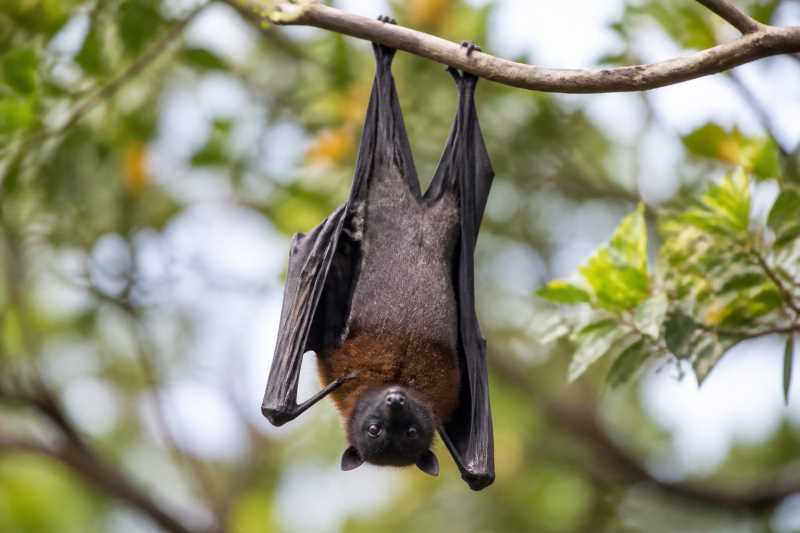
Dobsonia magna is distinguished by several unique physical traits that set it apart from other fruit bats. The most distinctive feature of this species is the absence of fur on its back, which gives it the descriptive name ‘naked-backed’. This lack of fur is an adaptation that may aid in thermoregulation in the warm climates of its habitat. The bat’s body is covered with a fine, velvety fur that ranges in color from dark brown to olive-green, providing excellent camouflage among the canopy foliage.
The New Guinea Naked-backed Fruit Bat is relatively large compared to other fruit bats, with an average wingspan of 1.2 meters (approximately 47 inches). Its body length typically ranges from 27 to 29 centimeters (10.6 to 11.4 inches). The bat’s face is fox-like, with large, expressive eyes adapted for nocturnal vision and a snout that is slightly elongated to aid in fruit consumption. Its ears are relatively small and rounded, enhancing its ability to navigate and forage in dense forests using echolocation.
Range and Habitat
The New Guinea Naked-backed Fruit Bat is endemic to the island of New Guinea, which is politically divided between Papua New Guinea to the east and the Indonesian provinces of Papua and West Papua to the west. The species is also found on nearby islands, including the Bismarck Archipelago and the D’Entrecasteaux Islands. These bats prefer lowland tropical rainforests, but they are also known to inhabit montane forests and occasionally coastal mangroves.
Their habitat is characterized by dense vegetation, which provides ample food sources and roosting sites. The bats are highly dependent on forest canopy for protection and sustenance, making them vulnerable to habitat destruction. The availability of fruiting trees and flowers heavily influences their distribution within these forested areas.
Behavior and Diet
The New Guinea Naked-backed Fruit Bat is predominantly nocturnal, emerging at dusk to forage for food. They are frugivorous, feeding primarily on a variety of fruits, nectar, and flowers. Their diet consists of soft fruits such as figs, bananas, and mangos, making them important seed dispersers in their ecosystem.
These bats are social creatures, often forming roosting colonies in caves or large trees. Roosting colonies can vary in size, offering protection from predators and facilitating social interactions. Communication within the colony is achieved through a series of vocalizations and scent markings. Their nocturnal activities and feeding patterns substantially contribute to the pollination and seed dispersal of many tropical plant species, underpinning the ecological health of their habitat.
Identification Tips (Field Recognition Cues)
Recognizing the New Guinea Naked-backed Fruit Bat in the wild requires keen observation skills. Here are several tips to help identify this species:
- Naked Back: As the name implies, this species lacks fur on its back, a unique feature that distinguishes it from other bats.
- Large Size: With a wingspan of about 1.2 meters, Dobsonia magna is one of the larger fruit bats in its range.
- Coloration: Look for dark brown to olive-green fur, which helps them blend into the forest canopy.
- Roosting Habits: Observe potential roosting sites such as caves or large trees, particularly where there are signs of colony activity.
- Flight Pattern: These bats have a slow, deliberate flight pattern, making them easier to spot against the evening sky.
Conservation Status (with Threats and Protections)
The conservation status of the New Guinea Naked-backed Fruit Bat is currently classified as ‘Least Concern’ by the International Union for Conservation of Nature (IUCN). Despite this relatively secure status, the species faces several threats that could impact its population in the future.
Threats
- Habitat Loss: The primary threat to Dobsonia magna is habitat destruction due to logging, agriculture, and urban development. Deforestation reduces available roosting and foraging sites, leading to population declines.
- Hunting: In some regions, these bats are hunted for food, posing a significant threat to local populations.
- Climate Change: Changes in climate patterns can alter fruiting cycles of trees, affecting the availability of food resources.
Protections
- Protected Areas: Several parts of New Guinea and nearby islands have designated protected areas that serve as sanctuaries for the New Guinea Naked-backed Fruit Bat.
- Conservation Programs: Efforts are being made to promote sustainable forestry practices and to raise awareness about the ecological importance of fruit bats.
Frequently Asked Questions
What is the role of the New Guinea Naked-backed Fruit Bat in its ecosystem?
The New Guinea Naked-backed Fruit Bat plays a crucial role in its ecosystem as a seed disperser and pollinator. By consuming fruits and nectars, they aid in the propagation of various plant species, thus maintaining the biodiversity of their habitat.
How can you differentiate between the New Guinea Naked-backed Fruit Bat and other fruit bats?
The most distinguishing feature of the New Guinea Naked-backed Fruit Bat is its lack of fur on the back. Additionally, its large size and specific coloration (dark brown to olive-green) can help differentiate it from other fruit bats.
Are there any conservation efforts specifically targeting the New Guinea Naked-backed Fruit Bat?
While there are no conservation programs specifically targeting this species, broader initiatives for tropical forest conservation and sustainable land use indirectly benefit the New Guinea Naked-backed Fruit Bat by preserving its natural habitat.
What is the typical lifespan of a New Guinea Naked-backed Fruit Bat in the wild?
In the wild, the New Guinea Naked-backed Fruit Bat can live up to 12 years, though this may vary depending on environmental conditions and predation pressures.
How does the New Guinea Naked-backed Fruit Bat navigate and find food?
This bat species uses a combination of echolocation and keen night vision to navigate through dense forests. Its sense of smell also plays a significant role in locating ripe fruits and nectar sources.
Related posts