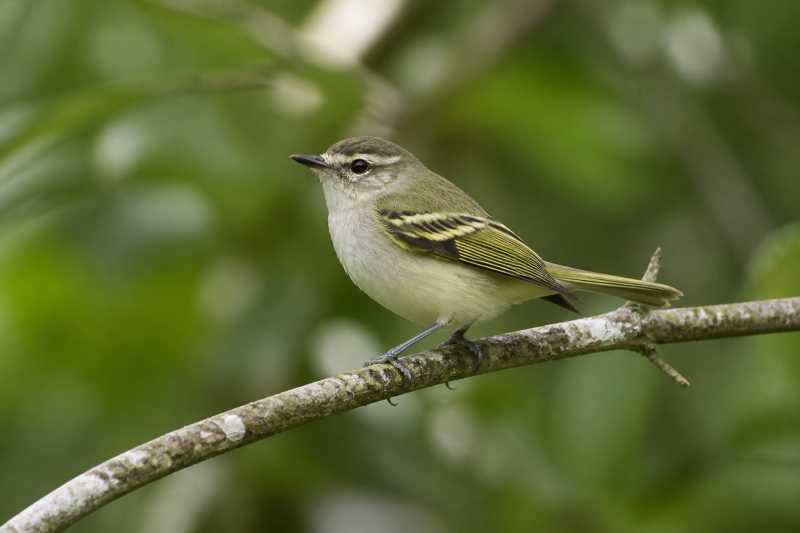
The Alagoas Tyrannulet: A Jewel of the Brazilian Rainforest
The Alagoas Tyrannulet, scientifically known as Phylloscartes ceciliae, is a captivating bird species endemic to the lush rainforests of northeastern Brazil. Known for its distinctive vocal patterns and vibrant plumage, this small passerine bird is a symbol of the rich biodiversity found in the region. However, despite its charming appearance, the Alagoas Tyrannulet faces significant threats that endanger its survival.
Taxonomy and Description
Belonging to the Tyrannidae family, the Alagoas Tyrannulet is a member of the subfamily Elaeniinae, which comprises a diverse group of small, insect-eating birds. The species was first described in 1983 by biologist Helmut Sick, who recognized its unique characteristics and its restricted geographic range.
The Alagoas Tyrannulet is a small bird, measuring approximately 12 centimeters in length. It exhibits a captivating mix of olive-green and yellow plumage, with a notably bright yellow belly. Its head is adorned with a subtle white eye-ring, adding to its allure. One of the most distinguishing features of the Alagoas Tyrannulet is its vocalization—a series of high-pitched, melodious whistles that resonate through the forest.
Habitat and Distribution
This elusive bird is endemic to the Atlantic Forest in the northeastern part of Brazil, specifically in the states of Alagoas and Pernambuco. The Atlantic Forest is one of the most biodiverse forests in the world but also one of the most threatened. The Alagoas Tyrannulet primarily inhabits humid lowland forests and secondary growth areas, often at elevations ranging from 200 to 500 meters.
The limited distribution of the Alagoas Tyrannulet, confined to a few forest fragments, makes it particularly vulnerable to habitat loss. Deforestation for agriculture, logging, and urban development has significantly reduced its natural habitat, posing a serious threat to its survival.
Behavior and Diet
The Alagoas Tyrannulet is an insectivorous bird, feeding mainly on small insects and arthropods. It employs a sallying technique, where it perches quietly before darting out to catch prey in mid-air. This hunting strategy is common among flycatchers and is a testament to their agility and precision.
These birds are typically seen in pairs or small family groups, often foraging in the forest canopy or mid-levels. Their social behavior is characterized by cooperative breeding, where offspring from previous broods assist in raising the new chicks. This cooperative strategy is thought to enhance the survival rates of the young, given the limited availability of resources in their fragmented habitat.
Conservation Status
The International Union for Conservation of Nature (IUCN) currently classifies the Alagoas Tyrannulet as Critically Endangered. This classification is due to the bird’s extremely limited range, estimated population size of fewer than 250 mature individuals, and the continuing decline in the extent and quality of its habitat.
Conservation efforts are focused on habitat protection and restoration. Local and international organizations are working to establish protected areas and reforestation projects to restore the Alagoas Tyrannulet’s habitat. Additionally, environmental education programs are being implemented to raise awareness about the importance of conserving this and other endemic species of the Atlantic Forest.
Challenges and Future Prospects
Despite ongoing conservation efforts, the future of the Alagoas Tyrannulet remains uncertain. The primary challenges include continued habitat destruction due to illegal logging and agricultural expansion, as well as climate change, which could further alter its already limited habitat.
To secure the survival of the Alagoas Tyrannulet, it is crucial to strengthen conservation initiatives and promote sustainable land-use practices. Collaborative efforts involving local communities, government agencies, and non-governmental organizations are essential in creating a sustainable model for the preservation of the Atlantic Forest and its unique inhabitants.
Research also plays a pivotal role in conservation. Long-term monitoring of the Alagoas Tyrannulet’s population trends and habitat conditions will provide valuable data to inform conservation strategies. Furthermore, studies on its ecology and behavior can offer insights into how this species adapts to environmental changes, aiding in the development of more effective conservation measures.
In conclusion, the Alagoas Tyrannulet is not just an emblem of Brazil’s rich natural heritage but also a reminder of the pressing need to conserve our planet’s biodiversity. Protecting this exquisite bird and its habitat is not only crucial for its survival but also for maintaining the ecological integrity of one of the world’s most diverse ecosystems. Concerted conservation efforts today will ensure that future generations can continue to marvel at the beauty and song of the Alagoas Tyrannulet in its natural home.
Related posts