Thomas’s Pygmy Jerboa: A Detailed Look at Salpingotus thomasi
Introduction
Thomas’s Pygmy Jerboa (Salpingotus thomasi) is a remarkable and diminutive member of the rodent family, known for its unique adaptations to desert life. This elusive mammal, belonging to the family Dipodidae, is native to the arid regions of Central Asia, where it plays a crucial role in its ecosystem. Renowned for its tiny size and incredible leaping ability, the Thomas’s Pygmy Jerboa is a subject of fascination among researchers and wildlife enthusiasts alike. This article delves into the various aspects of this intriguing species, from its physical characteristics to its conservation status, providing a comprehensive insight into the life of this desert-dwelling mammal.
Physical Description
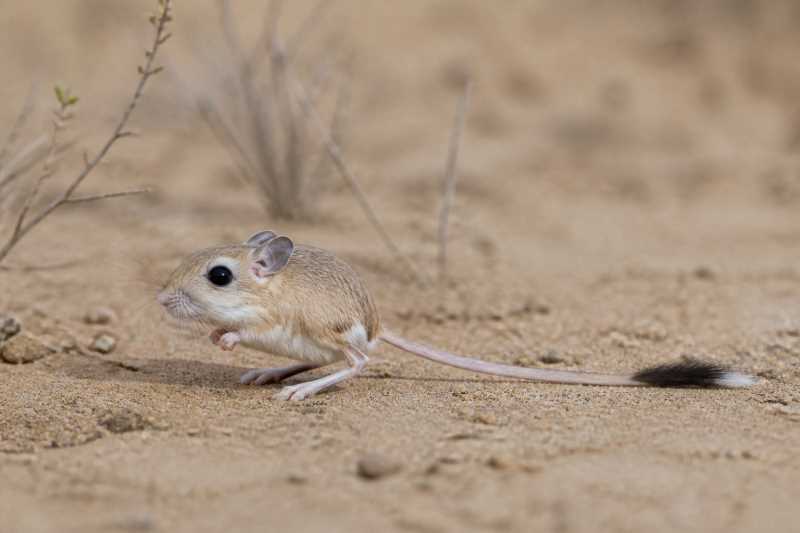
Thomas’s Pygmy Jerboa is one of the smallest rodents in the world, measuring merely 4 to 5 centimeters in body length, with a tail that can extend up to 8 centimeters. This disproportionate tail is not just for show; it serves as a critical balancing tool, aiding the jerboa’s exceptional leaping ability, which can reach up to a meter in a single bound. Weighing in at just a few grams, its lightweight body is covered in soft, silky fur that ranges from sandy brown to pale gray, providing effective camouflage against the desert landscape.
The jerboa’s hind legs are significantly elongated compared to its forelimbs, a characteristic adaptation for hopping across sandy terrains. Its feet are equipped with tufts of stiff hairs that help it to walk on loose sand, much like a snowshoe effect. The large eyes and ears of Thomas’s Pygmy Jerboa are adaptations for nocturnal life, enhancing its ability to detect predators and forage in the dark.
Range and Habitat
Salpingotus thomasi is primarily found in the desert regions of Central Asia, including parts of Kazakhstan, Uzbekistan, Turkmenistan, and Iran. This species inhabits arid and semi-arid environments, favoring sandy dunes and gravel plains where vegetation is sparse. The jerboa’s habitat is characterized by extreme temperatures, ranging from scorching heat during the day to chilly nights, conditions that the species has adeptly adapted to over time.
Thomas’s Pygmy Jerboa constructs burrows in sandy soils, which provide shelter from the harsh climate and predators. These burrows are usually simple, consisting of a single tunnel with a nesting chamber. The jerboa is well-adapted to survive in environments with limited water sources, obtaining moisture primarily from its diet.
Behavior and Diet
Thomas’s Pygmy Jerboa is a nocturnal creature, emerging from its burrow under the cover of darkness to forage for food. Its diet primarily consists of seeds, insects, and plant matter, which provide the necessary nutrients and moisture needed for survival in arid conditions. The jerboa’s foraging behavior is opportunistic, and it exhibits remarkable agility, using its powerful hind legs to leap considerable distances in search of food.
Social behavior in Thomas’s Pygmy Jerboa is relatively solitary, with individuals typically occupying separate burrows. However, during the breeding season, males and females may come together. Little is known about their reproductive habits, but it is believed that they have a gestation period of around 25 days, producing litters of up to four young.
Identification Tips (Field Recognition Cues)
Identifying Thomas’s Pygmy Jerboa in the wild requires keen observation and familiarity with its distinctive features:
- Size and Shape: Look for a very small rodent with an exceptionally long tail compared to its body length.
- Coloration: Note the sandy brown or pale gray fur, which blends seamlessly with desert environments.
- Movement: Observe its unique hopping locomotion, using powerful hind legs and balancing with its long tail.
- Ears and Eyes: Large ears and eyes are indicative of its nocturnal lifestyle.
- Habitat: Search in sandy and gravelly desert areas, where burrows may be present.
Conservation Status (with Threats and Protections)
As of current assessments, Thomas’s Pygmy Jerboa is listed as Least Concern on the IUCN Red List. However, like many desert species, it faces several threats that could impact its population stability. Habitat degradation due to agricultural expansion and development poses a significant risk, as does climate change, which can alter the delicate balance of desert ecosystems.
Protections for Salpingotus thomasi are limited, largely due to its wide distribution and the challenges associated with monitoring small, nocturnal mammals. Conservation efforts are primarily focused on habitat preservation and conducting further research to better understand its ecology and population dynamics.
Frequently Asked Questions
What adaptations help Thomas’s Pygmy Jerboa survive in the desert?
Thomas’s Pygmy Jerboa has several adaptations for desert survival, including its ability to extract moisture from its diet, nocturnal habits to avoid daytime heat, and long hind legs for efficient locomotion across sandy terrain.
How does Thomas’s Pygmy Jerboa find food in such arid environments?
The jerboa forages at night, utilizing its acute senses to locate seeds, insects, and plant material. Its agile jumping ability allows it to cover large areas in search of food.
Is Thomas’s Pygmy Jerboa endangered?
Currently, Thomas’s Pygmy Jerboa is classified as Least Concern, but it faces threats from habitat loss and climate change. Ongoing conservation efforts focus on habitat protection and further research.
What is the lifespan of Thomas’s Pygmy Jerboa?
While precise data is limited, it is believed that Thomas’s Pygmy Jerboa has a lifespan of around 3 to 5 years in the wild, depending on environmental conditions and predation pressures.
Can Thomas’s Pygmy Jerboa be kept as a pet?
Due to its specialized habitat needs and status as a wild animal, Thomas’s Pygmy Jerboa is not suitable for domestication or as a pet. Conservation in its natural habitat is a priority.
Related posts