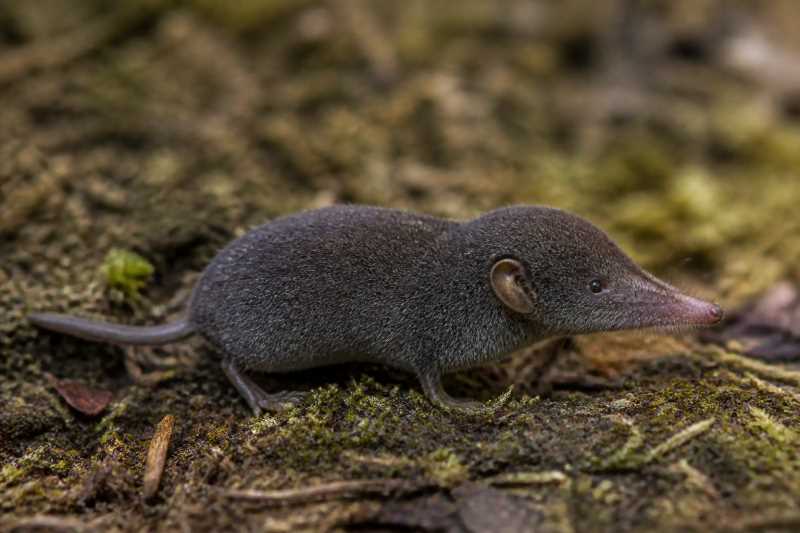
Short-tailed Shrew Tenrec (Microgale brevicaudata)
Introduction
The Short-tailed Shrew Tenrec, scientifically known as Microgale brevicaudata, is a captivating species of small mammal endemic to the lush landscapes of Madagascar. This elusive creature belongs to the Tenrecidae family, which is a diverse group of mammals that have adapted to a variety of ecological niches across the island. Despite its small size, the Short-tailed Shrew Tenrec plays a significant role in its ecosystem, contributing to the complex tapestry of Madagascar’s unique biodiversity. This article delves into the various aspects of the Short-tailed Shrew Tenrec, from its physical characteristics to its behavior, diet, and conservation status.
Physical Description
The Short-tailed Shrew Tenrec is a small, nocturnal mammal with a distinctive appearance. It typically measures about 6 to 9 centimeters in length, with a short tail that is roughly half the length of its body. The tail is one of the defining features of this species, giving it its common name. Its fur is dense and soft, usually a muted shade of brown or gray, which provides excellent camouflage in its natural habitat. The head is elongated with a narrow, pointed snout that is perfectly adapted for probing into crevices and leaf litter in search of food. Its eyes are relatively small, indicative of its nocturnal lifestyle, while its ears are also reduced, aligning with its subterranean tendencies.
Range and Habitat
The range and habitat of the Short-tailed Shrew Tenrec are confined to the island of Madagascar, where it is predominantly found in the eastern rainforests. These regions provide the ideal conditions for its survival, offering abundant cover and a rich supply of invertebrates. The tenrec’s habitat is characterized by dense undergrowth, fallen leaves, and decaying wood, all of which offer ample foraging opportunities. Occasionally, they can also be found in degraded areas and secondary forests, demonstrating a degree of adaptability to human-altered environments. However, they are less frequently observed in open or dry habitats, which do not support the moisture and food resources they require.
Behavior and Diet
The behavior and diet of the Short-tailed Shrew Tenrec are intriguing aspects of its ecology. As a nocturnal animal, it is most active during the night, spending the day hidden away in burrows or under dense foliage to avoid predators. Its diet primarily consists of insects and other small invertebrates, which it locates using its keen sense of smell and touch. The tenrec uses its pointed snout to root through the ground, uncovering ants, termites, and beetles, which form the bulk of its diet. Occasionally, it may also consume small vertebrates or plant matter, showcasing a degree of dietary flexibility.
Socially, the Short-tailed Shrew Tenrec is relatively solitary, with individuals only coming together during the breeding season. Communication between these animals is thought to involve ultrasonic vocalizations, though more research is needed to fully understand their social structures and interactions.
Identification Tips (Field Recognition Cues)
Identifying the Short-tailed Shrew Tenrec in the wild can be a challenging task due to its elusive nature and the dense habitats it occupies. However, there are several cues that can aid in its identification:
- Size and Shape: Look for a small mammal with a compact body and a noticeably short tail.
- Coloration: Their fur is typically brown or gray, blending well with leaf litter and soil.
- Activity Patterns: They are primarily nocturnal, so sightings are more likely at night.
- Habitat: Focus on the rainforest floor or areas with dense undergrowth where they forage for insects.
- Behavior: Listen for rustling sounds in the leaf litter, which could indicate a foraging tenrec.
Conservation Status (With Threats and Protections)
The conservation status of the Short-tailed Shrew Tenrec is currently listed as ‘Least Concern’ by the International Union for Conservation of Nature (IUCN). However, this does not mean the species is free from threats. The primary threat to its survival is habitat destruction due to deforestation and land conversion for agriculture. The rainforests of Madagascar are being cleared at an alarming rate, which poses a significant risk to all forest-dwelling species, including the Short-tailed Shrew Tenrec.
In terms of protections, several national parks and reserves in Madagascar serve as critical refuges for this species. Conservation efforts are focused on preserving these habitats and promoting sustainable land-use practices. Additionally, international organizations are working with local communities to raise awareness about the importance of biodiversity and the need to protect Madagascar’s unique ecosystems.
Frequently Asked Questions
- What is the diet of the Short-tailed Shrew Tenrec?
The Short-tailed Shrew Tenrec primarily feeds on insects and other small invertebrates. Its diet includes ants, termites, beetles, and occasionally small vertebrates or plant matter. This dietary flexibility allows it to adapt to varying food availability within its habitat.
- Where can the Short-tailed Shrew Tenrec be found?
This species is endemic to Madagascar and is typically found in the eastern rainforests. It prefers areas with dense undergrowth and abundant leaf litter, although it can occasionally be found in secondary forests and degraded habitats.
- How is the Short-tailed Shrew Tenrec adapted to its environment?
The Short-tailed Shrew Tenrec is well-adapted to its environment with features like a pointed snout for foraging, small eyes suited for nocturnal activity, and dense fur for camouflage. Its size and behavior allow it to thrive in the undergrowth of Madagascar’s rainforests.
- What are the main threats to the Short-tailed Shrew Tenrec?
The main threats to this species are habitat destruction and deforestation due to agricultural expansion. Conservation efforts are crucial to protect the remaining forest habitats and ensure the species’ survival.
- How can you identify the Short-tailed Shrew Tenrec in the wild?
To identify this species, look for a small, nocturnal mammal with a short tail and brown or gray fur. It is most active at night and is found foraging on the forest floor in Madagascar’s rainforests.
Related posts