Introduction
The Giant Otter-shrew, scientifically known as Potamogale velox, is a remarkable semi-aquatic mammal found in the central regions of Africa. Despite its name and similar appearance, this fascinating creature is not closely related to otters or shrews. Rather, it belongs to the family Tenrecidae, which is more closely associated with the diverse and unique fauna of Madagascar. Known for its elusive nature and specialized adaptations for a life both in water and on land, the Giant Otter-shrew is a subject of interest for researchers and wildlife enthusiasts alike.
Physical Description
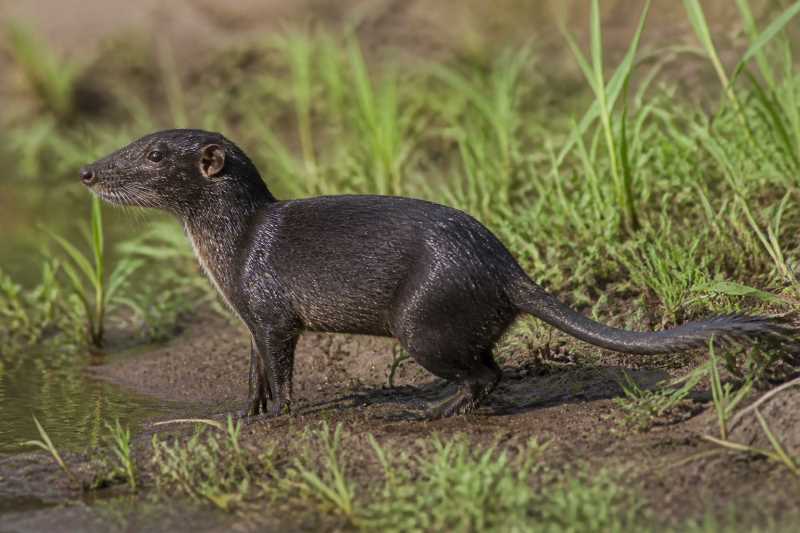
The Giant Otter-shrew is notable for its elongated and streamlined body, which is perfectly adapted for its semi-aquatic lifestyle. Measuring between 55 to 60 cm in length, including a tail that is about 25 to 30 cm long, it is among the larger members of the Tenrecidae family. The body is covered with a dense, water-repellent fur that ranges in color from dark brown to grayish-black, providing excellent camouflage in its natural habitat.
Its head is small and flattened, with a short, broad snout that is well-suited for hunting underwater. The eyes and ears are relatively small, reducing drag when swimming. The limbs are short and sturdy, equipped with partially webbed feet that aid in swimming. The tail is long, muscular, and laterally compressed, functioning like a rudder to enhance maneuverability in water.
Range and Habitat
The Giant Otter-shrew is endemic to Central Africa, predominantly found in countries such as Cameroon, Gabon, Equatorial Guinea, the Republic of Congo, and the Democratic Republic of the Congo. It inhabits freshwater environments, including rivers, streams, swamps, and marshes, typically within tropical rainforest regions. These areas provide the dense vegetation and abundant aquatic prey necessary for their survival.
The preferred habitat of the Giant Otter-shrew is characterized by slow-moving or stagnant water bodies with overhanging vegetation along the banks. This kind of environment not only offers food resources but also protection from predators and a suitable location for nesting and rearing young.
Behavior and Diet
Giant Otter-shrews are primarily nocturnal, spending the daylight hours resting in burrows or dense vegetation and emerging at night to hunt. They are solitary creatures, with each individual maintaining a territory that it actively defends from others of its kind.
Their diet mainly consists of aquatic prey, such as fish, crustaceans, and mollusks. They utilize their sensitive whiskers to detect vibrations and movements in the water, allowing them to locate prey even in the dark or murky conditions. Once prey is detected, the Giant Otter-shrew uses its agile swimming skills to capture it with its sharp teeth.
Identification Tips (Field Recognition Cues)
Identifying a Giant Otter-shrew in the wild can be challenging due to its nocturnal and elusive nature. However, there are several key characteristics that can aid in its identification:
- Body Shape and Size: Look for a long, slender, and streamlined body, typically around 55-60 cm in length.
- Fur Coloration: Dark brown to grayish-black fur that is dense and water-repellent.
- Tail Structure: A long, muscular, and laterally compressed tail that helps in swimming.
- Habitat: Presence near slow-moving or stagnant freshwater bodies in dense tropical rainforests.
Conservation Status (with Threats and Protections)
The Giant Otter-shrew is currently listed as "Least Concern" by the International Union for Conservation of Nature (IUCN). However, its population is believed to be decreasing due to several threats.
Threats
- Habitat Destruction: Deforestation and water pollution from agriculture and industrial activities pose significant threats to its habitat.
- Hunting: Although not a primary target, it can be caught in traps set for other species or hunted for its meat by local communities.
- Climate Change: Alterations in rainfall patterns and water levels can disrupt its habitat and food availability.
Protections
Conservation efforts focus on protecting the rainforest habitats and water systems that are crucial for the survival of the Giant Otter-shrew. Protected areas and national parks in regions like Gabon and the Republic of Congo offer some refuge, although enforcement and management of these areas need strengthening.
Frequently Asked Questions
- Are Giant Otter-shrews related to otters?
No, despite their name and similar appearance, Giant Otter-shrews are not related to otters. They belong to the Tenrecidae family, which is distinct from the Mustelidae family that otters belong to.
- What do Giant Otter-shrews eat?
Giant Otter-shrews primarily feed on aquatic prey such as fish, crustaceans, and mollusks. They use their sensitive whiskers to detect prey in the water.
- Where can I find Giant Otter-shrews in the wild?
They are found in Central African countries such as Cameroon, Gabon, Equatorial Guinea, and the Republic of Congo, typically in tropical rainforest regions near freshwater bodies.
- How do Giant Otter-shrews adapt to their environment?
Their streamlined body, water-repellent fur, and webbed feet are specialized adaptations for swimming. They also have sensitive whiskers for detecting prey underwater.
- What threats do Giant Otter-shrews face?
Habitat destruction, hunting, and climate change are significant threats to the Giant Otter-shrew population.
Related posts