The Arrowhead Warbler: Jamaica’s Avian Gem
The Arrowhead Warbler, scientifically known as Setophaga pharetra, is a captivating species endemic to the lush landscapes of Jamaica. This small but striking bird is a member of the New World warbler family, a group renowned for its vibrant plumage and lively songs. As an emblematic species of Jamaica, the Arrowhead Warbler plays a crucial role in the island’s unique biodiversity and offers fascinating insights into the evolutionary processes that shape island ecosystems.
Physical Characteristics
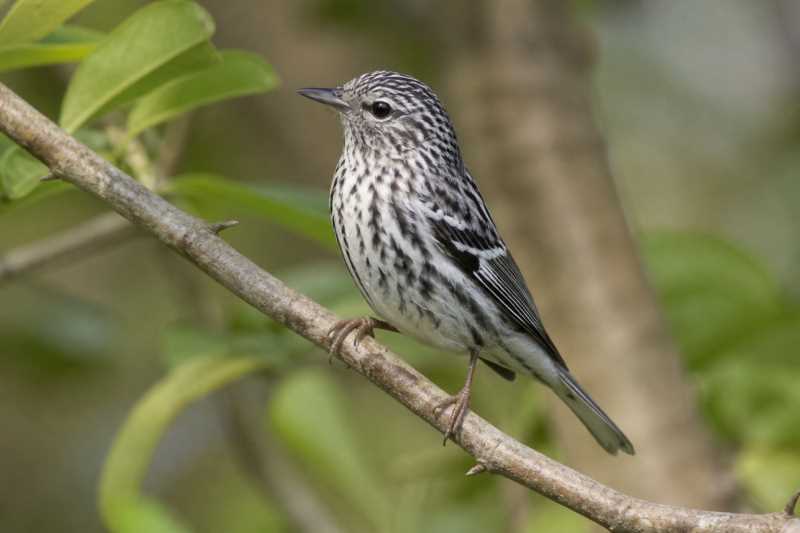
The Arrowhead Warbler is a medium-sized warbler, measuring about 12 to 13 centimeters in length, with a wingspan of approximately 19 to 21 centimeters. Its most distinguishing feature is its vivid plumage. The upperparts are an alluring mix of olive-green and gray, while the underparts are predominantly white with subtle streaking. The bird’s head is adorned with a striking black cap and a prominent white supercilium, which gives it a distinguished appearance. The bill is slender and pointed, ideally suited for gleaning insects from foliage.
Habitat and Distribution
As an endemic species, the Arrowhead Warbler is found exclusively in Jamaica. It thrives in a variety of forested habitats, ranging from the island’s montane rainforests to lower elevation woodlands. The bird is particularly associated with the lush, damp environments of the Blue and John Crow Mountains, where dense foliage provides ample foraging opportunities and protection from predators. Despite its limited range, the Arrowhead Warbler is relatively common within its habitat and is considered of Least Concern by the International Union for Conservation of Nature (IUCN).
Behavior and Diet
The Arrowhead Warbler is an active and agile bird, often observed flitting through the forest canopy in search of food. It primarily feeds on insects and other small invertebrates, which it skillfully extracts from leaves and branches using its sharp bill. The bird is also known to consume berries and seeds, especially during the non-breeding season when insects are less abundant. Its foraging behavior is characterized by quick, darting movements and occasional hover-gleaning, a technique that involves hovering briefly to snatch prey from the underside of leaves.
Breeding and Reproduction
Breeding season for the Arrowhead Warbler typically occurs from March to July, coinciding with the wet season when food resources are plentiful. The species is monogamous, with pairs forming strong bonds that often last across multiple breeding seasons. The female constructs a cup-shaped nest, usually placed well-concealed within dense foliage or epiphytes, to protect against predators and the elements.
Nests are meticulously built using twigs, moss, and other plant materials, lined with softer substances such as feathers and animal hair. The female lays a clutch of 2 to 4 eggs, which she incubates for about 12 to 14 days. Both parents partake in feeding the nestlings, which fledge after approximately 10 to 12 days. Post-fledging, the young birds continue to rely on parental care until they are fully independent.
Conservation and Threats
Although currently listed as a species of Least Concern, the Arrowhead Warbler faces several threats that could impact its populations in the future. Habitat destruction due to agricultural expansion, logging, and human development poses significant risks to Jamaica’s forest ecosystems. Climate change also presents a looming threat, with potential impacts on the availability of food resources and the integrity of the warbler’s habitat.
Conservation efforts in Jamaica are essential to ensure the long-term survival of the Arrowhead Warbler and other endemic species. Initiatives aimed at preserving and restoring forest habitats, alongside sustainable land-use practices, are critical components of these efforts. Additionally, public awareness and education about the importance of conserving Jamaica’s unique biodiversity can foster a greater appreciation and commitment to protecting these natural treasures.
The Arrowhead Warbler in Culture and Research
The Arrowhead Warbler holds cultural significance in Jamaica, often celebrated in local folklore and nature-inspired art. Its presence in the island’s forests is a reminder of the rich natural heritage that Jamaica boasts. For ornithologists and birdwatchers, the Arrowhead Warbler serves as a subject of interest due to its unique evolutionary adaptations and behaviors.
Research on the Arrowhead Warbler provides valuable insights into the dynamics of island ecosystems and the processes that drive speciation and adaptation. Studies on its foraging ecology, breeding behaviors, and population dynamics contribute to a broader understanding of avian biology and conservation.
In conclusion, the Arrowhead Warbler is a remarkable species that embodies the beauty and complexity of Jamaica’s avifauna. Protecting this avian gem requires ongoing conservation efforts and a commitment to preserving the island’s pristine habitats. By safeguarding the Arrowhead Warbler and its environment, we ensure that future generations can continue to marvel at this symbol of Jamaica’s natural wonder.
Related posts