The Black-headed Bunting: A Vibrant Avian Migrant
The Black-headed Bunting (Emberiza melanocephala) is a strikingly colorful bird that captivates birdwatchers and ornithologists alike with its vibrant plumage and fascinating migratory patterns. This article delves into the characteristics, habitat, and behaviors of this species, offering insights into its ecological significance and the conservation challenges it faces.
Taxonomy and Description
Belonging to the family Emberizidae, the Black-headed Bunting is a passerine bird native to regions extending from Southeast Europe to Central Asia. The scientific name, Emberiza melanocephala, reflects its distinct black head, with ‘melanocephala’ derived from Greek, meaning ‘black-headed.’
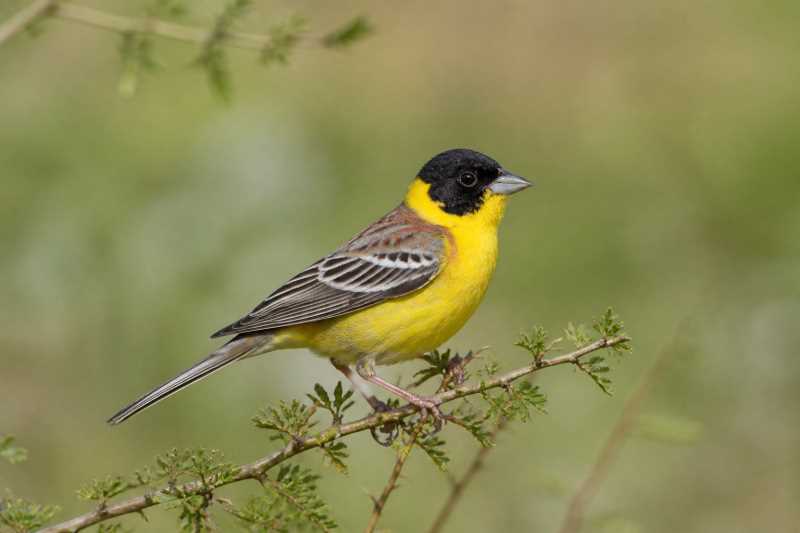
Adult males are particularly striking, featuring a jet-black head and throat, contrasted with a vivid yellow underbody and chestnut-brown upperparts. In contrast, females and juveniles display more subdued colors, with a muted brown head and back, and a paler yellow underside. This dimorphism aids in sexual identification and plays a role during the breeding season.
Habitat and Distribution
The Black-headed Bunting primarily inhabits open, arid landscapes, including fields, grasslands, and scrubby areas. During the breeding season, which spans from late spring to early summer, they are predominantly found in Southeast Europe, ranging from the Balkans across to parts of the Middle East.
In winter, these birds undertake an impressive migration, traveling to the Indian subcontinent where they spend the non-breeding season. This migration, covering thousands of kilometers, highlights their resilience and adaptability to different environments.
Behavior and Diet
Black-headed Buntings are known for their distinctive songs, which are melodious and complex. Males sing to establish territories and attract females, often perching on elevated vantage points to broadcast their calls.
Their diet primarily consists of seeds, which they forage from the ground, supplemented by insects during the breeding season to meet the higher protein demands of raising young. This seasonal dietary shift is crucial for chick development and reflects their adaptability to resource availability.
Breeding and Lifecycle
The breeding process begins with males establishing territories and engaging in elaborate courtship displays to attract females. Once paired, females build nests in dense vegetation or low shrubs, using grass and twigs to create a secure environment for their eggs.
Typically, a clutch consists of three to five eggs, which the female incubates for approximately two weeks. After hatching, both parents are involved in feeding and caring for the chicks until they fledge, approximately 12-14 days post-hatching.
Conservation Status and Challenges
The International Union for Conservation of Nature (IUCN) currently classifies the Black-headed Bunting as a species of Least Concern, indicating a stable global population. However, localized threats do exist, primarily from habitat destruction and agricultural intensification.
The conversion of traditional farmland to monoculture crops and urban expansion reduces available breeding and foraging habitats. Additionally, pesticide use can impact their food sources, especially the insect populations critical during the breeding season.
Conservation Efforts and the Future
Conservation efforts for the Black-headed Bunting focus on habitat preservation and the promotion of sustainable agricultural practices. Protecting the diverse landscapes these birds inhabit is crucial for maintaining their populations.
Bird conservation organizations are also involved in monitoring populations and advocating for policies that mitigate habitat destruction. Public education campaigns aim to raise awareness about the importance of biodiversity and the role of species like the Black-headed Bunting in ecosystems.
In conclusion, the Black-headed Bunting is a fascinating example of avian adaptability and resilience. Its vibrant appearance and intriguing life cycle make it a valuable species for both scientific study and birdwatching enthusiasts. By supporting conservation efforts, we can ensure that future generations will continue to marvel at this colorful migrant as it embarks on its epic journeys across continents.
Related posts