The Majestic Turkey Vulture: Nature’s Essential Scavenger
The Turkey Vulture (Cathartes aura), often seen soaring high above rural landscapes and open fields, is a bird that plays an indispensable role in the ecosystem. Despite its somewhat unsavory reputation due to its scavenging habits, the Turkey Vulture is a fascinating species with unique adaptations that allow it to thrive as nature’s cleanup crew.
Physical Characteristics
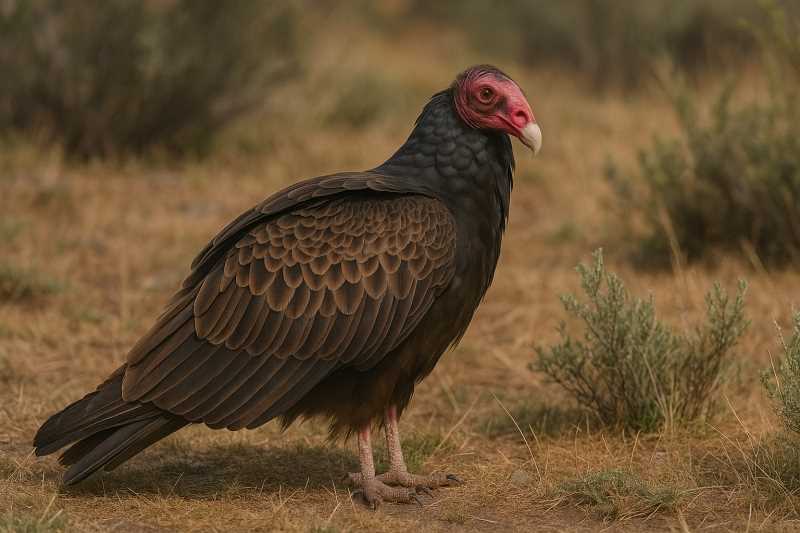
The Turkey Vulture is easily identifiable by its distinctive red head, which is featherless, aiding in hygiene as it feeds on carrion. Adults typically have a wingspan of about six feet, making them one of the largest birds of prey in North America. Their plumage is dark brown with a slight sheen, and they possess a slightly hooked beak that is well-suited for tearing through tough animal hides.
Their keen eyesight and exceptional sense of smell—unique among New World vultures—enable them to detect the scent of decaying flesh from over a mile away. This adaptation is particularly useful as they soar on thermals, conserving energy while searching for food across vast areas.
Habitat and Range
Turkey Vultures are one of the most widespread vulture species in the Western Hemisphere. They inhabit a wide range of environments, from forests and shrublands to deserts and grasslands. These adaptable birds can be found from southern Canada down through the entirety of the United States and into Central and South America.
They are migratory in the northern parts of their range, moving southward in the winter to take advantage of milder climates and more abundant food sources. During migration, they travel in groups, sometimes forming large flocks known as “kettles,” which can number in the hundreds.
Diet and Feeding Behavior
As obligate scavengers, Turkey Vultures primarily feed on carrion. Their diet is not limited to any specific type of animal, as they consume anything from small rodents to large mammalian carcasses. Their role as scavengers is crucial, as they help prevent the spread of disease by disposing of dead animals.
The Turkey Vulture’s digestive system is highly specialized to cope with the bacteria and toxins found in decaying flesh. Their stomach acid is exceptionally corrosive, allowing them to safely digest and neutralize harmful pathogens.
Behavior and Social Structure
Turkey Vultures are social creatures, often seen roosting in large groups. They communicate through body language and vocalizations, although they lack a syrinx and thus cannot produce complex calls. Instead, they make hissing and grunting noises.
Their flight is characterized by a unique, unsteady wobble, which aids them in utilizing wind currents effectively. This energy-efficient method of flying allows them to cover large distances while expending minimal effort.
Reproduction
Breeding season for Turkey Vultures occurs in the spring. They are monogamous and often return to the same nesting sites year after year. Rather than building traditional nests, they lay their eggs in sheltered locations such as caves, hollow logs, or abandoned buildings.
The female usually lays two eggs, which are incubated by both parents. After about five to six weeks, the chicks hatch and are fed regurgitated food. The young vultures fledge at around ten weeks old but may remain dependent on their parents for several months.
Conservation Status
Currently, the Turkey Vulture is not considered threatened and is listed as a species of Least Concern by the International Union for Conservation of Nature (IUCN). Their adaptability and wide range have helped maintain stable population numbers. However, like all wildlife, they face threats from habitat destruction, pollution, and human interference.
Conclusion
The Turkey Vulture, with its crucial role in the ecosystem, efficient adaptations, and wide range, is a remarkable bird that deserves appreciation. By understanding and respecting their ecological contributions, we can better appreciate the intricate balance of nature in which they play a vital part.
While they may not be the most glamorous of birds, their presence is a testament to the complexity and interdependence of natural systems. The Turkey Vulture not only cleans up the environment but also provides a valuable service that benefits both nature and human communities alike.
This is one of the species covered in our book Vultures and Condors Of The World which is part of our Kings Birds of the world series, and one of the Kings Guides.

Related posts