Introduction
The Little Bunting, scientifically known as Emberiza pusilla, is a small passerine bird belonging to the family Emberizidae. Known for its discreet demeanor and subtle beauty, this bird has captured the attention of ornithologists and bird enthusiasts around the globe. Despite its small size, the Little Bunting plays a significant role in the ecosystem, influencing both its natural habitat and human observers. This comprehensive article delves into the various aspects of the Little Bunting’s life, including its taxonomy, physical characteristics, habitat, behavior, breeding, migration patterns, and conservation status.
Taxonomy and Classification
The Little Bunting was first described by the German zoologist Peter Simon Pallas in 1776. Its scientific name, Emberiza pusilla, is derived from Latin, where "pusilla" translates to "small," aptly describing this diminutive bird.
Belonging to the family Emberizidae, the Little Bunting shares its lineage with other buntings and sparrows. The Emberizidae family is known for its diverse group of seed-eating birds with conical bills, and the Little Bunting is no exception. It is closely related to other buntings such as the Reed Bunting (Emberiza schoeniclus) and the Yellowhammer (Emberiza citrinella).
Physical Characteristics
The Little Bunting is a small bird, measuring approximately 13-14 cm in length with a wingspan ranging from 20-22 cm. It weighs around 10-12 grams, making it one of the smaller members of the bunting family.
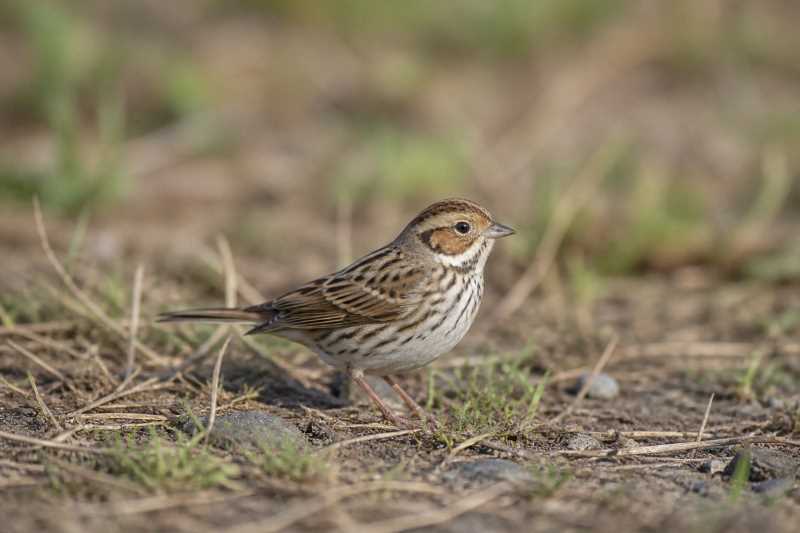
Its plumage is primarily brown with streaks of black, providing excellent camouflage against the forest floor and dense undergrowth where it often resides. The bird’s head features a distinct pattern, with a chestnut-brown cap and a striking white eye-ring. Males and females are similar in appearance, though females tend to have slightly duller plumage.
The Little Bunting’s bill is short and conical, adapted for a diet primarily composed of seeds. During the breeding season, its diet expands to include insects and other invertebrates, providing essential protein for growing chicks.
Habitat and Distribution
The Little Bunting is primarily found across the Palearctic region, with its breeding range extending from Scandinavia and Northern Russia to Eastern Siberia. During the non-breeding season, these birds migrate southwards to escape the harsh northern winters, inhabiting areas across South Asia, including parts of India, China, and Southeast Asia.
Its preferred habitats include open woodlands, forest edges, and shrubby areas, often near water sources. The bird’s adaptability allows it to thrive in a variety of environments, from deciduous and coniferous forests to agricultural landscapes.
Behavior and Diet
The Little Bunting is known for its elusive nature, often remaining hidden within dense vegetation. It is a ground-dwelling bird that forages for food on the forest floor. Its primary diet consists of seeds, but during the breeding season, it supplements its diet with insects and larvae to provide adequate nourishment for its young.
This species is generally solitary outside of the breeding season, though it may form small flocks during migration. Its call is a soft "tsip" or "tsit," which is often heard during flight or when the bird is agitated.
Breeding and Nesting
Breeding occurs from May to July, primarily in the northern parts of its range. The Little Bunting is monogamous, with pairs forming at the beginning of the breeding season.
Nests are constructed close to the ground, often hidden among grasses or low shrubs. The female typically lays 4-6 eggs, which are incubated for about 12-14 days. Both parents participate in feeding the chicks, which fledge approximately two weeks after hatching.
The breeding success of the Little Bunting is influenced by various factors, including predation, food availability, and weather conditions. Despite these challenges, the species has developed strategies to maximize reproductive success, such as re-nesting if the first clutch is lost.
Migration Patterns
The Little Bunting is a migratory bird, undertaking long journeys between its breeding and wintering grounds. Migration typically occurs from late August to November, with birds traveling south to escape the cold northern winters.
During migration, the birds follow well-established routes, often stopping at key sites to rest and refuel. These stopover sites are crucial for the birds’ survival, providing essential resources needed for the continuation of their journey.
In spring, the return migration to breeding grounds begins in March and continues through May. The timing of migration is influenced by factors such as weather conditions and food availability, with birds adjusting their departure and arrival times accordingly.
Conservation Status and Threats
The Little Bunting is currently listed as a species of Least Concern by the International Union for Conservation of Nature (IUCN). Its wide distribution and relatively stable population contribute to this status. However, like many bird species, the Little Bunting faces threats from habitat loss, climate change, and human activities.
Deforestation and land-use changes in both breeding and wintering areas pose significant threats to the species’ habitat. Additionally, climate change may alter migration patterns and affect food availability, posing further challenges to the Little Bunting’s survival.
Conservation efforts are essential to ensure the continued survival of the Little Bunting. Protecting key habitats, monitoring population trends, and conducting research on the species’ ecology and behavior are crucial steps in safeguarding its future.
Conclusion
The Little Bunting, Emberiza pusilla, is a fascinating species that exemplifies the beauty and complexity of avian life. Despite its small size, it plays an important role in the ecosystems it inhabits, influencing both natural environments and human observers. Understanding and conserving this species is vital not only for maintaining biodiversity but also for preserving the intricate balance of nature.
As we continue to study and appreciate the Little Bunting, it serves as a reminder of the delicate interplay between wildlife and the environment, highlighting the importance of conservation efforts in ensuring the survival of this remarkable bird species.
Related posts