Introduction
The White-vented Euphonia (Euphonia minuta) is a small passerine bird belonging to the family Fringillidae, commonly found in the tropical regions of Central and South America. Known for its vibrant plumage and distinctive calls, the White-vented Euphonia is a captivating subject for ornithologists and bird enthusiasts alike. This article delves into the characteristics, habitat, behavior, and conservation status of this remarkable bird species.
Physical Characteristics
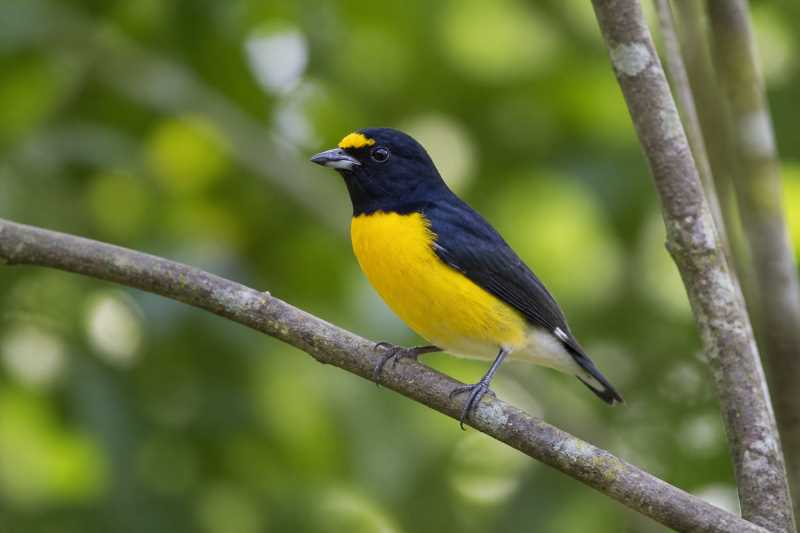
The White-vented Euphonia is a small bird, measuring about 9-10 centimeters in length and weighing between 9-14 grams. Males and females exhibit sexual dimorphism, with males being more colorful. The male boasts a bright yellow underbelly, a striking blue-black crown, and a greenish back. The most distinguishing feature is the white vent, after which the species is named. Females, on the other hand, have a more subdued olive-green plumage with a duller yellow underside, which aids in camouflage.
Habitat and Distribution
Euphonia minuta is primarily distributed across the tropical lowland forests of Central and South America, ranging from southern Mexico to Bolivia and western Brazil. They are typically found in humid forests, forest edges, and secondary growth areas. The species shows a preference for areas with dense foliage, which provides ample resources for feeding and nesting.
Their adaptability to different forest environments, including degraded habitats, has allowed them to maintain relatively stable populations despite the ongoing deforestation in parts of their range. However, their reliance on forested habitats makes them vulnerable to large-scale habitat destruction.
Behavior and Diet
White-vented Euphonias are social birds often seen in pairs or small flocks. They are known for their melodic calls, which are a series of sweet-sounding whistles and chirps. These calls play a crucial role in communication between individuals, especially during the breeding season.
Their diet primarily consists of fruits, with a particular fondness for mistletoe berries. They occasionally consume insects and other small invertebrates, especially to meet the protein demands during the breeding season. This frugivorous diet plays a significant role in seed dispersal, contributing to forest regeneration.
Breeding and Reproduction
The breeding season of the White-vented Euphonia varies geographically but generally coincides with the wet season when food resources are abundant. During this time, males engage in elaborate displays to attract females, including singing and showcasing their vibrant plumage.
Nests are typically built in tree cavities, abandoned woodpecker holes, or dense foliage. The female is primarily responsible for constructing the nest, which is a cup-shaped structure made from plant fibers, moss, and feathers. Clutch size usually ranges from 2 to 4 eggs, which are incubated by the female for about two weeks. Both parents share the responsibility of feeding the chicks once they hatch.
Conservation Status
The White-vented Euphonia is currently listed as a species of Least Concern on the IUCN Red List. While their population is considered stable, the species faces threats from habitat loss due to deforestation and land conversion for agriculture. Conservation efforts focused on preserving tropical forests are essential to ensure the long-term survival of this species.
In addition to habitat preservation, raising awareness about the ecological importance of Euphonias in seed dispersal can aid in conservation initiatives. Birdwatching and ecotourism also offer potential avenues for promoting the protection of these birds by highlighting their role in maintaining biodiversity.
Conclusion
The White-vented Euphonia is a testament to the vibrant biodiversity found within the tropical forests of the Americas. Its colorful appearance, melodious calls, and ecological role as a seed disperser make it a fascinating subject of study and admiration. While currently not at immediate risk, continued efforts to protect their natural habitats are crucial to ensure that future generations can enjoy the beauty and ecological contributions of this remarkable species.
References
- Restall, R., & Rodner, C. (2006). "Birds of Northern South America: An Identification Guide." Yale University Press.
- Schulenberg, T. S., & Stotz, D. F. (2007). "Neotropical Birds: Ecology and Conservation." University of Chicago Press.
- BirdLife International (2022). "Euphonia minuta." The IUCN Red List of Threatened Species 2022.
Related posts