Introduction
The Rufous-necked Puffbird (Malacoptila rufa) is a captivating bird species known for its distinctive appearance and intriguing behaviors. Found primarily in the dense forests of South America, this bird is a member of the Bucconidae family, known commonly as the puffbirds. With their charming looks and secretive nature, puffbirds have long fascinated ornithologists and bird enthusiasts alike. This article delves into the various aspects of the Rufous-necked Puffbird, including its habitat, behavior, diet, and conservation status.
Taxonomy and Distribution
The Rufous-necked Puffbird belongs to the order Piciformes, which also includes toucans, woodpeckers, and jacamars. Within the genus Malacoptila, this species is one of several puffbirds, each with unique adaptations and appearances. The Rufous-necked Puffbird is primarily found in the tropical regions of South America, with its range extending across countries like Brazil, Colombia, Ecuador, Peru, and Venezuela.
These birds inhabit lowland rainforests and are typically found at altitudes ranging from sea level to around 1,500 meters. Their preference for dense, humid forests often places them in areas that are difficult for humans to access, contributing to their elusive nature.
Physical Characteristics
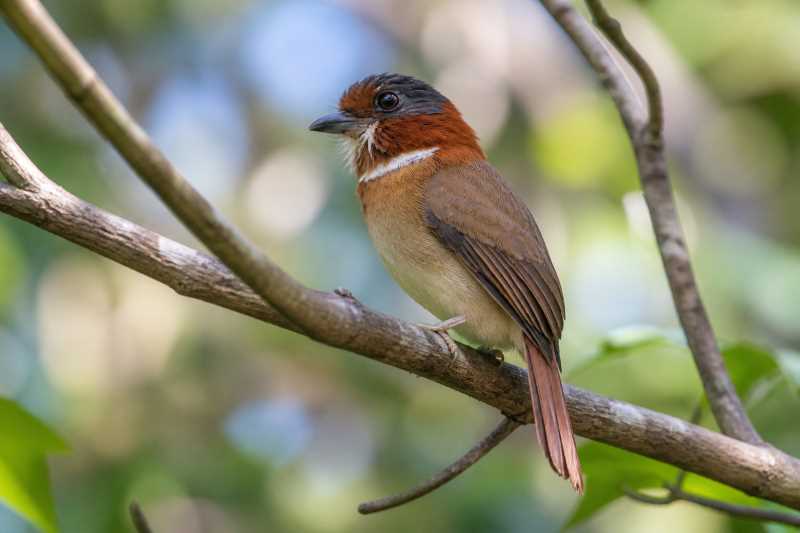
The Rufous-necked Puffbird is notable for its distinctive plumage. As suggested by its name, it features a rufous or reddish-brown band around its neck, which contrasts with its otherwise muted coloration. The rest of its body is adorned with shades of brown, black, and white, allowing it to blend seamlessly into the forest environment.
These birds have a robust build, with a large head and a stout bill that is slightly hooked at the tip. Their eyes are large and dark, giving them a striking appearance. Adult puffbirds typically measure between 18 to 20 centimeters in length and weigh around 40 to 50 grams, making them relatively small but substantial for their family.
Behavior and Ecology
Rufous-necked Puffbirds are known for their solitary and sedentary lifestyle. They are often seen perched quietly on branches, scanning their surroundings for prey. This behavior is typical among puffbirds, who rely on their excellent camouflage and patient hunting techniques to capture food.
These birds are primarily insectivorous, feeding on a variety of insects and small invertebrates. Their diet includes beetles, ants, spiders, and caterpillars. On occasion, they may also consume small vertebrates, such as lizards and frogs. Rufous-necked Puffbirds are sit-and-wait predators, remaining motionless until an unsuspecting prey item ventures too close, at which point they swiftly swoop down to capture it.
Their vocalizations are another interesting aspect of their behavior. Although generally quiet, Rufous-necked Puffbirds produce a series of low, melodious whistles that can be heard echoing through the forest. These calls are primarily used for communication between mates and to establish territory.
Reproduction and Lifespan
The breeding behavior of Rufous-necked Puffbirds is not extensively documented, but like other puffbirds, they are believed to practice monogamy. During the breeding season, which typically coincides with the rainy season, pairs work together to excavate a nest in a termite mound or a bank of earth. This behavior is quite unique among birds and provides the nest with added protection from predators.
Once the nest is prepared, the female lays a clutch of two to three eggs. Both parents share the responsibility of incubating the eggs and feeding the chicks once they hatch. The young are altricial, meaning they are born relatively undeveloped and require significant parental care before they are ready to fledge.
The lifespan of Rufous-necked Puffbirds in the wild is not well-documented, but they are thought to live for several years, given their stable and sedentary lifestyle.
Conservation Status and Threats
Currently, the Rufous-necked Puffbird is classified as "Least Concern" by the International Union for Conservation of Nature (IUCN). This classification indicates that the species is not at immediate risk of extinction. However, like many species residing in tropical forests, the Rufous-necked Puffbird faces potential threats from habitat loss and deforestation.
The expansion of agriculture, logging, and infrastructure development in South America continues to pose a threat to many forest-dwelling species. Conservation efforts aimed at preserving large tracts of forest and promoting sustainable land-use practices are crucial for ensuring the long-term survival of the Rufous-necked Puffbird and other forest-dependent wildlife.
Conclusion
The Rufous-necked Puffbird is a remarkable species that exemplifies the beauty and diversity of tropical avian life. Its distinct appearance, secretive behavior, and unique ecological role make it a fascinating subject for study and conservation. By understanding and protecting their habitats, we can continue to appreciate the presence of these captivating birds in the wild. As we deepen our knowledge of the Rufous-necked Puffbird, we also gain valuable insights into the broader ecosystem dynamics of the tropical forests they inhabit.
Related posts