The Hispaniolan Palm Crow: A Fascinating Avian Inhabitant of the Caribbean
The Caribbean region, with its lush landscapes and vibrant ecosystems, is home to a myriad of unique and captivating wildlife species. Among these is the Hispaniolan Palm Crow (Corvus palmarum), a lesser-known member of the crow family that commands interest due to its distinct characteristics and critical conservation status. This article delves into the world of the Hispaniolan Palm Crow, exploring its habitat, behavior, and the challenges it faces in the modern world.
Habitat and Distribution
The Hispaniolan Palm Crow, as its name suggests, is endemic to the island of Hispaniola, which is divided between the nations of Haiti and the Dominican Republic. This crow is typically found in lowland and montane forests, often in proximity to palm trees, which are integral to its lifestyle and diet. The species’ distribution is quite limited, with populations primarily concentrated in the island’s northern and eastern regions, particularly in the Sierra de Bahoruco and the Cordillera Central.
Unfortunately, the habitat of the Hispaniolan Palm Crow has undergone significant changes due to human activities. Deforestation for agriculture, logging, and urban expansion has led to habitat fragmentation, posing a major threat to the survival of this species. Conservation efforts are crucial to protect the remaining forested areas and ensure the continuity of this crow’s natural habitat.
Physical Characteristics and Behavior
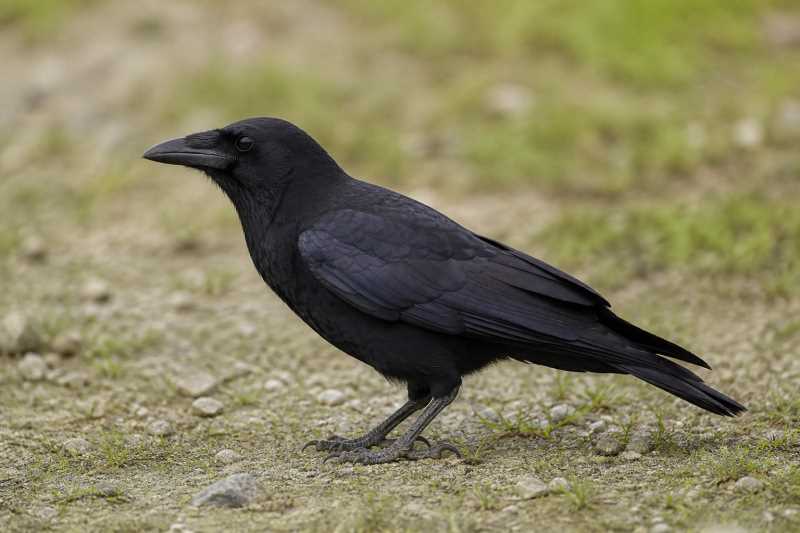
The Hispaniolan Palm Crow is a relatively small member of the Corvidae family, measuring approximately 34-38 cm in length. It is characterized by its glossy black plumage, stout bill, and distinctive calls that differ from those of its close relatives. Unlike the larger and more common American Crow, the Hispaniolan Palm Crow has a more slender build and exhibits more subtle vocalizations, often described as a series of soft, croaking sounds.
Social by nature, these crows are often observed in small family groups or flocks. Their social structure is a key aspect of their behavior, with cooperative breeding being a notable feature. In this system, younger birds assist in raising the offspring of the dominant pair, a strategy that enhances the survival rate of the young in challenging environments.
Diet and Feeding Habits
The diet of the Hispaniolan Palm Crow is diverse, reflecting the adaptability of this species to various food sources available in its habitat. It primarily feeds on insects, small vertebrates, seeds, and fruits. The crow has a particular affinity for palm nuts, a dietary preference that links it closely to its preferred habitat of palm groves.
Foraging behavior in the Hispaniolan Palm Crow involves both ground and arboreal techniques. These birds are adept at using their strong bills to extract insects from bark or soil and to crack open hard seeds. Their opportunistic feeding habits are an evolutionary advantage, allowing them to exploit a wide range of food resources in their environment.
Conservation Status and Challenges
The Hispaniolan Palm Crow is currently listed as "Endangered" on the IUCN Red List of Threatened Species. The primary threats to its survival are habitat loss and degradation, primarily due to deforestation. Additionally, the crow faces competition and predation from introduced species, which further exacerbates its population decline.
Conservation efforts are underway to protect this species, with several organizations working to preserve the remaining forested areas of Hispaniola. These initiatives include reforestation projects, legal protection of critical habitats, and community education programs aimed at promoting sustainable land-use practices.
The Role of Ecotourism
Ecotourism has emerged as a potential ally in the conservation of the Hispaniolan Palm Crow. By promoting birdwatching and nature tours, local communities can benefit economically from preserving their natural habitats. This approach not only raises awareness about the crow and its ecological importance but also incentivizes locals to participate in conservation activities.
Conclusion
The Hispaniolan Palm Crow is a remarkable bird that embodies the rich biodiversity of the Caribbean. Its survival, however, is intricately tied to the health of its natural habitat. As conservationists and local communities work together to protect this endangered species, there is hope that future generations will continue to marvel at the sight and sound of the Hispaniolan Palm Crow in its native lands.
Preserving the Hispaniolan Palm Crow is not just about saving a single species; it is about maintaining the delicate balance of an ecosystem that supports countless other forms of life. Through concerted efforts and sustainable practices, we can ensure that this unique crow remains a vital part of the Caribbean’s natural heritage.
Related posts