Introduction
The Nigerian Free-tailed Bat (Mops nigeriae) is a fascinating mammal species belonging to the family Molossidae. Known for its swift flight and distinctive tail, this bat plays a vital role in the ecosystems it inhabits by controlling insect populations. Despite its ecological significance, it remains relatively obscure in scientific literature, making its conservation status a topic of interest for researchers and environmentalists.
Physical Description
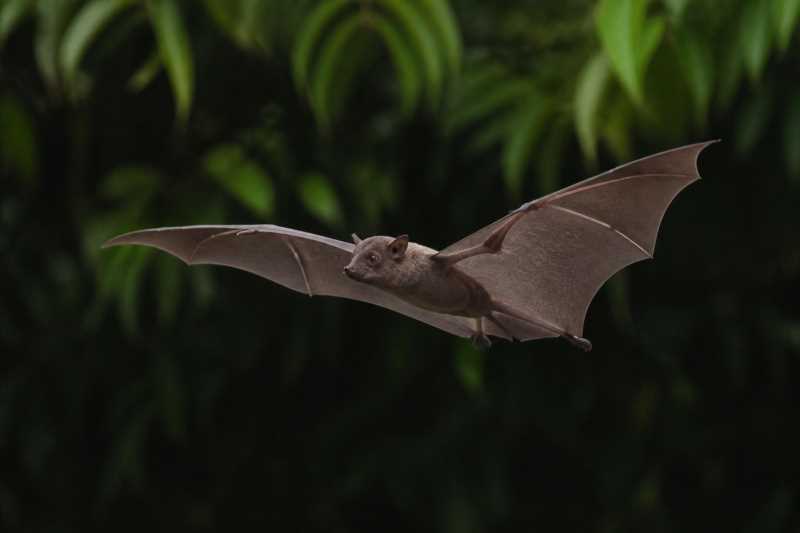
The Nigerian Free-tailed Bat is characterized by a robust body structure and a tail that extends beyond the tail membrane, a common trait among free-tailed bats. This species exhibits sexual dimorphism, with males typically larger than females. Their fur is short and ranges from a dark brown to grayish hue, providing excellent camouflage in their natural habitat. Adults weigh between 20 to 30 grams, with a wingspan that can reach up to 40 centimeters, allowing for agile and fast flight, which is essential for their insectivorous diet.
Range and Habitat
Mops nigeriae is predominantly found in West Africa, with recorded populations in Nigeria, Ghana, and some parts of Cameroon. These bats favor warm, tropical climates and are often found roosting in crevices of rocky outcrops, caves, and sometimes in buildings. They adapt well to urban environments, often seen in towns and cities where insect populations are abundant. Their range is influenced by the availability of roosting sites and prey, making habitat preservation crucial for their survival.
Behavior and Diet
The Nigerian Free-tailed Bat is predominantly nocturnal, emerging at dusk to forage for food. Their diet mainly consists of flying insects, including moths, beetles, and other small arthropods. They use echolocation to navigate and hunt, emitting high-frequency sounds that bounce off objects, allowing them to detect and capture prey efficiently. Socially, these bats are known to form colonies that can range from a few individuals to several hundred, often comprising mixed-sex groups. Their social structure and mating behaviors, however, remain subjects of further study.
Identification Tips (Field Recognition Cues)
Identifying the Nigerian Free-tailed Bat in the field requires close observation of several key features. Look for:
- A protruding tail that extends beyond the tail membrane.
- Short, dark fur that may appear glossy under certain lighting conditions.
- A broad, rounded head with large, forward-facing ears that aid in echolocation.
- Rapid, direct flight patterns, often seen at dusk when they are most active.
Conservation Status (with Threats and Protections)
The conservation status of Mops nigeriae is currently listed as Least Concern by the IUCN, but this does not mean the species is free from threats. Habitat destruction due to urbanization and deforestation poses a significant risk, reducing available roosting and feeding sites. Additionally, pesticide use can diminish their food sources, impacting their populations. Conservation efforts focus on habitat protection and creating awareness about the ecological role of bats in controlling insect populations. Legal protections in some regions help safeguard their habitats, but more comprehensive measures are needed to ensure their long-term survival.
Frequently Asked Questions
1. What is the primary diet of the Nigerian Free-tailed Bat? The Nigerian Free-tailed Bat mainly feeds on flying insects such as moths and beetles, utilizing echolocation to hunt effectively during the night.
2. Where can the Nigerian Free-tailed Bat be found? This species is commonly found in West Africa, particularly in Nigeria, Ghana, and Cameroon, inhabiting rocky areas, caves, and urban environments.
3. How does the Nigerian Free-tailed Bat contribute to the ecosystem? By preying on flying insects, the Nigerian Free-tailed Bat helps control insect populations, thus playing a crucial role in maintaining ecological balance in its habitat.
4. What are the main threats to the Nigerian Free-tailed Bat? The primary threats include habitat destruction due to urban development and deforestation, along with the reduction of insect populations caused by pesticide use.
5. How can one identify a Nigerian Free-tailed Bat? Look for their characteristic tail that extends beyond the tail membrane, short dark fur, large ears, and their swift, direct flying patterns during dusk.
Related posts