The Enigmatic White-faced Quail-Dove: A Comprehensive Overview
The avian world is a captivating realm of diversity and beauty, and among its myriad of species, the White-faced Quail-Dove (Zentrygon albifacies) stands out with its unique characteristics and elusive nature. This article delves into the life of this remarkable bird, exploring its habitat, behavior, conservation status, and more, to provide a thorough understanding of its place in the ecosystem.
Taxonomy and Identification
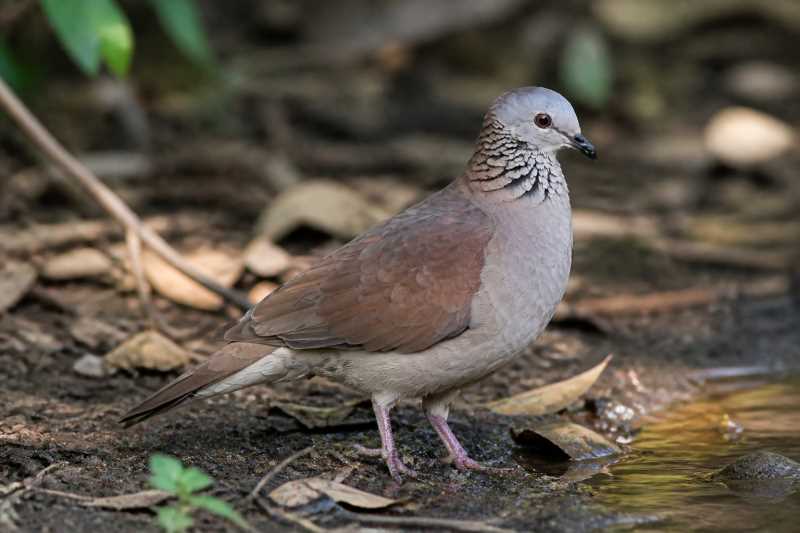
The White-faced Quail-Dove belongs to the Columbidae family, which encompasses pigeons and doves. Its scientific name, Zentrygon albifacies, reflects its distinctive facial coloration—a key feature for identifying this species. The bird exhibits a predominantly brown plumage with a striking white face and throat, setting it apart from other doves. Its eyes are surrounded by a subtle blue eye-ring, and its wings are marked by a soft, iridescent sheen that can appear purple or green depending on the light.
Distribution and Habitat
Zentrygon albifacies is primarily found in Central America, with its range extending from southern Mexico through Guatemala, Honduras, Nicaragua, and into Costa Rica. It inhabits montane and cloud forests, typically at elevations between 900 and 2,400 meters above sea level. These lush, dense forests provide the ideal environment for the White-faced Quail-Dove, offering ample food sources and protection from predators.
The bird’s preference for remote and elevated habitats contributes to its elusive nature, making sightings relatively rare and treasured by birdwatchers and researchers alike.
Behavior and Diet
White-faced Quail-Doves are predominantly ground-dwellers, often seen foraging for food among the leaf litter on the forest floor. Their diet mainly consists of seeds, fruits, and small invertebrates, which they expertly glean from their surroundings. The bird’s feeding habits play a crucial role in seed dispersal, contributing to the health and regeneration of its forest habitat.
These doves are generally solitary or found in pairs, and their shy, reclusive nature makes them difficult to observe in the wild. When disturbed, they tend to walk away quietly rather than take flight, blending seamlessly into their environment.
Breeding and Lifecycle
The breeding season of the White-faced Quail-Dove varies geographically but generally aligns with the rainy season in its range, ensuring an abundance of food for the growing chicks. The species constructs a simple nest made of twigs and leaves, typically located in a low shrub or on the ground.
Females lay one or two eggs per clutch, and both parents share the responsibility of incubation and chick-rearing. The downy chicks are fed a diet of regurgitated food, a common practice among pigeon and dove species, until they are ready to fledge and fend for themselves.
Conservation Status
Currently, the White-faced Quail-Dove is classified as Least Concern by the International Union for Conservation of Nature (IUCN). However, this status does not mean the species is free from threats. Habitat loss due to deforestation and agricultural expansion poses significant risks to its population. As forests in Central America are increasingly converted for human use, the White-faced Quail-Dove’s habitat becomes fragmented, leading to potential declines in population numbers.
Conservation efforts are crucial to preserving the delicate balance of these ecosystems. Protected areas and national parks in the region play a vital role in safeguarding the habitats of not only the White-faced Quail-Dove but countless other species as well.
The Importance of Continued Research
Despite its elusive nature, ongoing research is essential to understanding the full scope of the White-faced Quail-Dove’s ecological role and requirements. Advances in technology, such as remote sensing and bioacoustic monitoring, provide new tools for scientists to study these birds without causing disturbance.
Citizen science initiatives also contribute valuable data, as birdwatchers and local communities report sightings and share observations. These collective efforts help build a comprehensive picture of the species’ distribution, behavior, and population trends.
Conclusion
The White-faced Quail-Dove is a testament to the wonders of avian diversity, its unique adaptations allowing it to thrive in the montane forests of Central America. While its conservation status remains stable, continued vigilance is necessary to ensure that future generations can appreciate this enigmatic bird.
Understanding and protecting the White-faced Quail-Dove is not just about preserving a single species; it is about maintaining the intricate web of life that sustains our planet’s ecosystems. As we deepen our knowledge and expand our conservation efforts, we take vital steps toward a sustainable future for all species, including this fascinating dove.
Related posts