Gianna’s Yellow-shouldered Bat (Sturnira giannae)
Introduction
The Gianna’s Yellow-shouldered Bat, scientifically known as Sturnira giannae, is a fascinating mammal that belongs to the family Phyllostomidae. This bat species is a recent discovery in the world of chiropterology, having been described only in the late 20th century. Named to honor the contributions of Dr. Gianna Giusti, a renowned bat specialist, this species is recognized for its unique physical attributes and ecological importance. As a member of the leaf-nosed bats, Sturnira giannae plays a crucial role in the ecosystems it inhabits, particularly in seed dispersal and pollination. This article delves into the various aspects of this species, from its physical characteristics to its conservation status, providing a comprehensive overview for enthusiasts and researchers alike.
Physical Description
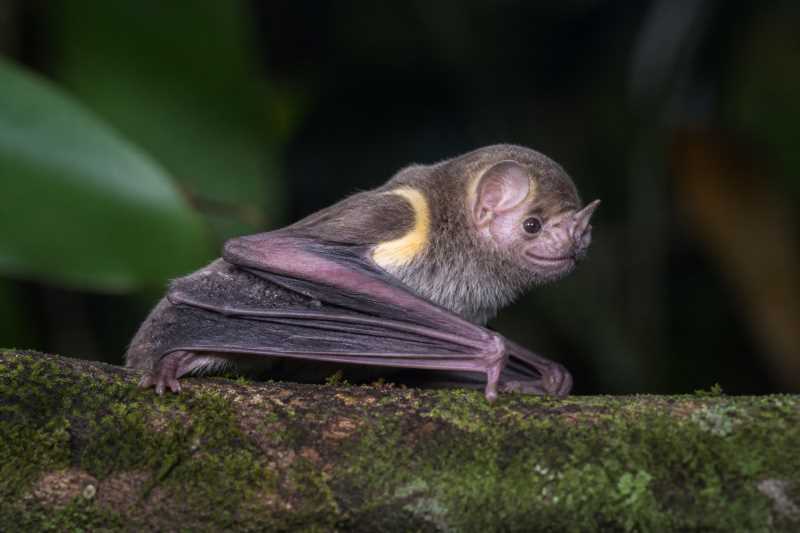
Gianna’s Yellow-shouldered Bat is a medium-sized bat characterized by its distinctive yellowish patches on its shoulders, which are more pronounced in males than females. This feature, coupled with its dark brown to grayish fur, makes it easily identifiable. The bat has a wingspan ranging between 30 to 35 centimeters, with an average body length of about 7 to 9 centimeters. Its muzzle is relatively short and broad, typifying the leaf-nosed bat family, and it bears a well-developed nose leaf that aids in echolocation.
The ears of Sturnira giannae are moderately sized, rounded, and equipped with a tragus that assists in sound reception. The bat’s eyes are small, reflecting its nocturnal lifestyle. Unlike many other bat species, the tail is either absent or significantly reduced, which is a common trait among members of the genus Sturnira.
Range and Habitat
Sturnira giannae is predominantly found in the neotropical regions, with its range extending across Central and South America. It inhabits a variety of environments, including lowland rainforests, montane forests, and occasionally, agricultural areas where it can find abundant food resources. This adaptability to different habitats is crucial for its survival, especially in regions experiencing habitat alterations due to human activities.
The bat prefers habitats with dense vegetation that provides ample roosting sites and protection from predators. It is also known to inhabit caves, hollow trees, and abandoned buildings. The preference for such diverse roosting sites highlights its adaptability and resilience in the face of environmental changes.
Behavior and Diet
Gianna’s Yellow-shouldered Bat is primarily nocturnal, spending its days roosting in secluded spots and emerging at night to forage. It exhibits a frugivorous diet, predominantly feeding on fruits from various plant species, which makes it an important seed disperser in its ecosystem. Additionally, it occasionally consumes nectar and pollen, thereby contributing to the pollination of several plant species.
Social behavior in Sturnira giannae is evident through its roosting habits, often found in small groups. These groups provide warmth and protection, as well as opportunities for social interactions. Communication among individuals is facilitated through vocalizations and scent markings, which play a vital role in maintaining group cohesion and territory demarcation.
Identification Tips (Field Recognition Cues)
When attempting to identify Sturnira giannae in the field, observers should look for the following key features:
- Yellow Shoulder Patches: The most distinctive feature, particularly visible in males.
- Nose Leaf: A prominent structure that assists in echolocation, typical of leaf-nosed bats.
- Fur Coloration: Dark brown to grayish fur, providing excellent camouflage in forested environments.
- Size and Wingspan: Medium-sized with a wingspan of 30 to 35 centimeters.
- Roosting Habits: Often found in dense vegetation, caves, or abandoned structures.
Conservation Status (with Threats and Protections)
Currently, the IUCN Red List categorizes Gianna’s Yellow-shouldered Bat as Least Concern, indicating that it is not immediately at risk of extinction. However, like many other bat species, it faces several threats that could impact its populations in the future.
Threats
- Habitat Destruction: Deforestation and land conversion for agriculture and urban development pose significant threats to its natural habitats.
- Climate Change: Alterations in temperature and precipitation patterns can affect food availability and suitable roosting sites.
- Human Disturbance: Increased human activity, including cave tourism and infrastructure development, can disrupt roosting colonies.
Protections
Conservation efforts aimed at preserving Sturnira giannae include habitat protection and restoration, particularly in key biodiversity areas. Environmental education programs and community involvement in conservation practices are also crucial in mitigating human-induced threats.
Frequently Asked Questions
1. What is the primary diet of Gianna’s Yellow-shouldered Bat?
Gianna’s Yellow-shouldered Bat primarily feeds on fruits, playing a significant role in seed dispersal. It also consumes nectar and pollen, aiding in pollination.
2. Where can Gianna’s Yellow-shouldered Bat be found?
This species is found in the neotropical regions of Central and South America, inhabiting rainforests, montane forests, and sometimes agricultural areas.
3. How does Sturnira giannae contribute to its ecosystem?
Sturnira giannae contributes to its ecosystem through seed dispersal and pollination, promoting plant diversity and forest regeneration.
4. What are the main threats to Gianna’s Yellow-shouldered Bat?
The main threats include habitat destruction, climate change, and human disturbance, which can impact its natural habitats and food sources.
5. How can Gianna’s Yellow-shouldered Bat be identified?
Key identification features include yellow shoulder patches, a prominent nose leaf, dark brown to grayish fur, and medium size with a wingspan of 30 to 35 centimeters.
Related posts