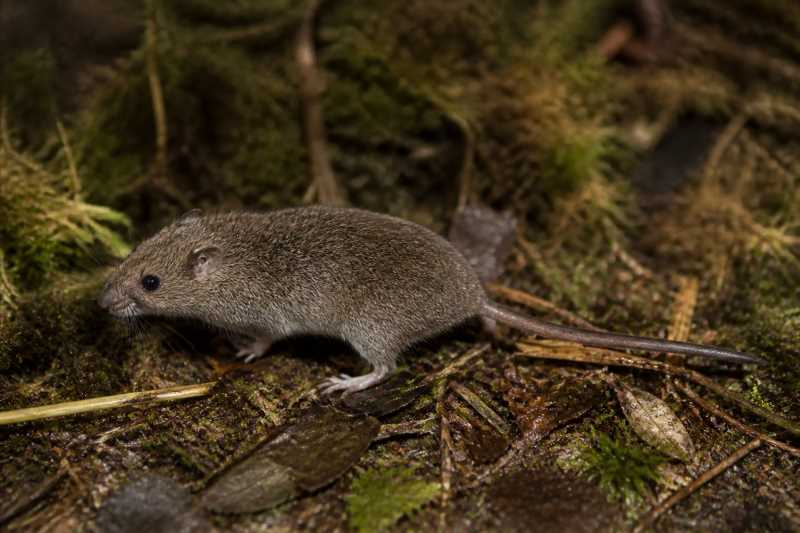
Huon Small-toothed Moss Mouse (Pseudohydromys carlae)
Introduction
The Huon Small-toothed Moss Mouse, scientifically known as Pseudohydromys carlae, is an intriguing yet lesser-known mammalian species. Discovered in the remote montane forests of Papua New Guinea, this elusive rodent has captured the attention of researchers due to its unique adaptations and ecological significance. Despite being overshadowed by more charismatic fauna, the Huon Small-toothed Moss Mouse plays a vital role in its ecosystem, making it a subject of interest for conservationists and wildlife enthusiasts alike.
Physical Description
The Huon Small-toothed Moss Mouse is a diminutive mammal, measuring approximately 8 to 10 centimeters in body length, with a tail extending to about 7 to 9 centimeters. Weighing in at a mere 20 to 30 grams, this species is characterized by its small, delicate frame. Its fur is soft and dense, primarily grey-brown on the dorsal side, while the ventral side features a lighter, almost white coloration.
One of the most distinctive features of the Huon Small-toothed Moss Mouse is its dental morphology. As its name suggests, the mouse possesses small, sharp teeth adapted for its insectivorous diet. Unlike many other rodents, it lacks prominent incisors, which is a unique trait among mammals in its geographical range. The mouse’s eyes are moderately sized, providing it with adequate vision, and its ears are rounded and proportionally small, blending seamlessly into its fur.
Range and Habitat
Endemic to the Huon Peninsula of Papua New Guinea, the Huon Small-toothed Moss Mouse inhabits montane and subalpine forests at altitudes ranging from 1,500 to 3,000 meters. These forests are often shrouded in mist and characterized by dense undergrowth and an abundance of epiphytic mosses, which contribute to the mouse’s common name.
The habitat of the Huon Small-toothed Moss Mouse is marked by high humidity and consistent rainfall, supporting a rich diversity of plant and animal life. The mouse is typically found in areas with thick leaf litter and abundant ground cover, which provide essential resources for foraging and nesting. The fragmented and isolated nature of its habitat poses challenges to the species, making understanding its ecological requirements crucial for its conservation.
Behavior and Diet
The Huon Small-toothed Moss Mouse is primarily nocturnal, exhibiting peak activity during the night when it forages for food. Its diet consists mainly of insects and other small invertebrates, which it locates through a combination of acute hearing and a keen sense of smell. The mouse’s small teeth are perfectly adapted for piercing the exoskeletons of insects, allowing it to efficiently extract nutritional value.
Socially, the Huon Small-toothed Moss Mouse is believed to be solitary, with limited interaction occurring between individuals outside of the breeding season. Little is known about their reproductive behavior, but like many small rodents, they are presumed to have a relatively short gestation period and produce multiple litters per year.
Identification Tips
For field researchers and wildlife enthusiasts hoping to identify the Huon Small-toothed Moss Mouse, several key characteristics can aid in recognition:
- Size and Shape: Look for a small rodent with a slender body and a long tail relative to its body length.
- Fur Coloration: Note the grey-brown dorsal fur and lighter ventral side.
- Teeth: The species’ small, sharp teeth and lack of large incisors are distinctive.
- Habitat: Presence in montane and subalpine forests with dense mossy undergrowth is a strong indicator.
- Activity: Observations during nighttime hours are more likely to be successful.
Conservation Status
The conservation status of the Huon Small-toothed Moss Mouse is currently listed as Data Deficient by the International Union for Conservation of Nature (IUCN). This classification highlights the need for further research to accurately assess population trends and threats.
Threats
The primary threats to the Huon Small-toothed Moss Mouse include habitat degradation and loss due to logging and agricultural expansion. The species’ restricted range makes it particularly vulnerable to environmental changes. Additionally, climate change poses a long-term threat by altering the delicate balance of its montane habitat.
Protections
Efforts to protect the Huon Small-toothed Moss Mouse must focus on habitat preservation and restoration. Establishing protected areas within its range and implementing sustainable land management practices are critical steps. Furthermore, fostering community involvement in conservation initiatives can enhance local awareness and support for protecting this unique species.
Frequently Asked Questions
What is the Huon Small-toothed Moss Mouse?
The Huon Small-toothed Moss Mouse (Pseudohydromys carlae) is a small rodent endemic to the montane forests of Papua New Guinea, known for its unique dental adaptations.
Where can the Huon Small-toothed Moss Mouse be found?
This species is found exclusively in the Huon Peninsula of Papua New Guinea, inhabiting montane and subalpine forests at altitudes of 1,500 to 3,000 meters.
What does the Huon Small-toothed Moss Mouse eat?
The diet of the Huon Small-toothed Moss Mouse consists primarily of insects and small invertebrates, which it captures using its small, sharp teeth.
How can you identify the Huon Small-toothed Moss Mouse?
Identification can be made by observing its small size, grey-brown fur, small teeth, and nocturnal activity in montane habitats.
What threats does the Huon Small-toothed Moss Mouse face?
The species faces threats from habitat loss due to logging and agriculture, as well as potential impacts from climate change.
Related posts