Introduction
The Philippine Tarsier (Carlito syrichta) is a small primate species that has captured the fascination of many due to its unique features and mysterious nature. Known for its large eyes and nocturnal habits, this primate is native to the Philippines and is one of the smallest primates in the world. The species is of particular interest to conservationists and biologists because of its distinct evolutionary lineage and the critical role it plays in biodiversity. This article explores the various aspects of the Philippine Tarsier, from its physical characteristics to its habitat, behavior, and conservation status.
Physical Description
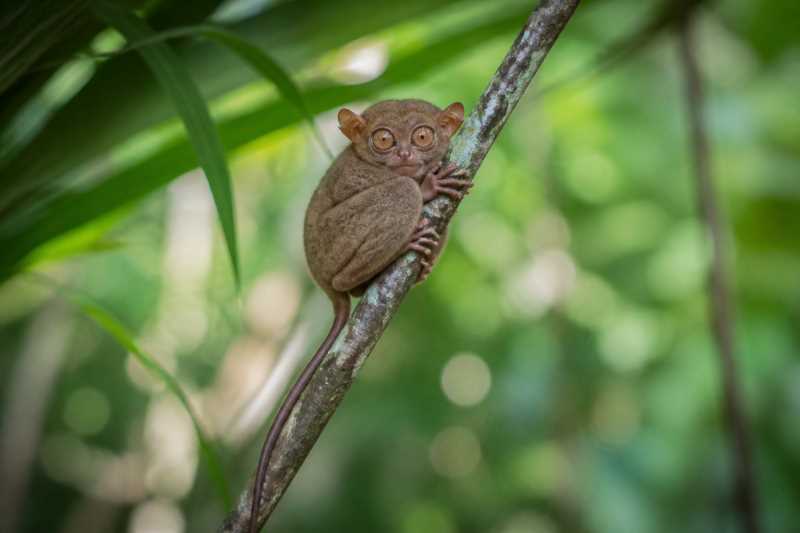
The Philippine Tarsier is renowned for its striking appearance, which includes several adaptations suited for its nocturnal lifestyle. An adult tarsier typically measures about 85 to 160 millimeters in height and weighs between 80 to 160 grams. One of its most distinctive features is its disproportionately large eyes, which are extremely well-adapted for night vision. In fact, each eye is approximately the same size as the animal’s brain, allowing it to see exceptionally well in low-light conditions.
The tarsier’s body is covered in a fine, velvety fur that ranges in color from gray to brown, providing excellent camouflage against tree bark and dense foliage. Its long, thin fingers and toes are equipped with adhesive pads that aid in climbing and grasping branches. The tarsier’s tail, which is more than twice the length of its body, is mostly hairless and assists in balance and mobility as it leaps through the trees.
Range and Habitat
The Philippine Tarsier is primarily found in the southeastern part of the Philippine archipelago, including the islands of Bohol, Leyte, Samar, and Mindanao. These areas offer the dense primary and secondary forests that the species prefers, providing ample cover and an abundant supply of insects, which are a primary component of its diet.
The tarsier’s habitat is typically characterized by thick vegetation with a rich understory, which is essential for its survival. The dense foliage provides protection from predators and an ideal environment for hunting and nesting. Unfortunately, habitat destruction due to logging, agriculture, and urban expansion poses significant threats to these ecosystems.
Behavior and Diet
The Philippine Tarsier is a solitary and territorial animal, primarily active during the night. Its nocturnal habits are supported by its excellent night vision and acute sense of hearing, which it uses to locate prey. Tarsiers are insectivores, with a diet that predominantly consists of insects such as beetles, grasshoppers, and crickets. They have also been known to consume small vertebrates, including lizards and birds.
Tarsiers communicate through a series of high-pitched calls, which are often used to establish territory and attract mates. These vocalizations are typically beyond the range of human hearing. During the day, tarsiers rest in tree hollows or dense foliage, where they are well-hidden from predators.
Identification Tips
Identifying a Philippine Tarsier in the wild can be challenging due to its small size and elusive nature. However, there are several key characteristics to look for:
- Eye Size: The large, forward-facing eyes are a standout feature that is unmistakable.
- Tail: Look for the long, slender tail that is mostly hairless.
- Movements: Tarsiers are known for their quick, agile movements, often leaping from tree to tree.
- Vocalizations: Listening for their high-pitched calls during nighttime excursions can also aid in identification.
Conservation Status
The Philippine Tarsier is currently classified as Near Threatened by the International Union for Conservation of Nature (IUCN). The primary threats to its survival include habitat loss, hunting, and the illegal pet trade. Deforestation due to logging and agricultural expansion has significantly reduced the available habitat for these primates, leading to population declines.
Conservation efforts are underway to protect the remaining populations. Several sanctuaries and protected areas have been established in the Philippines to conserve their natural habitat. Additionally, there are ongoing efforts to educate the public about the importance of preserving this unique species and its ecosystem.
Frequently Asked Questions
1. What is the lifespan of a Philippine Tarsier?
The lifespan of a Philippine Tarsier in the wild is generally around 12 years, although they can live longer in captivity under optimal conditions.
2. Why are Philippine Tarsiers endangered?
Philippine Tarsiers are endangered primarily due to habitat destruction, hunting, and the illegal pet trade. Efforts to protect their natural habitats are crucial for their survival.
3. How do Philippine Tarsiers communicate?
Philippine Tarsiers communicate through high-frequency vocalizations that are often beyond the range of human hearing. These sounds are used for mating calls and territorial disputes.
4. Where can I see a Philippine Tarsier in the wild?
You can see Philippine Tarsiers in their natural habitat on the islands of Bohol, Leyte, Samar, and Mindanao, primarily in protected areas and sanctuaries.
5. Can Philippine Tarsiers be kept as pets?
Keeping Philippine Tarsiers as pets is illegal and highly discouraged due to their specific habitat needs and the stress captivity causes them.
Related posts