Black-footed Ferret (Mustela nigripes): A Comprehensive Guide
Introduction
The Black-footed Ferret (Mustela nigripes) is one of North America’s most endangered mammals, captivating wildlife enthusiasts and conservationists alike. Known for its slender body, distinctive facial markings, and nocturnal habits, this elusive species plays a critical role in the prairie ecosystem. Once thought extinct, the Black-footed Ferret has made a remarkable comeback thanks to intensive conservation efforts. This article provides an in-depth overview of the Black-footed Ferret, covering its physical description, habitat, behavior, identification tips, and conservation status.
Physical Description
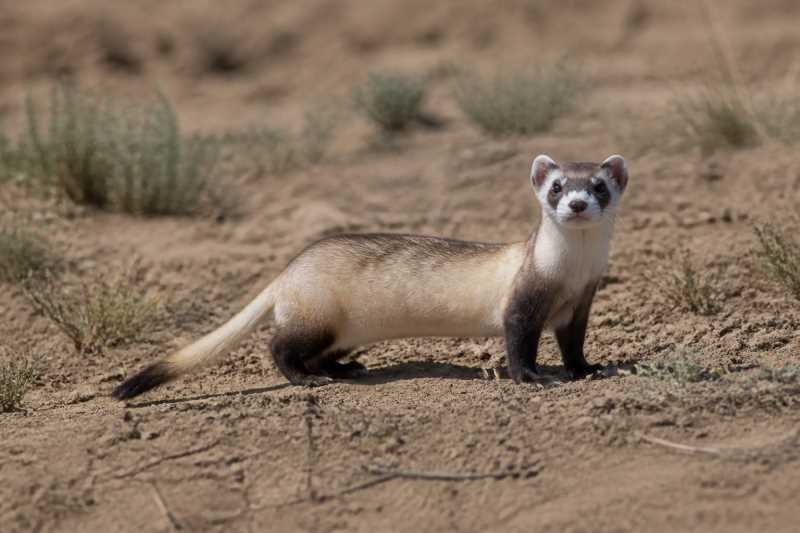
The Black-footed Ferret is a member of the Mustelidae family, closely related to weasels, minks, and otters. Characterized by a slender, elongated body, adult ferrets weigh between 1.5 to 2.5 pounds and measure approximately 18 to 24 inches in length, including a tail that accounts for about one-third of their body length.
The ferret’s coat is a pale yellowish-buff, with black markings on its feet, tail tip, and a distinct mask across its eyes, lending the species its common name. This unique coloration provides effective camouflage in their natural habitat, helping them avoid predators and hunt efficiently.
Range and Habitat
Historically, Black-footed Ferrets inhabited the vast grasslands of North America, from southern Canada to northern Mexico. Today, their range is significantly reduced, and they are primarily found in small, isolated populations in parts of Wyoming, Montana, South Dakota, and Arizona.
Black-footed Ferrets are highly specialized predators, relying almost exclusively on prairie dog colonies for survival. They inhabit burrows within these colonies, using them for shelter, breeding, and as a primary food source. The symbiotic relationship with prairie dogs underscores the importance of healthy prairie ecosystems for the ferrets’ survival.
Behavior and Diet
Black-footed Ferrets are solitary and nocturnal, spending much of their day inside burrows. They are most active at night, employing a keen sense of smell and hearing to hunt their prey. While prairie dogs make up the majority of their diet, accounting for over 90%, ferrets also consume small rodents, birds, and occasionally insects.
Breeding occurs once a year, typically between March and April. After a gestation period of about 42 days, females give birth to a litter of three to five kits. The young are raised solely by the mother, who weans them at around 6 weeks and introduces them to hunting by the age of three months.
Identification Tips (Field Recognition Cues)
Identifying Black-footed Ferrets in the wild requires keen observation skills due to their nocturnal and elusive nature. Here are some tips to help:
- Time of Day: Look for them at dawn or dusk when they are most active.
- Burrow Presence: Focus on areas with active prairie dog colonies, as ferrets are typically nearby.
- Distinctive Coloring: Watch for the contrast of their black feet and facial mask against the lighter body color.
- Behavior: Ferrets often exhibit a characteristic bounding motion when moving above ground.
Conservation Status (with Threats and Protections)
The Black-footed Ferret is listed as endangered by the International Union for Conservation of Nature (IUCN) and under the U.S. Endangered Species Act. The main threats to their survival include habitat loss, disease, and declines in prairie dog populations due to human activities and plague.
Conservation efforts have been paramount in preventing the extinction of the Black-footed Ferret. Captive breeding programs, habitat restoration, and disease management are critical components of these efforts. Successful reintroduction programs have been implemented in various states, leading to the establishment of several wild populations.
Moreover, public awareness initiatives and legal protections are vital in promoting the recovery of this species. Conservationists continue to work with landowners and government agencies to ensure the preservation of suitable habitats and sustainable prairie dog populations.
Frequently Asked Questions
1. Why are Black-footed Ferrets endangered?
Black-footed Ferrets are endangered primarily due to habitat loss and the decline of prairie dog populations, which are essential for their survival. Disease outbreaks, such as sylvatic plague, also pose significant threats to both prairie dogs and ferrets.
2. How do conservationists help Black-footed Ferrets?
Conservationists help by implementing captive breeding programs, reintroducing ferrets into the wild, managing diseases, and working to protect and restore prairie ecosystems. Public awareness and policy advocacy are also key components.
3. Where can I see Black-footed Ferrets in the wild?
Black-footed Ferrets can be spotted in select wildlife refuges and national parks in the western United States, particularly in areas with active prairie dog colonies. Locations like the Conata Basin in South Dakota and the Shirley Basin in Wyoming are known for reintroduction efforts.
4. What role do prairie dogs play in the Black-footed Ferret’s life?
Prairie dogs are crucial for Black-footed Ferrets, providing both a primary food source and burrows for shelter. The health of prairie dog populations directly impacts ferret populations.
5. What can I do to help Black-footed Ferret conservation?
Supporting organizations that work on ferret conservation, advocating for policies that protect prairie habitats, and increasing public awareness are effective ways to contribute to the survival of Black-footed Ferrets.
Related posts