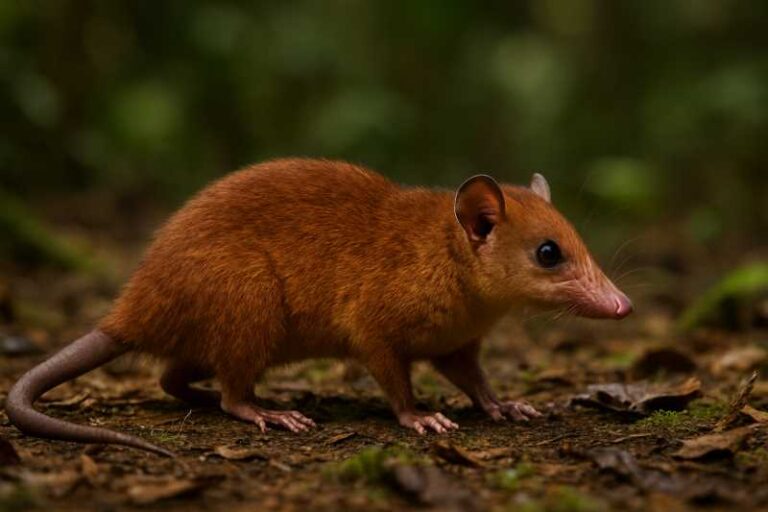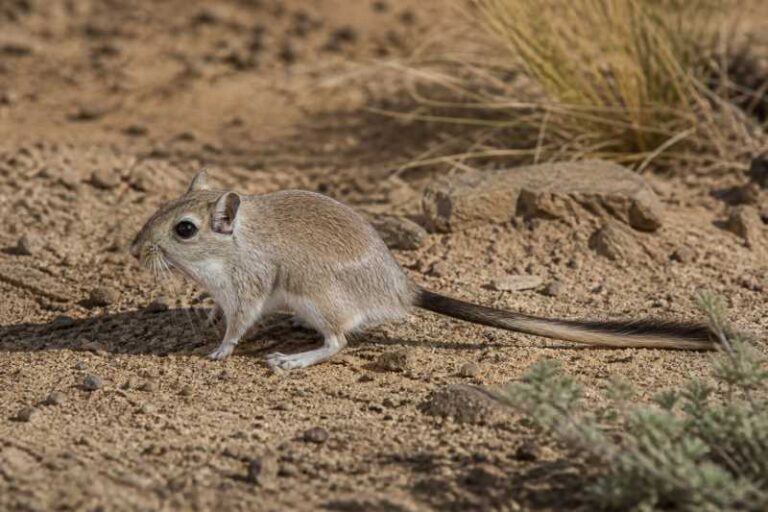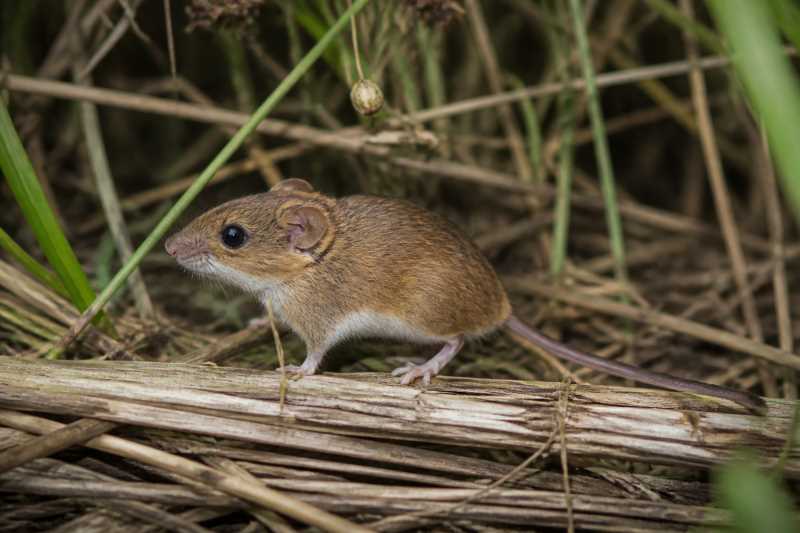
Eastern Harvest Mouse (Reithrodontomys humulis)
Introduction
The Eastern Harvest Mouse, scientifically known as Reithrodontomys humulis, is a small rodent belonging to the Cricetidae family. This diminutive mammal is native to North America and plays a crucial role in its ecosystem as both a prey and a consumer of various seeds and insects. Despite its small size, the Eastern Harvest Mouse exhibits a fascinating array of behaviors and adaptations that make it a subject of interest for both scientists and nature enthusiasts.
Physical Description
The Eastern Harvest Mouse is notably small, with adults typically measuring between 4.5 to 6 inches in total length, including a tail that ranges from 2 to 3 inches. Weighing in at around 0.2 to 0.4 ounces, this species is characterized by its delicate build. The fur of the Eastern Harvest Mouse is soft and dense, with a coloration that ranges from brownish-gray on the dorsal side to a lighter, whitish hue on the ventral side. This coloration serves as an effective camouflage against predators in their natural habitat.
The ears of the Eastern Harvest Mouse are relatively large and rounded, enhancing their auditory senses, which are crucial for detecting predators. Their eyes are also large and dark, providing them with good night vision, which is essential for their nocturnal lifestyle. The incisors of the Eastern Harvest Mouse are grooved, a unique feature that distinguishes them from other small rodent species.
Range and Habitat
The Eastern Harvest Mouse is primarily found in the southeastern United States, with its range extending from Maryland and Virginia in the north, down through the Carolinas and Georgia, and into parts of Florida, Alabama, and Mississippi. This mouse prefers habitats that offer dense ground cover, such as grassy fields, meadows, and marshy areas. They are also known to inhabit overgrown fields and the edges of forests where vegetation is abundant.
These habitats provide the necessary cover and food resources that sustain the Eastern Harvest Mouse population. The presence of tall grasses and reeds is particularly important as they use these materials to construct their nests, which are usually located above ground to avoid flooding.
Behavior and Diet
The Eastern Harvest Mouse is predominantly nocturnal, meaning it is most active during the night. This nocturnal behavior helps it avoid many daytime predators. During the day, these mice rest in their nests, which are intricately woven from grasses and other plant materials. These spherical nests are typically placed a few inches above the ground in tufts of grass or low shrubs.
In terms of diet, the Eastern Harvest Mouse is omnivorous. Its diet primarily consists of seeds from grasses and weeds, but it also consumes a significant amount of insects. This diverse diet allows the mouse to adapt to seasonal changes in food availability. During winter months, when seeds are less abundant, insects and other invertebrates become an important food source.
Identification Tips
Identifying the Eastern Harvest Mouse in the field requires keen observation. Key characteristics to look for include:
- Size and Build: Small size with a delicate build, weighing between 0.2 to 0.4 ounces.
- Fur Coloration: Brownish-gray dorsally with a lighter, whitish underbelly.
- Tail Length: Relatively long tail, comprising nearly half of the mouse’s total length.
- Ears and Eyes: Large, rounded ears and prominent dark eyes.
- Habitat: Often found in grassy fields, meadows, and marshy areas.
Conservation Status
The Eastern Harvest Mouse is currently listed as a species of Least Concern by the International Union for Conservation of Nature (IUCN). However, like many other small mammals, it faces several threats that could impact its population in the future. Habitat loss due to agricultural expansion, urban development, and climate change poses significant risks to its natural habitats. Additionally, the use of pesticides can reduce the availability of insects, a crucial food source.
Conservation efforts focus on protecting and restoring natural habitats to ensure the survival of the Eastern Harvest Mouse. This includes conserving grassy and marshy areas and promoting sustainable agricultural practices that minimize habitat disruption.
Frequently Asked Questions
What does the Eastern Harvest Mouse eat?
The Eastern Harvest Mouse primarily feeds on seeds from grasses and weeds, supplemented by insects. This omnivorous diet helps it adapt to seasonal changes in food availability.
How can I identify an Eastern Harvest Mouse?
Look for a small rodent with a brownish-gray back, lighter underbelly, long tail, large ears, and prominent eyes. They are often found in grassy or marshy areas.
Where is the Eastern Harvest Mouse found?
This species is found in the southeastern United States, from Maryland and Virginia down through the Carolinas, Georgia, and into parts of Florida, Alabama, and Mississippi.
Is the Eastern Harvest Mouse endangered?
Currently, the Eastern Harvest Mouse is not considered endangered and is classified as Least Concern. However, habitat loss and other environmental pressures could pose future risks.
How does the Eastern Harvest Mouse build its nest?
The Eastern Harvest Mouse constructs spherical nests from grasses and plant materials, typically placing them a few inches above the ground in dense vegetation for protection.
Related posts