Introduction
The Crowned Monkey, scientifically known as Cercopithecus pogonias, is a captivating primate species found in the lush forests of Central Africa. With its striking appearance and intricate social behavior, this monkey has piqued the interest of wildlife enthusiasts and researchers alike. As a member of the guenon family, the Crowned Monkey plays a significant role in the biodiversity of its ecosystem. This article delves into the physical characteristics, habitat, behavior, diet, and conservation status of this remarkable species.
Physical Description
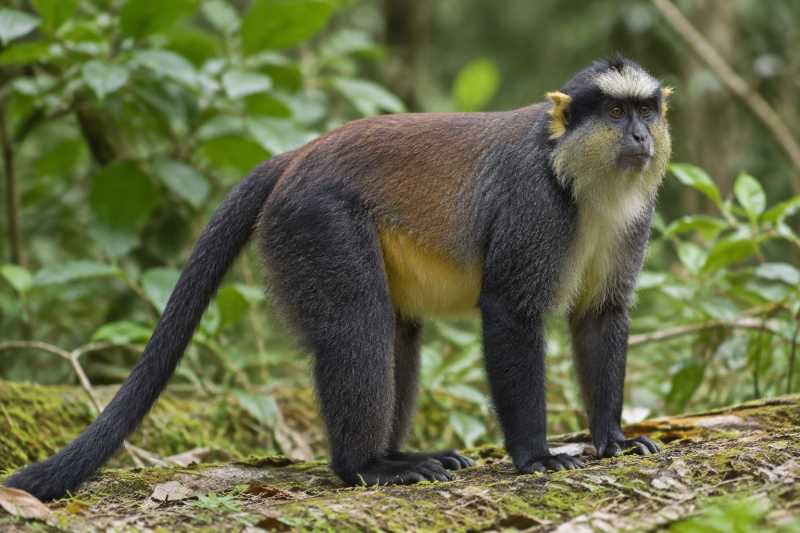
The Crowned Monkey is a medium-sized primate, with males typically larger than females. Adult males weigh between 4 to 7 kilograms, while females range from 3 to 4.5 kilograms. These monkeys boast a distinctive facial pattern, characterized by a white or pale mask around the eyes and a vivid orange or yellow crown, which gives them their name. Their fur is predominantly dark gray or black, with subtle variations in coloration across different populations.
Their limbs are lean and agile, adapted for an arboreal lifestyle. The tail of the Crowned Monkey is notably long, aiding in balance and mobility through the dense forest canopy. Their expressive eyes and keen senses make them adept at navigating their environment and detecting predators.
Range and Habitat
Crowned Monkeys are primarily found in the tropical rainforests of Central and West Africa, with populations distributed across countries like Cameroon, Gabon, Republic of the Congo, and the Central African Republic. They thrive in dense, humid forests and are also known to inhabit secondary forests and swampy areas.
These monkeys exhibit a preference for the mid to upper canopy layers of the forest, where they can forage and travel with relative safety from ground-based predators. The continuous loss of habitat due to deforestation poses a significant threat to their range, emphasizing the need for effective conservation measures.
Behavior and Diet
Crowned Monkeys are social animals, typically forming groups of 10 to 30 individuals. These groups are composed of a mix of males, females, and their offspring, with a social structure that is often dominated by a single alpha male. Vocalizations play a crucial role in their communication, with a repertoire of calls used to convey alarm, coordinate group movements, and establish social bonds.
Their diet is primarily frugivorous, consisting of a wide variety of fruits. However, they are also known to consume leaves, flowers, seeds, and insects, demonstrating a degree of dietary flexibility that aids their survival in fluctuating environmental conditions.
Identification Tips (Field Recognition Cues)
Identifying a Crowned Monkey in the wild can be an exciting challenge. Key features to look for include:
- Facial Markings: The distinctive white mask and bright crown atop their heads.
- Body Size and Shape: Medium-sized with a lean, agile build.
- Tail Length: A long tail that is often used for balance as they move through the trees.
- Behavior: Look for groups moving quietly through the canopy, with individuals foraging or resting.
- Vocalizations: Listen for their varied calls, which can alert you to their presence.
Conservation Status (With Threats and Protections)
The Crowned Monkey is currently listed as Least Concern on the IUCN Red List, but this status does not fully reflect the challenges they face. Habitat destruction, primarily due to logging and agricultural expansion, poses the most significant threat to their survival. Additionally, hunting for bushmeat and the illegal pet trade further pressure their populations.
Conservation efforts are crucial to ensuring the survival of this species. Protected areas and national parks within their range offer some refuge, but more extensive measures, including habitat restoration and stronger law enforcement against poaching, are necessary. Community-based conservation initiatives that involve local populations can also play a vital role in preserving their natural habitats.
Frequently Asked Questions
Why is this species unique?
The Crowned Monkey is unique due to its striking crown of colored fur and complex social structures. Their adaptability to different environments and diverse diet also sets them apart from many other primate species.
How does the Crowned Monkey contribute to its ecosystem?
As frugivores, Crowned Monkeys play a crucial role in seed dispersal, aiding in the regeneration of forest vegetation. Their presence supports the biodiversity of their habitat, contributing to ecological balance.
What are the main threats to Crowned Monkeys?
The primary threats include habitat destruction from deforestation, hunting for bushmeat, and capture for the illegal pet trade. Conservation efforts are needed to mitigate these risks.
How can conservation efforts be improved?
Conservation can be improved by enforcing anti-poaching laws, expanding protected areas, and engaging local communities in conservation activities. Educating the public about the ecological importance of Crowned Monkeys is also vital.
Related posts