Virginia Opossum (Didelphis virginiana)
Introduction
The Virginia opossum (Didelphis virginiana) is North America’s only marsupial, famous for its unique reproductive strategy and adaptability. Found across a wide range of habitats, this nocturnal creature plays a vital role in the ecosystem as both predator and prey. Despite its sometimes misunderstood reputation, the Virginia opossum is a fascinating species worthy of appreciation.
Physical Description
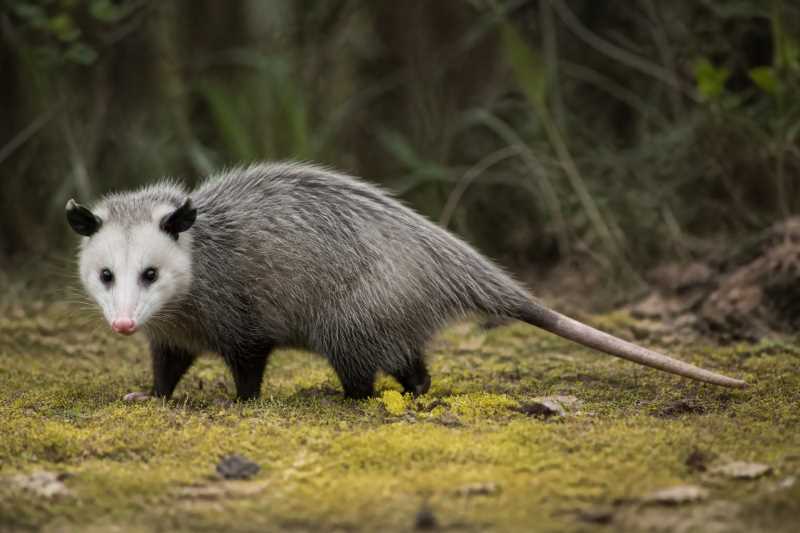
The Virginia opossum boasts a distinctive appearance characterized by its grayish-white fur, long snout, and hairless prehensile tail. Adult opossums typically measure between 13 to 37 inches in length, with an additional 8 to 19 inches attributed to their tail. Weighing between 4 to 15 pounds, their size can vary greatly depending on factors such as age, sex, and environmental conditions.
A prominent feature of the Virginia opossum is its opposable thumbs on the hind feet, aiding in their adept climbing abilities. Their ears are hairless and black, contrasting with their white face. The opossum’s dental formula includes 50 teeth, more than any other North American land mammal, which they utilize for their omnivorous diet.
Range and Habitat
The Virginia opossum is highly adaptable and occupies a vast geographic range. It is native to North America, extending from southern Canada through the United States and into Central America. Originally found primarily in the southeastern United States, opossums have expanded their range northward and westward, facilitated by human-altered landscapes and mild winters.
In terms of habitat, the Virginia opossum shows remarkable flexibility. They thrive in diverse environments, including deciduous forests, agricultural areas, and urban settings. Preferring areas near water sources, such as streams and swamps, they are often found in regions that provide ample food resources and shelter.
Behavior and Diet
The Virginia opossum is primarily nocturnal, emerging at night to forage and explore. Known for their solitary nature, opossums are not territorial and may share overlapping ranges with other individuals. They are also well-known for their defense mechanism of "playing possum," a unique behavior in which they feign death to deter predators.
Opossums are omnivores with a varied diet, consuming fruits, grains, insects, small mammals, carrion, and even garbage. This dietary flexibility allows them to survive in a wide range of environments. They play a crucial role in controlling pest populations and are important scavengers in their ecosystems.
Identification Tips (Field Recognition Cues)
Identifying the Virginia opossum in the field is relatively straightforward due to its distinctive characteristics. Key recognition cues include:
- Size and Shape: Medium-sized with a long, pointed snout and a hunched posture.
- Tail: Long, hairless, and prehensile, used for grasping and balancing.
- Coloration: Grayish-white fur with a lighter face and dark ears.
- Movement: Slow and deliberate on the ground, adept climbers when in trees.
Conservation Status (with Threats and Protections)
The Virginia opossum is currently classified as a species of "Least Concern" by the IUCN Red List, attributed to its stable population and wide distribution. However, they face threats from habitat loss, road mortality, and human-wildlife conflicts.
Conservation efforts focus on mitigating these threats through habitat preservation and public education. Opossums benefit from legal protections in some regions, preventing them from being hunted or trapped without permits. Their adaptability to human-altered environments continues to support their population resilience.
Frequently Asked Questions
Q1: Are Virginia opossums dangerous to humans?
Virginia opossums are generally not dangerous to humans. They are shy and non-aggressive, preferring to avoid confrontation. While they have sharp teeth, they rarely bite unless provoked or cornered. They can carry parasites and diseases like any wild animal, so it is best to admire them from a distance.
Q2: What should I do if I find a baby opossum?
If you find a baby opossum, it is important to determine if it truly needs help. Baby opossums are often left alone while the mother forages. If the baby is in distress or injured, contact a local wildlife rehabilitator for assistance. Never attempt to raise or feed a wild opossum yourself.
Q3: How can I deter opossums from my property?
To deter opossums, secure trash bins, eliminate food sources like pet food or fallen fruit, and block access to potential shelters such as attics or sheds. Using motion-activated lights or sprinklers can also discourage them from visiting your property.
Q4: Do Virginia opossums carry rabies?
Virginia opossums have a low risk of carrying rabies compared to other mammals. Their lower body temperature is thought to make them less susceptible to the virus. However, it is always wise to avoid handling wild animals and to vaccinate pets against rabies.
Q5: What role do opossums play in the ecosystem?
Opossums are important for maintaining ecological balance. They control insect and rodent populations and act as scavengers, cleaning up carrion and organic waste. Their presence supports a healthy and biodiverse environment.
Related posts