Northern Pudu: The World’s Smallest Deer
Introduction
The Northern Pudu (Pudella mephistophiles) is one of the most fascinating members of the deer family. As the world’s smallest deer species, the Northern Pudu has captured the attention of wildlife enthusiasts and scientists alike. This article seeks to provide a comprehensive overview of this unique mammal, covering its physical characteristics, habitat, behavior, and conservation status.
Physical Description
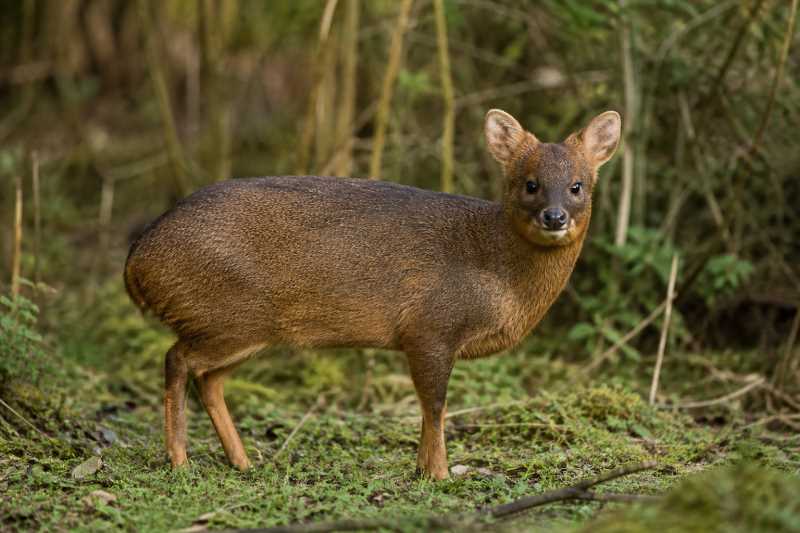
Standing at a mere 32 to 35 centimeters (12.5 to 14 inches) at the shoulder, the Northern Pudu is the epitome of "small but mighty." Adults typically weigh between 3.3 to 6 kilograms (7 to 13 pounds), making them easily distinguishable from other deer species. Their compact body is covered in a dense coat of reddish-brown to dark brown fur, which offers excellent camouflage in their forested habitats.
The Northern Pudu’s face is adorned with large, expressive eyes and short, rounded ears that are adept at picking up sounds in their environment. Males are equipped with small, unbranched antlers, typically measuring about 6 centimeters (2.4 inches) in length. These antlers are shed annually and play a role in establishing dominance during mating seasons.
Range and Habitat
Native to the Andean regions of South America, the Northern Pudu primarily inhabits the mountainous cloud forests of Colombia, Ecuador, and Peru. These locations provide the dense underbrush and rich biodiversity necessary for their survival. The Pudu thrives at altitudes ranging from 2,000 to 4,000 meters (6,500 to 13,000 feet), where cool and moist conditions prevail.
The dense vegetation of these forests offers both food and protection from predators. The Northern Pudu is particularly well adapted to this environment, using its small size and agility to navigate through thick undergrowth with ease.
Behavior and Diet
Northern Pudus are known for their solitary and elusive nature, making them a challenge to study in the wild. They are primarily crepuscular, being most active during dawn and dusk. This behavior helps them avoid predators and human disturbances.
Their diet is primarily herbivorous, consisting of leaves, shoots, berries, and bark. The Pudu is a browser, meaning it feeds on a variety of vegetation types rather than grazing in open fields. This diverse diet is essential for meeting their nutritional needs in the varied environments they inhabit.
Identification Tips
For those fortunate enough to observe a Northern Pudu in its natural habitat, certain field recognition cues can assist in identification. Look for a small, solitary deer with a dark, dense coat and short antlers (if male). Their quick, agile movements and preference for dense underbrush are also key indicators.
Listening for soft rustling sounds in the undergrowth can also be helpful, as Northern Pudus are adept at moving quietly through their environment.
Conservation Status
The International Union for Conservation of Nature (IUCN) has classified the Northern Pudu as a Vulnerable species. The primary threats to their survival include habitat destruction, hunting, and competition with livestock for resources.
Deforestation and land conversion for agriculture are the most significant challenges, as they lead to the loss of the dense forest cover critical for the Pudu’s survival. Efforts to conserve their habitat include establishing protected areas and promoting sustainable land-use practices.
Frequently Asked Questions
What is the Northern Pudu’s natural habitat?
The Northern Pudu inhabits the cloud forests of the Andes in Colombia, Ecuador, and Peru, thriving at altitudes between 2,000 and 4,000 meters.
How does the Northern Pudu avoid predators?
The Pudu uses its small size and agility to navigate through dense underbrush, coupled with crepuscular activity patterns to avoid predators.
What do Northern Pudus eat?
Their diet consists of leaves, shoots, berries, and bark, making them browsers that feed on a variety of vegetation types.
Are Northern Pudus endangered?
The Northern Pudu is classified as Vulnerable by the IUCN due to threats like habitat loss, hunting, and competition with livestock.
How can I identify a Northern Pudu in the wild?
Look for a small, solitary deer with a dark coat and short antlers (in males), often found in dense underbrush at high altitudes.
Related posts