North American Beaver (Castor canadensis)
Introduction
The North American Beaver, scientifically known as Castor canadensis, is one of the most intriguing and industrious mammals found in North America. Renowned for its dam-building abilities, the beaver plays a crucial role in maintaining healthy ecosystems. As a keystone species, its activities create wetland habitats that support a wide variety of wildlife. This article explores the various aspects of the North American Beaver, including its physical characteristics, habitat, behavior, and conservation status.
Physical Description
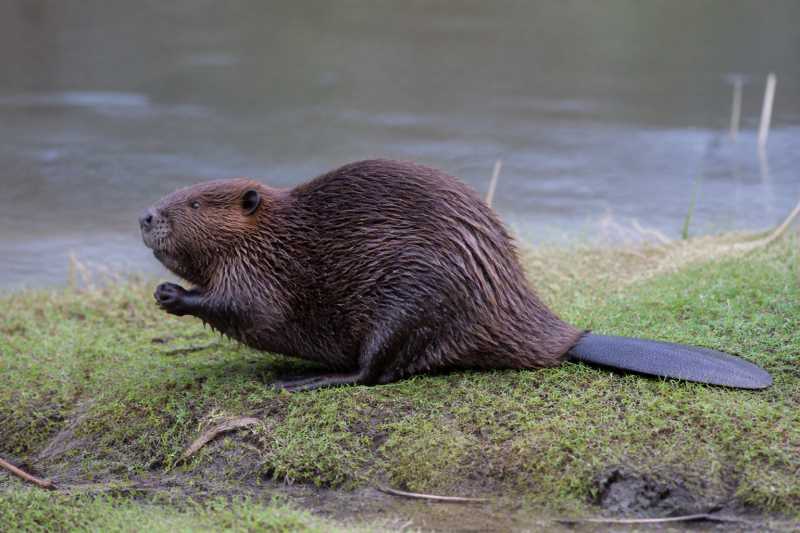
The North American Beaver is a large, semi-aquatic rodent, second only to the capybara in size. Adult beavers typically weigh between 35 to 70 pounds (16 to 32 kg) and measure about 3 to 4 feet (0.9 to 1.2 meters) in length, including the tail. The beaver’s most distinctive feature is its flat, scaly tail, which serves multiple purposes such as propulsion in water, balance on land, and a warning device when slapped against the water surface.
Beavers have a robust body covered with thick, waterproof fur. Their fur consists of two layers: a soft, insulating underfur and a longer, protective outer layer. This adaptation is essential for their survival in cold water environments. The beaver’s large, orange incisors are continuously growing and are used for gnawing wood, their primary building material. These teeth are kept sharp through constant use, allowing beavers to fell trees efficiently.
Range and Habitat
The North American Beaver is widely distributed across the continent, from the northern reaches of Alaska and Canada to the southern United States. They are highly adaptable and can be found in a variety of freshwater habitats, including rivers, streams, lakes, and ponds. Beavers prefer areas with abundant woody vegetation, which provides both food and building materials for their dams and lodges.
Beavers are known for their remarkable engineering skills. They construct dams to create ponds that provide deep water for protection against predators and easy access to food during winter months. These ponds also help regulate water flow and improve water quality, benefiting other species within the ecosystem.
Behavior and Diet
Beavers are primarily nocturnal and spend most of their time in or around water. They are social animals, typically living in family groups known as colonies. A colony usually consists of a mated pair, their offspring, and sometimes a few sub-adults. Beavers are monogamous and form long-term pair bonds.
The diet of the North American Beaver is largely herbivorous, consisting mainly of tree bark, leaves, twigs, and aquatic plants. They have a preference for trees such as aspen, willow, birch, and maple. Beavers have a unique digestive system that allows them to process cellulose, the primary component of wood. During the winter, when food is scarce, beavers rely on food caches stored underwater near their lodges.
Identification Tips
Identifying a North American Beaver in the field can be straightforward if you know what to look for:
- Tail: Look for the distinctive flat, paddle-shaped tail.
- Teeth: The large, orange incisors are a key identifying feature.
- Fur: Dense, brown fur with a noticeable sheen.
- Tracks: Beavers leave webbed tracks with 5 toes in mud or snow.
- Dams and Lodges: Evidence of beaver activity, such as dams and lodges, are strong indicators of their presence.
Conservation Status
The North American Beaver is currently listed as a species of Least Concern by the International Union for Conservation of Nature (IUCN). However, their populations face several threats, including habitat destruction, pollution, and human-wildlife conflict. In some regions, beavers are considered a nuisance due to their dam-building activities, which can lead to flooding and damage to infrastructure.
Conservation efforts for beavers focus on habitat protection and management, as well as public education to promote coexistence. Many regions have implemented beaver management programs to address conflicts while preserving their ecological role.
Frequently Asked Questions
What do beavers eat in winter?
Beavers primarily consume stored food caches in winter, which include branches and twigs from preferred trees like aspen and willow. Their underwater storage allows them access to food even when the surface is frozen.
How do beavers build their dams?
Beavers build dams by cutting down trees and using the branches, mud, and stones to create structures that block water flow. This creates a pond that provides safety and easy access to food.
Are beavers dangerous to humans?
While beavers are generally not dangerous to humans, they can become aggressive if threatened or if their territory is invaded. It is best to observe beavers from a respectful distance.
How long do beavers live?
In the wild, beavers typically live for 10 to 12 years, although they can live longer in captivity. Their lifespan is influenced by factors such as predation, disease, and environmental conditions.
What role do beavers play in the ecosystem?
Beavers are considered ecosystem engineers due to their ability to alter landscapes. Their dam-building activities create wetlands that provide habitat for numerous plant and animal species, improving biodiversity and water quality.
Related posts