Introduction
Carruther’s Mountain Squirrel, scientifically known as Funisciurus carruthersi, is a fascinating and lesser-known member of the Sciuridae family. This species of squirrel is primarily found in the mountainous regions of East Africa, where it plays a vital role in the local ecosystems. Despite its elusive nature, the Carruther’s Mountain Squirrel is an intriguing subject of study for researchers and wildlife enthusiasts alike. This article delves into the various aspects of this species, including its physical characteristics, habitat, behavior, and conservation status, providing a comprehensive overview of Funisciurus carruthersi.
Physical Description
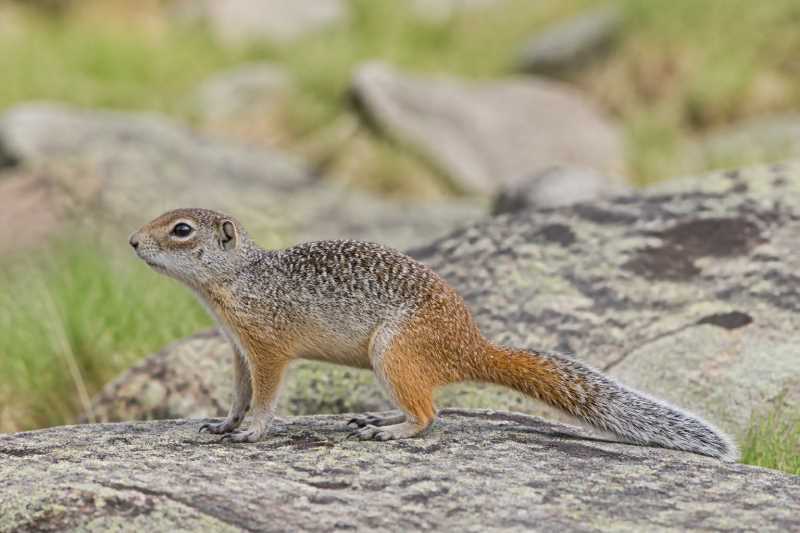
Carruther’s Mountain Squirrel is a medium-sized squirrel characterized by its distinctive coloration and body structure. Typically, this species exhibits a dark brown to blackish fur on its back, with a lighter, often reddish-brown underbelly. The fur is dense and soft, providing insulation against the cooler temperatures of its mountainous habitat.
The squirrel’s tail is bushy and long, often exceeding the length of its body, which aids in balance and agility among the trees. Carruther’s Mountain Squirrel has sharp claws and strong limbs, adaptations that facilitate its arboreal lifestyle. The ears are small and rounded, with a subtle tuft of hair, and the eyes are large and expressive, aiding in keen visual perception.
Range and Habitat
Carruther’s Mountain Squirrel is endemic to the montane forests of East Africa, particularly in regions such as the Rwenzori Mountains and the Albertine Rift. These areas are characterized by their high altitudes and dense forest cover, which provide an ideal environment for this species.
The squirrel thrives in both primary and secondary forests, showing a preference for areas with abundant tree cover and a diverse range of flora. This habitat offers ample food resources and nesting sites, crucial for the survival and reproduction of Carruther’s Mountain Squirrel.
Behavior and Diet
Carruther’s Mountain Squirrel is predominantly diurnal, meaning it is active during the day. It exhibits a solitary lifestyle, although it may occasionally be seen in pairs, particularly during the breeding season. The species is known for its agility and speed, often seen darting through the trees with remarkable ease.
The diet of Carruther’s Mountain Squirrel is primarily herbivorous, consisting of fruits, seeds, and nuts. It is also known to consume insects and small invertebrates, which supplement its diet with essential proteins. The squirrel plays a critical role in seed dispersal, as it often carries seeds away from parent trees, aiding in forest regeneration.
Identification Tips (Field Recognition Cues)
Identifying Carruther’s Mountain Squirrel in the wild requires careful attention to several key features:
- Coloration: Look for the characteristic dark brown to blackish fur with a reddish-brown underbelly.
- Tail: Note the long, bushy tail, which is a prominent feature of this species.
- Habitat: Spotting them is more likely in high-altitude montane forests.
- Behavior: Observe their agile and swift movements through the trees, often accompanied by a series of sharp, chirping calls.
Conservation Status (with Threats and Protections)
Currently, Carruther’s Mountain Squirrel is classified as Least Concern by the International Union for Conservation of Nature (IUCN). However, like many species, it faces threats from habitat destruction and climate change. The expansion of agriculture, logging activities, and human encroachment into forested areas pose significant risks to its habitat.
Conservation efforts are focused on preserving the montane forests of East Africa through protected areas and sustainable land-use practices. Continued research and monitoring are essential to understand the population dynamics of this species and implement effective conservation strategies.
Frequently Asked Questions
What is the primary habitat of Carruther’s Mountain Squirrel?
Carruther’s Mountain Squirrel primarily inhabits the montane forests of the Rwenzori Mountains and the Albertine Rift, thriving in high-altitude environments with dense tree cover.
How does Carruther’s Mountain Squirrel contribute to its ecosystem?
The species plays a vital role in seed dispersal, as it carries seeds away from parent trees, promoting forest regeneration and biodiversity.
What adaptations help Carruther’s Mountain Squirrel live in its environment?
Adaptations such as sharp claws, strong limbs, and a bushy tail enable agile movement through trees, while its dense fur provides insulation in cooler climates.
Are there any conservation efforts in place for Carruther’s Mountain Squirrel?
Yes, conservation efforts focus on protecting montane forests through designated protected areas and promoting sustainable land-use practices to mitigate habitat destruction.
What threats does Carruther’s Mountain Squirrel face?
Major threats include habitat loss due to agriculture, logging, and human encroachment, as well as the impacts of climate change on its montane forest habitat.
Related posts