Introduction
Phayre’s Langur, scientifically known as Trachypithecus phayrei, is an intriguing primate species that captures the interest of wildlife enthusiasts and researchers alike. Named after Sir Arthur Purves Phayre, a noted British army officer and diplomat, this langur is a significant part of the biodiversity in Southeast Asia. Their unique physical features, social behavior, and habitat preferences make them a fascinating subject of study. However, like many wildlife species, Phayre’s Langur faces threats that endanger its survival, underscoring the importance of conservation efforts.
Physical Description
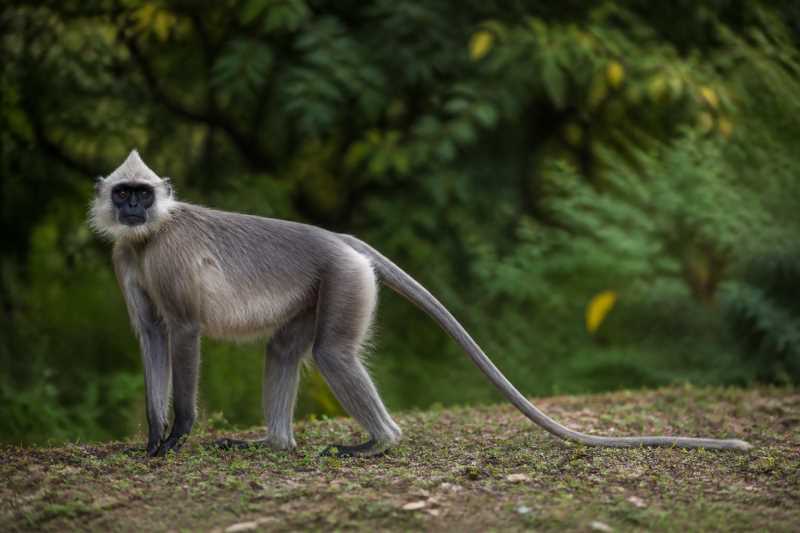
The Phayre’s Langur is a medium-sized primate characterized by its strikingly dark, glossy fur, which is predominantly gray with a bluish tint. This species exhibits sexual dimorphism, with males generally larger than females. Adult males typically weigh between 6 to 9 kilograms, while females range from 5 to 7 kilograms. A distinctive feature of Phayre’s Langur is its pale, almost white facial features, which contrast sharply with its dark body. The species has a prominent brow ridge and a characteristic tuft of hair atop its head, which adds to its unique appearance.
Their expressive eyes, surrounded by pale fur, give them a wise and contemplative look. The tail of Phayre’s Langur is long and used for balance as they navigate through their arboreal habitat. The limbs are well-adapted for life in the trees, with strong, agile fingers that help in grasping branches.
Range and Habitat
Phayre’s Langur is native to the forests of Southeast Asia, with its range extending across Bangladesh, India, Myanmar, Thailand, and Laos. They predominantly inhabit subtropical or tropical dry forests and subtropical or tropical moist lowland forests. These langurs are arboreal, spending most of their time in the canopy, which provides them with food and protection from predators.
The species prefers dense forest habitats where they can take advantage of the cover provided by leaves and branches. These environments not only offer ample food resources but also serve as crucial ecological niches that support their complex social structures. The langurs are known to form multi-male, multi-female groups, which require a habitat that can sustain large troop numbers.
Behavior and Diet
Phayre’s Langurs are diurnal creatures, meaning they are active during the day. Their social structure is complex and hierarchical, typically featuring groups ranging from 5 to 20 individuals. These groups are often composed of several adult females, their offspring, and a few adult males. The males are known to be territorial, often engaging in displays to assert dominance and protect their groups from rival troops.
The diet of Phayre’s Langur is primarily herbivorous, consisting mainly of leaves, fruits, flowers, and seeds. Their ability to digest a wide variety of plant materials is facilitated by their specialized stomachs, which allow for the fermentation of cellulose-rich leaves. This dietary flexibility enables them to adapt to different seasonal changes in their environment, ensuring a stable food supply throughout the year.
Identification Tips
Recognizing Phayre’s Langur in the wild requires keen observation skills and knowledge of their distinctive features. Here are some key identification tips:
- Coloration: Look for the unique bluish-gray fur and the contrasting pale face, which are hallmarks of this species.
- Tail: They have long tails that are often held in an arch, aiding in balance as they move through the trees.
- Social Behavior: They are usually observed in groups, which can help distinguish them from solitary primates.
- Vocalizations: Listen for their distinctive calls, which are used for communication within the group and can alert you to their presence.
Conservation Status
According to the International Union for Conservation of Nature (IUCN), Phayre’s Langur is currently listed as "Endangered." This status highlights the significant threats they face, primarily due to habitat destruction, hunting, and the illegal wildlife trade. Deforestation driven by agricultural expansion, logging, and human settlement has severely reduced their natural habitat, posing a critical risk to their survival.
Efforts to conserve Phayre’s Langur include habitat protection and restoration, legal enforcement against hunting, and conservation awareness programs. Protected areas and national parks in their range countries play a crucial role in safeguarding their populations. Conservationists are also working with local communities to promote sustainable practices that benefit both human and langur populations.
Frequently Asked Questions
What is the primary diet of Phayre’s Langur?
Phayre’s Langur primarily feeds on leaves, fruits, flowers, and seeds. Their specialized stomachs allow them to digest cellulose-rich plant materials effectively.
How do Phayre’s Langurs communicate?
Phayre’s Langurs communicate using a variety of vocalizations, body postures, and facial expressions. These vocalizations are crucial for maintaining group cohesion and signaling alarm.
Where can I observe Phayre’s Langur in the wild?
You can observe Phayre’s Langur in the forests of Southeast Asia, particularly in Bangladesh, India, Myanmar, Thailand, and Laos. National parks and wildlife reserves in these countries are ideal locations for sightings.
What are the main threats to Phayre’s Langur?
The primary threats to Phayre’s Langur include habitat destruction due to deforestation, hunting, and the illegal wildlife trade. Conservation efforts are in place to mitigate these threats.
Are there conservation programs in place for Phayre’s Langur?
Yes, there are several conservation programs focusing on habitat protection, anti-poaching measures, and community engagement to protect and preserve Phayre’s Langur populations.
Related posts