Introduction
The Lomami Red Colobus (Piliocolobus parmentieri) represents a unique and fascinating aspect of Africa’s rich mammalian biodiversity. This primate, part of the larger colobus group, is native to the central regions of the Democratic Republic of Congo (DRC). Despite its elusiveness, the Lomami Red Colobus has garnered significant attention from primatologists and conservationists, owing to its distinct characteristics and the critical threats it faces. This article delves into various facets of the Lomami Red Colobus, from its physical traits to its behavior, habitat, and conservation status.
Physical Description
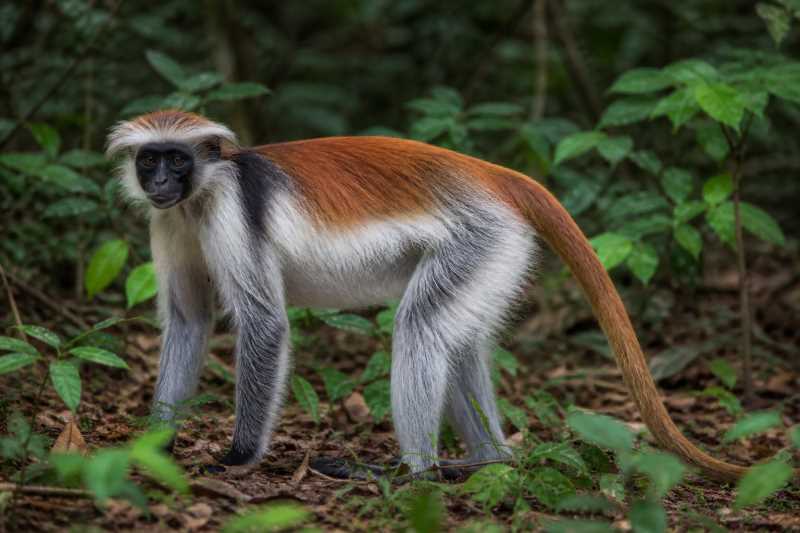
The Lomami Red Colobus is distinguished by its striking coloration and physical features. This medium-sized primate typically exhibits a reddish-brown coat, which contrasts sharply with its white underparts and black face. The vivid red hue of its fur not only aids in camouflage within its forest habitat but also contributes to its distinctive appearance.
The body length of the Lomami Red Colobus ranges from 45 to 70 centimeters, with a tail that extends an additional 60 to 75 centimeters, providing balance and agility in the treetops. Weighing between 6 to 10 kilograms, this species exhibits sexual dimorphism, with males generally larger than females. Their long limbs and prehensile tail are adaptations for an arboreal lifestyle, allowing them to navigate the dense canopy with ease.
One of the most notable features of the Lomami Red Colobus is its lack of a thumb, a characteristic shared with other colobus monkeys, which aids in their specialization for life in the trees.
Range and Habitat
The Lomami Red Colobus is endemic to the central Democratic Republic of Congo, specifically within the Lomami and Tshuapa Rivers region. This area is part of the Congo Basin, one of the most extensive tropical rainforests in the world, providing the ideal environment for the species.
These primates thrive in primary and secondary lowland rainforest habitats, often found in areas with thick, broad-leafed trees. They prefer undisturbed forests, which offer ample food resources and elevated pathways for movement. The Lomami Red Colobus is arboreal, rarely descending to the ground, which makes the preservation of their forest habitat crucial for their survival.
Behavior and Diet
Lomami Red Colobus monkeys are highly social creatures, typically living in groups ranging from 20 to 50 individuals. These groups are characterized by a complex social structure, with hierarchies often determined by age and gender. Communication within the group is facilitated through a series of vocalizations, including grunts and screams, which serve various social functions such as coordination and alerting others to potential threats.
Their diet primarily consists of leaves, supplemented by fruits, seeds, and flowers. As folivores, they possess a specialized stomach capable of breaking down tough plant materials, allowing them to extract maximum nutrition from their leafy diet. This dietary specialization, however, makes them particularly vulnerable to habitat loss, as they rely on specific tree species for sustenance.
Identification Tips (Field Recognition Cues)
Identifying the Lomami Red Colobus in the wild requires attention to several key characteristics:
- Coat Coloration: Look for their distinctive reddish-brown fur, which is a hallmark of their appearance.
- Facial Features: Note the black face with a fringe of white hair around it, adding to their distinctive look.
- Group Behavior: These monkeys are typically seen in large, noisy groups, which can be a clear indicator of their presence.
- Movement: Observe their arboreal movement; they rarely come to the ground and are adept at navigating the canopy.
- Vocalizations: Listen for their unique vocal patterns, a mix of grunts and high-pitched calls, often heard before the monkeys are seen.
Conservation Status (With Threats and Protections)
The Lomami Red Colobus is classified as "Endangered" on the IUCN Red List. This status reflects the significant threats they face, primarily due to habitat destruction and hunting. The expansion of agriculture, logging, and human settlement has led to widespread deforestation, reducing their natural habitat. Additionally, hunting for bushmeat poses a direct threat to their survival.
Conservation efforts are underway to protect the Lomami Red Colobus, including the establishment of protected areas within the Congo Basin. Initiatives such as community-based conservation programs aim to involve local populations in sustainable practices, reducing hunting pressures and promoting the preservation of critical habitats.
Frequently Asked Questions
What is the primary diet of the Lomami Red Colobus?
The Lomami Red Colobus primarily feeds on leaves, with a diet supplemented by fruits, seeds, and flowers. Their specialized digestive system is adapted to break down fibrous plant material.
How does deforestation affect the Lomami Red Colobus?
Deforestation leads to habitat loss, which is a critical threat to the Lomami Red Colobus. As these primates are highly dependent on specific forest habitats for food and shelter, the destruction of these environments severely impacts their survival.
Are there any conservation efforts for the Lomami Red Colobus?
Yes, conservation efforts include creating protected areas and promoting community-based initiatives to reduce hunting and habitat destruction, aiming to preserve the Lomami Red Colobus population.
How can you identify a Lomami Red Colobus in the wild?
Key identification features include their reddish-brown coat, black face, and group behavior. They are often found in large, vocal groups in the forest canopy.
Why is the Lomami Red Colobus considered endangered?
The Lomami Red Colobus is considered endangered due to habitat loss from deforestation and hunting pressures, which have significantly reduced their population.
Related posts