Introduction
The Toque Macaque (Macaca sinica) is a fascinating primate belonging to the Old World monkey family, Cercopithecidae. Native to Sri Lanka, this species holds a significant place in the region’s ecological and cultural landscape. Known for their distinctive toque-like hair, these monkeys are an integral part of Sri Lanka’s biodiversity. As we delve into the life of the Toque Macaque, we uncover their unique adaptations, behaviors, and the conservation challenges they face in today’s rapidly changing world.
Physical Description
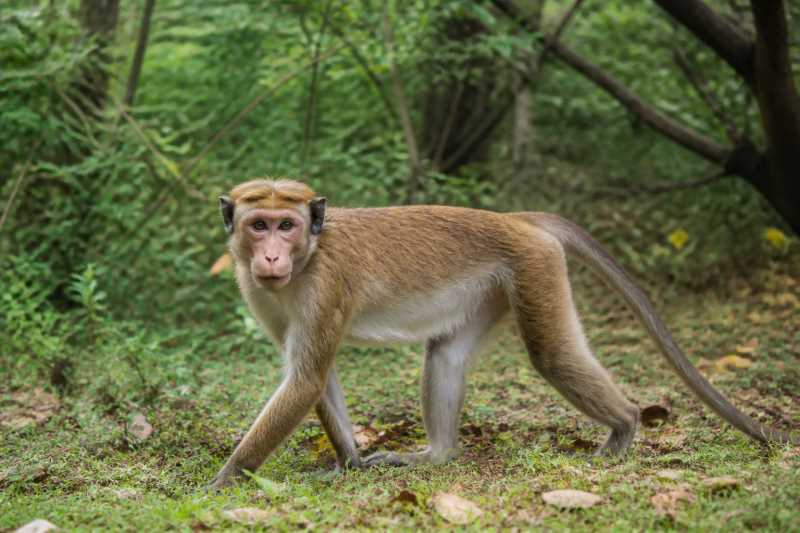
Toque Macaques are medium-sized primates with distinctive physical characteristics that make them easily recognizable. Adult males typically weigh between 5 to 9 kilograms, while females are smaller, weighing about 3 to 4 kilograms. Their body length ranges from 40 to 55 centimeters, with a tail that can add an additional 40 to 60 centimeters to their overall length.
The most striking feature of the Toque Macaque is the tuft of hair on the top of their head, resembling a ‘toque’ hat, which gives them their name. Their fur is generally a golden-brown color, with lighter undersides. The face is hairless and pinkish, enhancing their expressive facial features. Their limbs are strong and agile, adapted for a life both in the trees and on the ground.
Range and Habitat
The Toque Macaque is endemic to Sri Lanka, where they inhabit a range of environments from coastal lowlands to mountainous regions. They are commonly found in dry and moist forests, both primary and secondary, and can also thrive in human-modified landscapes such as plantations and urban areas.
These macaques have adapted to a variety of habitats, but they prefer areas that provide ample food sources and safe resting places. In the wild, they are often spotted in national parks and forest reserves, which offer protection from hunting and habitat destruction.
Behavior and Diet
Toque Macaques are social animals that live in groups known as troops, which can consist of a few individuals to over 20 members. These groups are typically organized in a multi-male, multi-female structure with a clear dominance hierarchy. Social bonds are important, and grooming is a common activity that helps maintain these relationships.
Their diet is omnivorous, consisting mainly of fruits, seeds, leaves, and flowers. They also consume insects, small mammals, and birds. The availability of food can influence their movement patterns, with some troops traveling long distances to find adequate resources.
Identification Tips (field recognition cues)
Identifying a Toque Macaque in the field is relatively straightforward due to their distinctive features:
- Toque-like Hair: Look for the unique tuft of hair on the top of their head.
- Coloration: Note the golden-brown fur with lighter undersides.
- Size and Structure: Medium-sized body with a long tail.
- Social Behavior: Often seen in groups engaging in social activities such as grooming.
- Vocalizations: Listen for their variety of vocal sounds used for communication within the troop.
Conservation Status (with threats and protections)
The Toque Macaque is currently listed as Vulnerable on the IUCN Red List. The primary threats to their survival include habitat loss due to deforestation, agricultural expansion, and urban development. Additionally, they are sometimes hunted for food and captured for the pet trade.
Conservation efforts are in place to protect this iconic species. Sri Lanka’s national parks and wildlife reserves offer protected habitats where these macaques can thrive. Public awareness campaigns and legal protections are also crucial in mitigating the threats posed by human activities.
Frequently Asked Questions
1. What do Toque Macaques eat? Toque Macaques have an omnivorous diet that includes fruits, seeds, leaves, flowers, insects, small mammals, and birds. Their diet varies depending on the availability of food sources in their habitat.
2. Where can Toque Macaques be found? Toque Macaques are endemic to Sri Lanka, where they inhabit diverse environments ranging from coastal lowlands to mountainous regions, including dry and moist forests.
3. Are Toque Macaques endangered? Toque Macaques are classified as Vulnerable by the IUCN Red List due to threats such as habitat loss, hunting, and capture for the pet trade. Conservation efforts are ongoing to protect their populations.
4. How do Toque Macaques communicate? Toque Macaques communicate through various vocalizations, body language, and grooming behaviors. These forms of communication are essential for maintaining social bonds and hierarchies within troops.
5. What is the social structure of Toque Macaques? Toque Macaques live in troops with a multi-male, multi-female structure. They have a clear dominance hierarchy, and social bonds are maintained through grooming and other social interactions.
Related posts